
The most pressing question is, of course, “What does a twenty-three-acre theme park have to do with Christianity?” It’s a solid question, all the more relevant today than when Joe E. Barnhart first asked it in 1988 with his Jim and Tammy: Charismatic Intrigue Inside PTL.
Jim Bakker, an Assemblies of God minister like Jimmy Swaggart, held to a completely different version of Christianity than the one Swaggart presented through his music, radio programs, television ministry, magazines, and publishing house. Bakker grew up in Muskegon, Michigan. Like Swaggart, his father was strict. Bakker was forbidden from dancing, from listening to “worldly” music, from attending movies, from dating outside of a group, from all of the staples of “Youth Culture” that came about after World War II in America.
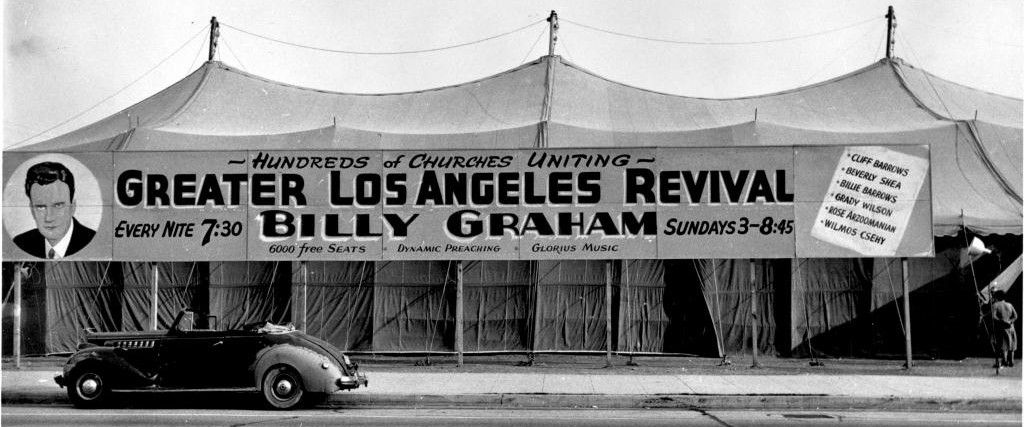
Billy Graham, the revivalist, capitalized on youth culture and tried to meet young people where they were with what they enjoyed most. Graham’s ministry emphasized cheerful, upbeat music of the “Big Band” era. It was perhaps a little out of step with the majority of youth culture, which was already moving toward rock n’ roll and drive-in movies, but certainly a step forward. Graham, in his autobiography Just As I Am (1997) recounted that he never felt aligned with the Southern Baptists for that reason. Unquestionably holding a conservative interpretation of scripture and tradition, Graham was still “edgy” to the fundamentalism of his denomination. It was this difference that led him away from pastoral ministry to begin his revivalist crusades, like the one in Los Angeles that “started” his ministry in 1949.
The Los Angeles Crusade of 1949 was the first great evangelistic campaign of Billy Graham. It was organized by the Christian group Christ for Greater Los Angeles; the campaign was scheduled for three weeks, but was extended to eight weeks because it is, essentially, said Christianity was not a somber, dowdy religion. It was fun. It was intense. It was passionate. It was a young person’s religion. Countercultural? Shucks, no! Christianity wasn’t countercultural. If anything, America was a product of Christianity. To be a Christian was to be an American and to be an American was to be Christian. This idea – that Christianity was “American” and could confront the creep of Communism with American ideals – was especially useful to newspaper magnate William Randolph Hearst, who directed each of his 16 daily publications, 8 magazines, and all of the syndicates to “Puff Graham.”
Suddenly, reporters and photographers converged onto the “Canvas Cathedral” and flashbulbs started popping. Graham’s star rose overnight, and photographs and praises soon followed in Life, Time, Newsweek, and on the front pages of big-city newspapers.
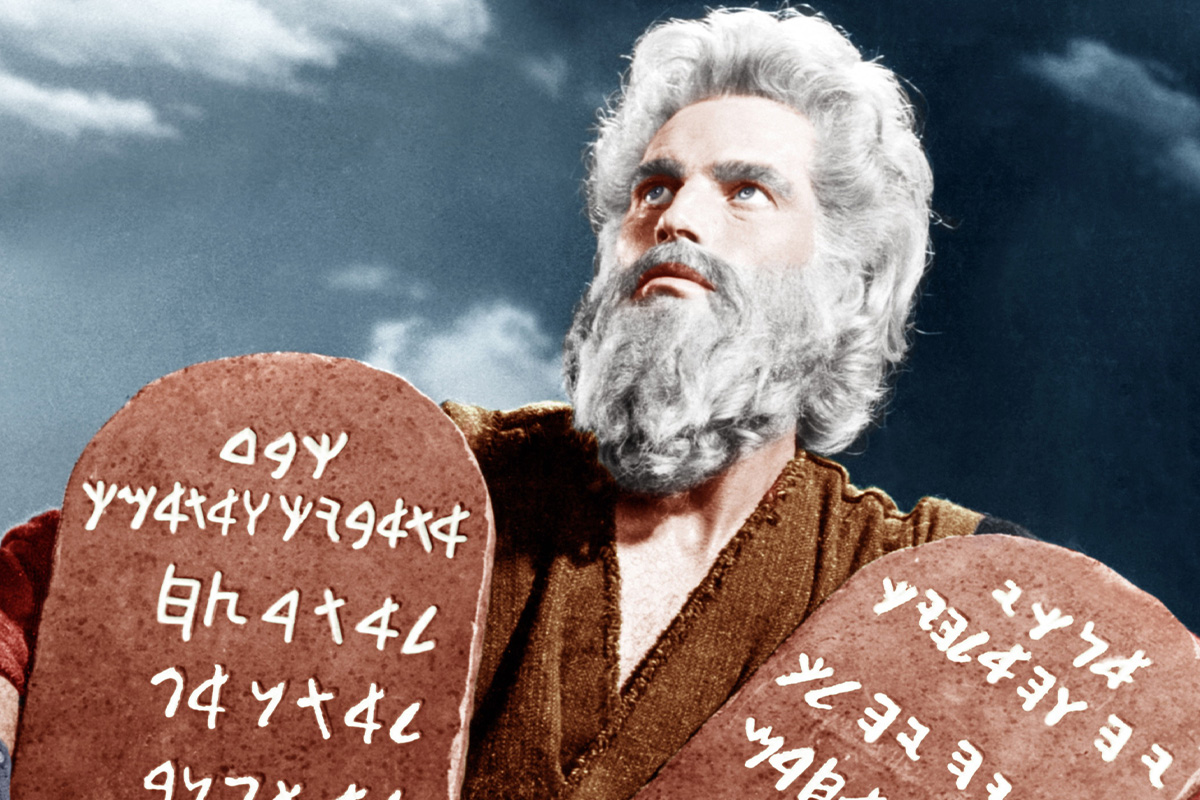
During the revival, Graham allegedly spoke to some 350,000 people, with 3,000 of them committing their lives to Christianity. It was subsequently described as the greatest revival since the time of Billy Sunday. The Los Angeles crusade was extended to Nov. 20, 1949, and gained much national attention due to the conversion testimonies of several Hollywood celebrities. It helped that the crusade was, of course, in Los Angeles. In 1950, Graham turned down a lucrative Hollywood acting role offered by then-president of Paramount Studios, Y. Frank Freeman, in The Ten Commandments (1956), which would eventually star Charleston Heston, Yul Brynner, and Edward G. Robinson. Cecil B. DeMille was in that lunch meeting along with Anthony Quinn, Barbara Stanwyck, and Betty Hutton. Recounting the luncheon years later, Graham said, “I looked [Freeman] straight in the eye, with the others listening, and told him that God had called me to preach the Gospel and that I would never do anything else as long as I lived.”
Which wasn’t exactly true.
Instead of collaborating with Hollywood, Graham launched his own Christian film production company, World Wide Pictures, in 1951 to produce dedicated evangelistic religious dramas. He would go on to befriend several American Presidents and give them political advice. He rallied Evangelical support through his crusades but also through luncheons with pastors, denominational leaders, local politicians, and wealthy donors who would in turn hold fundraisers for political leaders and, yes, Presidents. He would also found the magazine Christianity Today in 1956, a publication that would reshape American Christianity into Evangelicalism. Graham, it turns out, never actually held to that promise he made to God and routinely went beyond preaching the Gospel.
Despite insisting in his autobiography that he forced regions of the country to racially integrate in his crusades, Graham was known for referring to fellow Southern Baptist minister, Rev. Martin Luther King Jr. by racial epithets and obstructed King’s work. Graham also held a political rally with religious leaders and Republican members of the Senate to try and prevent “that Catholic” John F. Kennedy from beating Nixon during his first campaign in 1960. In 2002, when the National Archives released hundreds of hours of personal recordings by former President Richard Nixon, the level of Graham’s involvement in reshaping American culture could no longer be dismissed. In a tape recording on 1 February 1972, Graham can be heard agreeing with Nixon’s assertions regarding Jewish influence, stating that the Jews had a “stranglehold” on the American media and it “has got to be broken or the country’s going down the drain.” Graham agreed strongly, laughing with Nixon. The recording was made immediately after the National Prayer Breakfast that same morning.
Despite Graham’s fame as a result of the ‘49 Los Angeles and his role in reshaping American Christianity coming out of World War II, all of this felt out of step with the fundamentalism of Pentecostals, who saw themselves as perpetual outsiders.
Bakker resisted all of this. He knew of Graham’s ministry, studied it. He held screenings of Graham’s short movies and delighted in the bright colors, upbeat music, emphasis on early marriage as a means of “rebuilding” America. The emphasis on American ideals, or at least anti-Communist ideals, may have even helped him bridge the divide between he and his father, but to the end, Bakker could never convince his father that music or holding a positive outlook on life were “Christian.” How could they be?
The divide was deeper than versions of Christianity, though. Bakker’s father, Raleigh, was physically abusive. Bakker would, at times, insinuate the abuse was sexual as well. In Jim Bakker’s retelling, Raleigh saw his son as effeminate. That was accurate. In Bakker’s first autobiography, Move That Mountain (1976), he wrote, “Mom and dad considered me so fragile that they didn’t allow my brothers and sisters to even breathe on me.” He would later acknowledge in I Was Wrong (1996) what viewers of his programs had already seen for themselves. Jim Bakker was slight of frame, had a light voice, was subject to public bouts of crying, and was – yes – occasionally attracted to men.
The abuse in their house took many forms. Bakker recalled that his mother, trying to protect a perpetually sick son, became a hypochondriac and continually cleaned the house, demanding her children follow her example. Jim claimed he once objected to his mother’s obsessive compulsions and sighed “gee whiz” when his father grabbed him, physically restraining his son, washed Jim’s mouth out with soap not for talking back, but because he thought “gee whiz” was the same as cussing. As he recounted, and at odds with other claims he made about his father, Jim would write that this was one of the few times his father touched him. Both parents, raised in traditional Dutch homes of their own, refused to touch their children or allow expressive emotions.
Psychologically, Jim Bakker makes for an interesting though contradictory case study. As Charles E. Shepard put it, “Recast for dramatic effect and psychic relief, Bakker’s bygone days offered him the hopes and hurts to validate the path he chose as a man, a minister, and a corporate executive.” His father’s emotional inaccessibility with Jim’s effusiveness are both grounded in Joe Bakker, Raleigh’s father and Jim’s paternal grandfather, who was an early Pentecostal. Joe was severe, “righteous and implacable.” He believed that smoking was a sin that would send people directly to Hell, raised his voice regularly, and once got into a fistfight with a prisoner to whom he was “ministering.” The man was already behind bars.
Everyone, in Joe’s opinion, was going to Hell unless they agreed with him. Shepard continues, recounting the shadow Joe cast over the family. “In his early twenties, he organized the small prayer meetings that eventually became the Central Assembly of God. But the church did not revere this founding father. His eccentric testimonies ran too long. The youngsters were scared of him. He feuded with church leaders… When he died, in his ninetieth year, some of Joe Bakker’s siblings acknowledged to his grandchildren that they thought Joe was a bad seed. His proselytizing seemed incongruous… His own family doubted his suitability for God’s celestial kingdom.” Living a dual life was something Jim began to intuit and adopt. Raleigh’s continual disappointment, frustration, even abuse toward his son, Jim, may very well have been an overreaction to what he saw in his father now returning in a new generation. When Jim got an idea, he could not be reasoned with; he too was implacable.
Trying to escape a torturous household, Bakker left home to attend North Central University, a Minneapolis Bible college affiliated with the Assemblies of God, where he met fellow student Tammy Faye LaValley in 1960. In his autobiographies, Bakker claimed he was popular with classmates and especially women who enjoyed his companionship. It reads like he was a “ladies man” when he was likely insecure, taking comfort in the appearance of “courting” women who never saw him as a marriage partner. And then he met Tamara “Tammy” Faye LaValley, who worked at a boutique near the campus, the Three Sisters. Despite already having a fiancée in Muskegon (he claimed), Jim began “courting” Tammy Faye.
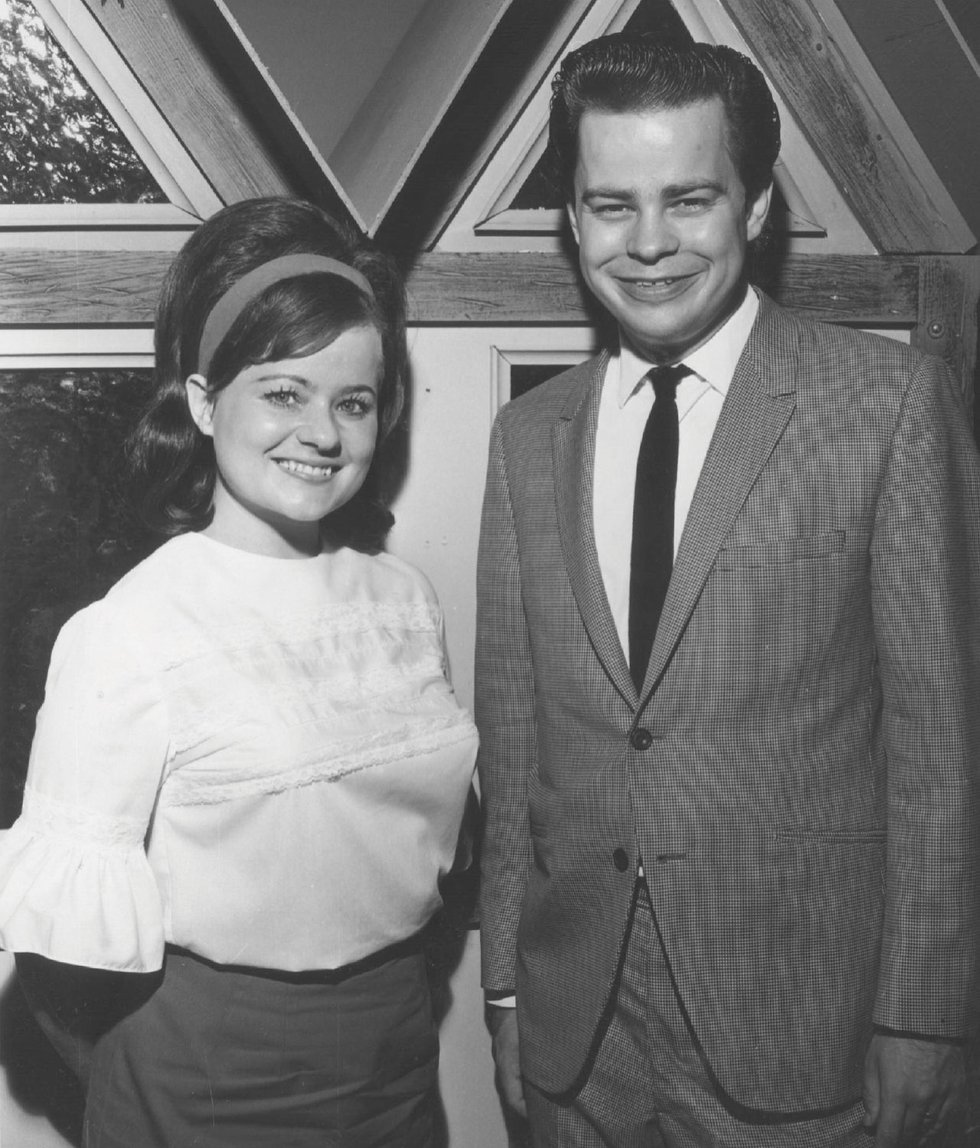
Tammy Faye was born in Minnesota to Pentecostal preachers Rachel Minnie and Carl Oliver LaValley. Shortly after she was born, the two divorced. It turned her mother against ministers, and alienated Rachel Minnie from churches and ministry altogether. Tammy Faye’s mother would never show support for her daughter, despite becoming one of the most well-known Christians in the world.
Like Bakker, Tammy Faye wanted to leave home at an early age. Her mother remarried and Tammy found herself the oldest of eight children under one roof. She left for North Central Bible College as soon as she could, where she met Jim. According to Darby Ottoson of Minneapolis St. Paul Magazine, “The millions who would watch Tammy Faye on television decades later—dolled up in bold lipstick and multilayered eye makeup, which would often streak down her cheeks—probably wouldn’t recognize the barefaced 18-year-old who hopped off that Greyhound bus… Jim grew smitten with Tammy Faye during long shifts as the night monitor at her dorm. The red-bricked Miller Hall still stands five stories tall, dominating the city block on Elliot Avenue, shaded by mature maples and elms. It was the first building purchased by North Central in 1937 and must have felt palatial compared to Tammy Faye’s humble childhood home and its outhouse. In her eyes, Miller Hall, and North Central more broadly, was a stately ivy-draped heaven, and she adored the view of Elliot Park from her dorm window. Soon after, Jim fessed up to his feelings for her and asked Tammy Faye out. On a wintry Wednesday evening, they talked and walked down the road to the Minneapolis Evangelistic Auditorium (MEA)—the modern-day Music Box Theatre of Triple Espresso fame—an Assemblies of God ministry on Nicollet Avenue where Jim was a youth leader. They went on a second date the night after the first, and by the end of their third date the following night, they were engaged.”
Neither completed their education. Jim bristled at the restrictions placed on his time and self-professed talents, especially the academic expectations of attendance, exams, essay writing, and study. “In his year and a half in college, Bakker had gotten no formal theological training. If he took the introductory course in religious doctrine, he did not complete it. Later, when his ministry spread to national television, the shallowness of his preaching did not surprise his former professors” according to Shephard. The two married on April 1, 1961 – tellingly, April Fools Day – and quickly left college to become itinerant evangelists. While they may have been in a rush to get married, they were not in a rush to have children. Both felt they had had a hard childhood. Neither Jim nor Tammy Faye were especially eager to repeat the cycle so soon as getting “free” of their families. They eventually had two children, Tammy Sue or “Sissy” Bakker in 1970, and Jamie Charles or “Jay” in 1975.
The years between marriage and parenthood were not idle. They began as traveling evangelists before going on to host local children’s programming, where Tammy Faye was known for her buoyant, optimistic personality and simple Bible stories, perfectly suited for her audience. Their audience? Jim’s autobiographies praised Tammy Faye but maintained, even insisted, he was the brains of the operation. “Traveling evangelists were a fixture in the Pentecostal world. Churches looked to their pastor to teach and counsel. The minister willing to abide that gritty work and numbing routine was often not the sort to render stirring performances in the pulpit” like Swaggart was doing down South. “Itinerant evangelists – polished, enthusiastic, flamboyant – could revive a congregation’s passion for God.” Bakker’s presentation as the host of The 700 Club and his various programs on CBN, TBN, and the PTL network, his affect, were all milquetoast. Unless he was asking for money, when he could turn the shine on and work a crowd. Tammy Faye, however, was a star from the moment she began speaking, authentically and passionately, even enthusiastically and playfully.
The Bakker’s motored through the cricks and hollers of Appalachia. They worked hard, but saw little success. After all, they primarily addressed themselves to children, where Tammy Faye’s personality brightened the mood of every church they visited. A star, she was meant for television.
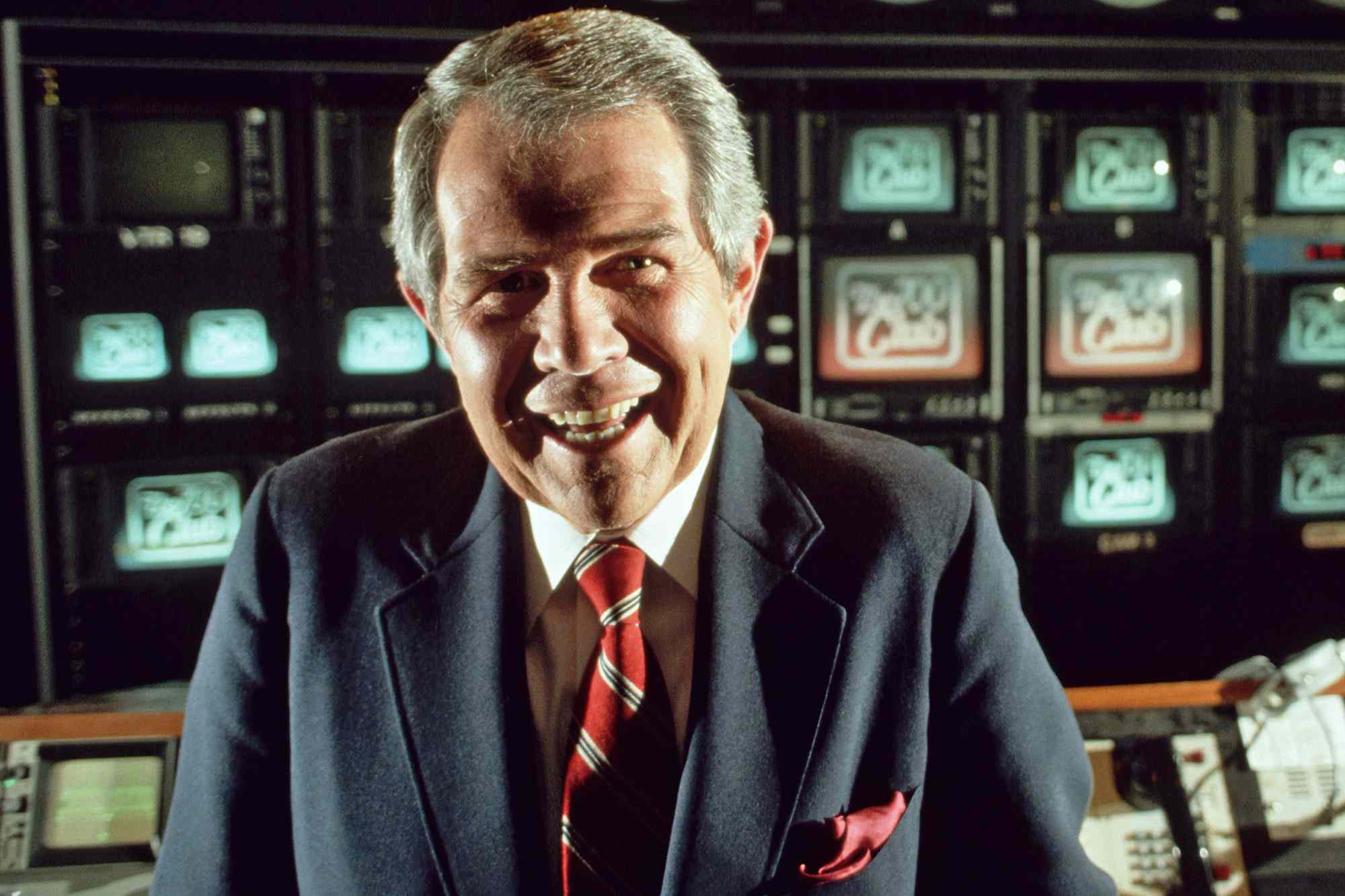
Meanwhile, Marion Gordon “Pat” Robertson, son of U.S. Representative (1933-46) and Senator (1946-66) A. Willis Robertson, was also working hard. Ordained as a Southern Baptist minister like Billy Graham and Martin Luther King, Robertson held to a charismatic theology not traditionally common among Southern Baptists. Convinced that his name, Marion, was too effeminate, he began calling himself “Pat” and left active ministry to found the Christian Broadcasting Network (CBN). There, he continually ran into objections by the FCC, disfavor from traditional Christianity, financial shortfalls, and low ratings. His father’s name, he said, opened doors that would have been impossible to open but it could only take the network so far. Robertson’s empire began with the purchase of a local station, WYAH, which he claimed was a sign from God since he incorrectly pronounced it “Yahweh.”
In 1966, Jim and Tammy Faye Bakker began working at the fledgling (and failing) CBN in Portsmouth, Virginia, which had an audience in the low thousands at the time. The Bakkers contributed to the network’s popularity, hosting a children’s variety show called Come On Over that employed comic routines with puppets. Again, Tammy Faye was the star while Bakker insisted he was the brains of the operation.
Due to the success of Come On Over, Robertson made Bakker the host of a new prime-time talk show, The 700 Club. It gradually became CBN’s flagship program, but Bakker and Robertson were continually coming to blows about the direction of the network. Robertson, raised in the halls of Congress, was reluctant to ask viewers for financial support. Bakker, in contrast, had no such qualms. More troubling, Bakker would outright claim “God told me” there were viewers who, “God has laid it upon your heart” to give specific amounts of money. Shephard explains,
If Pat Robertson, aristocrat and Ivy Leaguer, spoke to the educated and sophisticated, Bakker, the Bible-college dropout, spoke to the common man. He was tailor-made for CBN’s audience of traditional Pentecostals, the same working-class folks Bakker had grown up among and preached to on the road. He weeded big words out of his public vocabular to heighten his appeal to the masses. Whereas Robertson could come off as arrogant or detached, Bakker seemed warm. Bakker lived by his heart, not his head, and he had a gift for making his TV audience feel what he felt – or seemed to be feeling. Once touched, they responded. Some offered their tales of healing and saved souls; others offered their money to promote the novel cause of Christian television.”
Charles E. Shephard, Forgiven: The Rise and Fall of Jim Bakker and the PTL Ministry
The money came in and the network grew. In fact, the results were at times unbelievable to anyone who hadn’t seen Bakker’s ability to raise money on display. Early in his tenure at CBN, Bakker rescued a telethon that had fallen $40,000 short of its $120,000 goal. But Robertson did not think it was an answer to prayer. Increasingly, he thought Bakker overstepped his role as a host of The 700 Club to speak for the network, even for God. Bakker’s
tactic was one [he] would use repeatedly over the next twenty years: declare a crisis, dramatize it, often to the point of outright distortion, and wait for viewers to respond. Yes, CBN did have a problem. But had the $40,000 gap truly put CBN ‘on the verge of bankruptcy’? Bakker’s colleagues at CBN – and later at PTL – noticed Bakker bending the truth occasionally. Rarely did anyone challenge him. Exaggeration, a common marketing ploy in the secular world, was a pardonable sin in the business of saving souls ad financing ministries. If an evangelist could exaggerate the number of people he had saved at services, then Bakker could bend the truth about CBN’s finances. The ends justified the means.
Despite his histrionics and hyperbole, many of Bakker’s CBN colleagues considered his commitment to God’s cause genuine. Bakker disdained scripts and preproduction planning on his 700 Club broadcasts; he complained that too much structure diminished the presence of God. Bakker seemed to have a keen sensitivity to what was known as the move of the Holy Spirit. With that tangible divine presence, the sick were healed, believers spoke in unknown tongues, and the unchurched – in the studio and at home, watching television – found Jesus… Bakker became gifted at the word-of-knowledge healing style popularized by faith healer Kathryn Kuhlman of Pittsburgh. CBN carried Kuhlman’s TV program; Bakker had attended her miracle services and interviewed her on the 700 Club. Like Kuhlman, Bakker didn’t claim to possess healing power. He was merely a messenger, identifying those in the studio audience or at home watching television who, God was healing of arthritis or cancer or curvature of the spine. Occasionally, viewers called or visited WYAH and said, yes, I’m the one Jim talked about, and, yes, I’ve been healed. The testimonies sharpened the staff’s sense of purpose and they deepened the viewers’ devotion to God and to Jim Bakker… For many of Bakker’s true believers, particularly those who knew Bakker in his early years in television, even the evangelist’s 1987 fall from grace would not alter their conviction that Bakker was a man touched by God. God has few untainted vessels at his disposal. He must content himself with what is available, they thought, and Jim brought many in his audience to Him. Bakker got results; who he was underneath the mask and how he was able to seduce his audience were questions set aside for another day.
Charles E. Shephard, Forgiven: The Rise and Fall of Jim Bakker and the PTL Ministry
The Bakkers left CBN in 1973.
In Bakker’s retelling, Robertson was a micromanager who had no vision for the network. Robertson, on more than one occasion stopped God, by which he meant Robertson had stopped Bakker. In Robertson’s version, Bakker was fired for mismanagement of money. Founding the network and responsible to investors as much as the audience of WYAH / CBN, Robertson knew every penny had to be accounted for. What Robertson saw was on-air talent trying to skim off every dollar he solicited on the air. Someone who continually asked about ways to profit from the work of God. Who kept trying to elbow into business matters he knew nothing about, insisting he was not only the talent but the brains.
Robertson could see the proverbial handwriting on the wall. It was not sustainable.
Tammy Faye, irrelevant with her childish approach to ministry, caught in the crossfire of strong personalities, now pregnant, and increasingly depicted as a bumpkin idiot with a high-pitched voice, disappeared from the air. The two joined Paul and Jan Crouch to help co-found the Trinity Broadcasting Network (TBN) in California, where similar issues emerged. Bakker had the vision but not the money, while his partners had the money. And in Evangelicalism, money was the same as God, proof of divine favor. Bakker refused to be denied, and Crouch refused to allow financial recklessness. The partnership lasted only eight months until a falling-out between Jim and Paul Crouch caused the Bakkers to leave another new, emerging network that would play a role in the reshaping of Evangelicalism. By then, following the leading of “God”, Jim had moved the family to Charlotte, North Carolina.
In May 1973, Jim and Tammy Faye launched an East Coast version of Praise The Lord. It’s unclear what exactly happened, whether Jim overextended the line of credit given to him or whether he purchased too much air time, but all accounts lead to one conclusion: Paul Crouch had no idea who he had left in charge of half his network. Bakker was not going to play sideman to anyone, and he was clearly trying to create a rivalry with CBN in their own backyard. And using TBN’s monies to do it.
When Paul Crouch discovered the mismanagement of assets – cameras, a warehouse, lighting equipment well beyond the needs of the start-up, contracts for staff he never authorized, a satellite uplink – he tried to cut his losses. Less than a year later, the Bakkers formed their own non-profit organization, registered the PTL trademark, left the umbrella of TBN and the Crouches, and continued their show on 36 WRET Charlotte, 16 WGGS Greenville, South Carolina, and other stations. One year later, Bakker founded the PTL Satellite Network in 1974, which aired The PTL Club and other religious television programs through local affiliates across the U.S. The following year, in 1975, the Bakkers debuted their own late night-style talk show, known as The PTL Club. Moving at a stunning speed, Bakker’s approach was simple: Use credit to continue climbing up until someone stepped in to stop you. When asked the secret to his success, he cheerfully responded to inquiries about his use of mass media by saying: “I believe that if Jesus were alive today, he would be on TV.”
It was a study in contrast to Swaggart’s slow, methodical, even reluctant approach. Time and again Jimmy told Frances he did not want to be like the huckster clowns slinging the Gospel to suckers too stupid to realize they were getting conned. Jim Bakker was exactly who Jimmy was referring to.
Unlike Swaggart, whose album sales and ministry donations would fund over half of the missionary efforts of the Assemblies of God, Jim Bakker’s wealth was private. The PTL Network was his, not the denomination’s. His book sales and those of Tammy Faye were their own, not the denomination’s. His “ministry” was not feeding the hungry, housing the homeless, digging wells or biblical literacy. Jim Bakker’s ministry was Jim Bakker, and he reinvested in himself and his company, PTL. He created a business “too big to fail” decades before the phrase became relevant to investment companies on Wall Street who followed his example, overloading their balance sheets with so much accumulated debt until they, like Bakker, could leverage themselves for an impending crisis. It was, as author Tom Wolfe called it, a “carnival of prosperity,” and Bakker wanted to enjoy his toys until someone else came to take them away. First his father, then business partners, then finally the government who he had tried desperately to befriend. Tammy Faye would divorce him, “taking away” his marriage and the appearance of heteronormativity while he was in a federal penitentiary. A judge would take away his freedom of movement, silence his ability to continue the con, his closest friends would abandon him, and when he was finally released from prison, he would begin working for an AIDs hospital in Los Angeles.
But all of this had not happened yet. His downfall was still in the making, and so he did what any televangelist, any minister of the Gospel would do. Jim Bakker built a theme park. With a water slide.
Continued in Chapter 17


One thought on “Biography: Jimmy Swaggart, Chapter 16”