
The summer before college, I picked up a copy of Howard Schultz’s Pour Your Heart Into It (1997), a business biography of how he made Starbucks Coffee into… Starbucks. Some of it really reaches, especially as he tries to describe tasting and flavor profiles. Even these many years later, I remember thinking, “Some of this can’t really be explained. You have to taste the thing he’s writing about to really get it” and I still feel that way. Other parts were very business-y. The parts about ROI and Global Market Shares? Interesting, but I think they fell flat because that’s a very niche reader he was explaining these things to and a niche reader who would have been able to follow along. Me? The summer I turned 17? Not only was I unsure of what he was talking about, but I didn’t care. I wanted to know what made Starbucks Starbucks. They already dominated the coffee market! Moving numbers around a page didn’t make me want to jump up and order another cup, you know what I mean? Nevertheless, this is the kind of reader he continued to go after with his next four books. Self-proclaimed entrepreneurs who aspired to greatness but were not financially able to have their personal assistant summarize books for them, so they had to slog through a lot of condescention and jargon.
Where Schultz’s first book really shined though, and the thing that has remained with me almost three decades later, is his explanation of Third Space. I’ve talked about Third Space with classrooms of high schools and college students ever since. I made slide decks about it when I was still doing church consulting. I would, funnily enough, comment on the use of design whenever I grabbed a coffee – not always at Starbucks – with friends, my marketing clients, and even to myself while walking through IKEA. It was one of those ideas that landed at the right time and has stayed with me ever since.
Essentially, the concept of Third Space boils down to this: People need somewhere to go that isn’t home and isn’t work. Period. That’s the idea.
Innovative businesses know this and cultivate it. They don’t try to prohibit it. They want their customer to feel like they are “home” whenever they are consuming a good or service, because a good Third Space will feel like exactly that – home. They won’t need to go to a competitor. They will be loyal, even if things are cheaper somewhere else, because they have invested so much time and had so many important moments of their life in these spaces.
Will customers “cheat”? Be “unfaithful” – especially when they are out of town? Of course. But the Third Space will still be there for them, assuring them that they are forgiven and things can go back to normal. That’s the measure of loyalty to the Third Space, whether a customer will come back once they’ve tried something else.
In the case of Starbucks, customers are always comparing other drinks, other spaces, other WiFI, other logos and aesthetics to their favorite mermaid’s cups. At some point, the Third Space can override objectivity. It can override those other features that originally brought customers in.
Here in New Orleans, this means that whenever I walk into a local coffee shop, I am not only comparing the coffee offerings to my local corner Starbucks, I’m also comparing the creamers. The napkins. How loud the grinder is and whether it drowns out conversation with my friends (or exacerbates my migraine). The cushion of the chairs. The music. The “vibe.” If there is merchandise, does it fit into my already-developed style? My sense of self? Does this shop, tallying all these considerations, feel like a place I would want to revisit? Is this a place I can share with friends, where I can work, where I can read a book quietly? Am I – get this – able to go to this shop, the way I would with Starbucks, and just… sit?
Most places have a function. Your home exists for you to store things, to cook, use the toilet, and sleep. That’s kind of it. On a rainy day, otherwise closed in, these are the baseline things you do in your home. You want somewhere to store your stuff so it is not stolen or destroyed by the elements. Home is defined by these functions. How do I know? How can I say this so definitely? Because you can only live in a place so long as it meets these functions. When we move, we say we “outgrew” it. The neighborhood wasn’t safe. The leaky roof could no longer be patched. So we moved. We love our families, love our exes, but when a space no longer feels safe or when it begins to feel small, we move on.
Home may also be a status symbol, but that is not it’s baseline function. How do I know? Because people continue to leave their spacious homes for tiny apartments in Los Angeles, San Antonio, New York, and Miami. They are happy in these places! Entertaining, dating, celebrations, laments, the need for space can be satisfied by Third Spaces like our favorite restaurant or, you guessed it, our local coffee shop.
Work is the same. More explicit, mind you. But show me a workspace not defined by its function and I’ll show you a space already targeted for repurposing. Your cubicle is only as large as the role you fill in the workspace. CEOs? Large, open-aired offices that they rarely visit. These spaces exist as a reflection of the contribution to the company, supposedly, but they are not actually meant for the CEO. Large offices are meant to entertain. To “show off.” They are a status symbol of the office, of the workspace, not the inhabitant. How do I know? Because CEOs don’t get to take the real estate of their office with them when they retire, transition out, or die. They are replaced immediately with a new occupant, the same as a worker-bee cubicle-ee (not a typo).

Third Spaces, unlike Home and Work, do not have a designated function until people arrive and create meaning in them. This is why – as I have said to clients over the years – churches are able to take over abandoned shopping malls across America. This is why Spirit Halloween stores are able to do the same thing. The space was not built for residency. It was not built for work. It was designed and built with neither of these options as priorities, so the architecture does not restrict the space. These are two different considerations: the architecture and the space. People can repurpose space within seconds. They can’t do that with architecture without considerable investment of time, energy, labor, and finances. Third Spaces are, without the furniture and machines that come to define it, left open to the imagination. In fact, it’s far (far) more accurate to note that the Third Spaces of our predecessors were not designed at all, but cultivated by those who shared in its space – parks, gardens, libraries, walking paths, beaches. In these Third Spaces, social connection, the creation of art, and the exploration of ideas flourished.
I don’t mean any of this in a vague, general, loosey-goosey way. I mean this practically. Whenever I go into a classroom to teach, the space is built for education. There are desks. There are chairs. There is a screen bolted to one of the walls, clearly meant to be a backdrop to the ideas I am bringing into an educational setting. But what happens when I tell my students to stand up, to move their chairs, to face one another? The space is no longer limited. The desks are also, conveniently, able to move which recenters the entire room. When students face another rather than me, what seems – because of how it was designed when we entered the room – is now a completely different space. But if you were to walk into the hallway where instructor offices are, it is clear that these spaces were built for one purpose alone: office work. We are limited by the space of the office, the heavy permanence of the office desk in comparison to the ones in the education space. There are two chairs in my office, both facing my desk. Clearly, I am supposed to put my arms on the desk and scowl at whoever is in either of those two chairs, meant to tell them to “work harder and smarter” or something like that. My office was built, architecturally, to do office work. The furniture is adjustable in small ways but each piece, like the room itself, still restricts my use of the space.
Get it?

In the 1980s, American sociologist Ray Oldenburg officially coined the term ‘third spaces’ in his book The Great Good Place (1989) and continued to expand on his original ideas with subsequent editions in 1997, 1999, and 2023 as cultural awareness of Third Space increased. According to Oldenburg’s original idea, the third place is that which exists outside the home (the first space) and the workplace (the second space). The subtitle of the book even layed it out for the reader, The Great Good Place: Cafes, Coffee Shops, Community Centers, General Stores, Bars, Hangouts, and How They Get You through the Day.
These social surroundings, or third spaces, are places where people can spend time exchanging ideas, enjoying social company, and building communities. As he explains, Third Spaces are perhaps the reason why Europe seems to be a primary travel destination for those living in Western countries. Countries like Australia and North America are not designed for pedestrians and are thus somewhat devoid of the abundance of third spaces in their cities. Travelers are often in awe of the ease and prevalence of the third space in people-centric cities they travel to; that was certainly true for my wife when she traveled to Copenhagen with a friend. Or when we visited Paris on our honeymoon. Many Parisians have a single room that includes a bed, a kitchenette, and sometimes a bathroom. People could not exist like this unless there were also third spaces. Winter or summer, sun or rain, you’ll find the Parisians sprawled on terrasses, parks, by the Canal Saint-Martin, creating their own spaces for connection. When we left Paris, we went to London which was, by comparison, profoundly inhospitable. We tried walking places, as we had in Paris, and took note that the only benches we saw were in a park – which, ironically, had been taped off to visitors because they were remodeling it. We wanted a coffee, but the only one within walking distance was the hotel lobby where we were asked not to stay too long or a shop on the corner which served coffee through a small window. There were no chairs, no tables, no benches, which we both felt was frustrating and, for me, offensively unimaginative.
Lately, I’ve been thinking more about Third Spaces again in terms of religious observance. After several years of teaching in a new city and then the social distance of Covid, my wife and I are re-engaging with a church. Predictably, I think the birth of our son has played a major part in us reinvestigating our values, what we believe in, and the expressions of these things. We want to commit ourselves to something important, like most people. What follows is a brief collection of things we experienced as we looked for a church to attend, not a list of complaints.
There was the church whose sanctuary was built like an amphitheater, pews facing the front in a semi-circle. This kind of architecture is meant to showcase the minister and help with the acoustics of sound. Everyone in attendance can hear the musicians and minister, even the people in the nosebleed section. These spaces only work if the sanctuary is full, though. Bodies need to cushion the sound. Otherwise, as was the case for us, anyone who enters gets noticed because every creak of a door is amplified and echoes. When there are fewer people, every cough and sniffle can be heard like it’s right next to you.
Another church we went to was, to put it mildly, out of touch. The church congregation was made up of important doctors, lawyers, and educators so it was a great place to make connections. I’m sure many people attended for the same reason. While we tried to make it work, the music felt like we were attending a funeral, it felt like we were always in someone else’s pew – the one reserved for families who had, we assume, built the place a hundred years earlier – and no one even greeted us. With every subsequent visit, we increasingly felt like members of the congregation were intentionally avoiding us. Being generous and assuming the best, I think we can agree that respect for a visitor’s privacy is certainly important, but not at the expense of giving them the cold shoulder.
Another church, within my wife’s own faith tradition, felt… meh. Every sermon assured us we were good people. What we were doing, whatever it was, was fine and dandy. These vague appeals to assurance left us both feeling unchallenged and uninspired. During sermons, my wife and I would scribble on the weekly program, “What do you want to lunch?” or play Tic-Tac-Toe. Yes, literally. And that’s great for lots of people – going unchallenged. Their egos stroked or at least stroked. You’re doing great. God loves you. All is well with the world, or at least it should be in your hearts and minds. I don’t know, maybe I’m a contrarian, but when a church feels like a social club and no one is really “getting into it”, I’m not sure what the point of going really is. By the end, we tried listening to sermons online because it was more convenient to stay home and do other things as the sermons became increasingly irrelevant.
Other churches, like the ones I had worked with years earlier, were simply out of the question. I didn’t want to attend another job and exert the mental, emotional, and spiritual labor needed to make it a functional church. There was work to be done, but not by me and not for free.
Churches excel when they create a viable third space. They also do really strange things in their attempts to make that happen. Churches with ATMs in the foyer and churches with coffee shop extensions (even “pop-ups” in the parking lot)? Churches with a rotating lineup of poorly-attended groups and “opportunities to connect and minister”? These are weird. They are an attempt at Third Space, I recognize, but they seem to be misguided attempts at what makes Third Space so desirable – leaving people alone. Every time the doors are open, it is billed as an “opportunity” to do what, I wonder. To connect? To minister? To talk about Jesus? Jesus must be pretty needy if he is sitting in Heaven, trying to stir up conversations about him. Can you imagine it? God has hundreds of angels surrounding Him playing their harps and just awkwardly floating around semi-nude, then Jesus leans down to a cloud and whispers (from about a 400 miles up, I guess?) “Pst! Pst! Hey! The person across from you is already saved, but now is a good time to ask if they are really saved, hunh?”
Third Spaces, particularly in religious contexts, should embody the spiritual gift of shutting the fuck up.
Silence.
Just… leave people the hell alone.
You dig?
Starbucks employees are done with you the moment your order hits the counter. You walk in, you don’t have to buy anything. You can sit. You can read. You can meet and talk with friends. You can teleconference with work. You walk in and, until the moment you are standing in front of a register, you are left alone. You choose the level of engagement you want to have. Unconsciously, you feel empowered – and you did nothing. Nothing was asked or required of you.

Churches, historically, have excelled as repositories of spiritual wisdom. Housing large collections of libraries, pre-scheduled services which you could opt into or out of at your convenience, and providing a place where people can sit and contemplate have been longstanding major – not minor – offerings. Synagogues, whose attendees learned over generations to be vigilant about who was allowed in, made similar offerings. When the Temple was originally destroyed in Jerusalem, Jewish leaders created schools and synagogues to reorient their communities around religious life. Mosques around the world serve their members similarly and, I would add, do not require proof of attendance. A Muslim can get on a plane from anywhere, arrive in a new city, walk into a mosque, and pray. Can read. Can meet new people. Or can leave. But this level of accessibility to religious space does not, as American churches do, insist on people. Synagogues and mosques do not have neon signs, ATMs, garish vinyl banners “welcoming” their televangelists. People come when they choose, talk to one another if they choose, read if they choose, and leave when they choose. But this does not mean that the space is low-intensity or low-investment.
I am loyal to a specific coffeeshop some eight blocks away from my house. I’ve tried other locations. I’ve tried other coffee shops. I’ve tried other brews. And with no disrespect to any of them – one or two are fantastic – I still order my coffee to go from this one address. If they, for instance, began doing some of the things that churches do to get new customers, I would stop going. Bingo nights? Music nights? Kids nights? Lunch with special guest speakers? That’s not why I go there. If the music were a decibel larger, I would want to know why. If someone was shouting at customers that we needed to buy their latest book because it reveals “ancient secrets” about the end of the world and “timeless truths”, I would call social services because, clearly, someone is unwell. Yet churches in America not only facilitate but encourage behaviors that are objectively unsettling and cultures of commerce. Underneath all the programs and offerings and “family nights” and movies and ‘small groups”, there is a hollowness that only more consumption (new books, new sermons, new speakers, new merch in the foyer), more spending (aka “giving”), more free labor to building someone else’s empire will satisfy.
Third Places, the real ones that Oldenburg wrote about, do none of these things. They do not force a reason for existence, ask for money so you can continue coming, or try to manage your schedule to make you more productive. You are allowed to rest. Beauty is used to inspire, it is not commercialized and monetized. Which, again, churches did really well for a long period of time. Churches were places where the arts were allowed to flourish, where souls could contemplate and share in the awe of a holy service. Until the 1990s, that is, when the tail end of Reaganomics and coke-fueled mania demanded that everything, every piece of real estate, had to meet a need or suffer the bulldozer to make room for something new and innovative. Americans loved this hedonistic aggression, and churches, desperate to feel like they had a purpose, went along with it. Churches traded stained glass for aluminum siding. They began to lose their compass. Churches had to compete with television, which meant, another trade. Sermons that inspired gave way to large speakers, loud music, light gets, and demands for more money to meet the costs of the circus.
If the Church, which is to say local churches that continue to moan the decline in attendance, membership, salavations, and personal encounters with God do not find a way to express their beliefs except through capitalism, they are doomed to failure. That is not a prophecy. It is a widely-established surety. Americans believe that their own form of democracy is the only form of political expression available, where freedom is beholden to the powerful and liberty is determined by the rich. Such ignorance is not limited to politics, it permeates American churches and has tragically come to define not only local churches but denominations and Christianity, as a whole. Evangelicalism, a corruption of Christianity, cannot be differentiated from conservative American politics and only becomes more right-wing and violent with each decade. Evangelicals are defined by right-wing politics that discriminate and segregate, alternating between logical, emotional, racist, and misogynistic “biblical principles.” Third Spaces, as Oldenburg, welcomes all people to share space and resources without consideration of status, privilege, wealth, or ability.
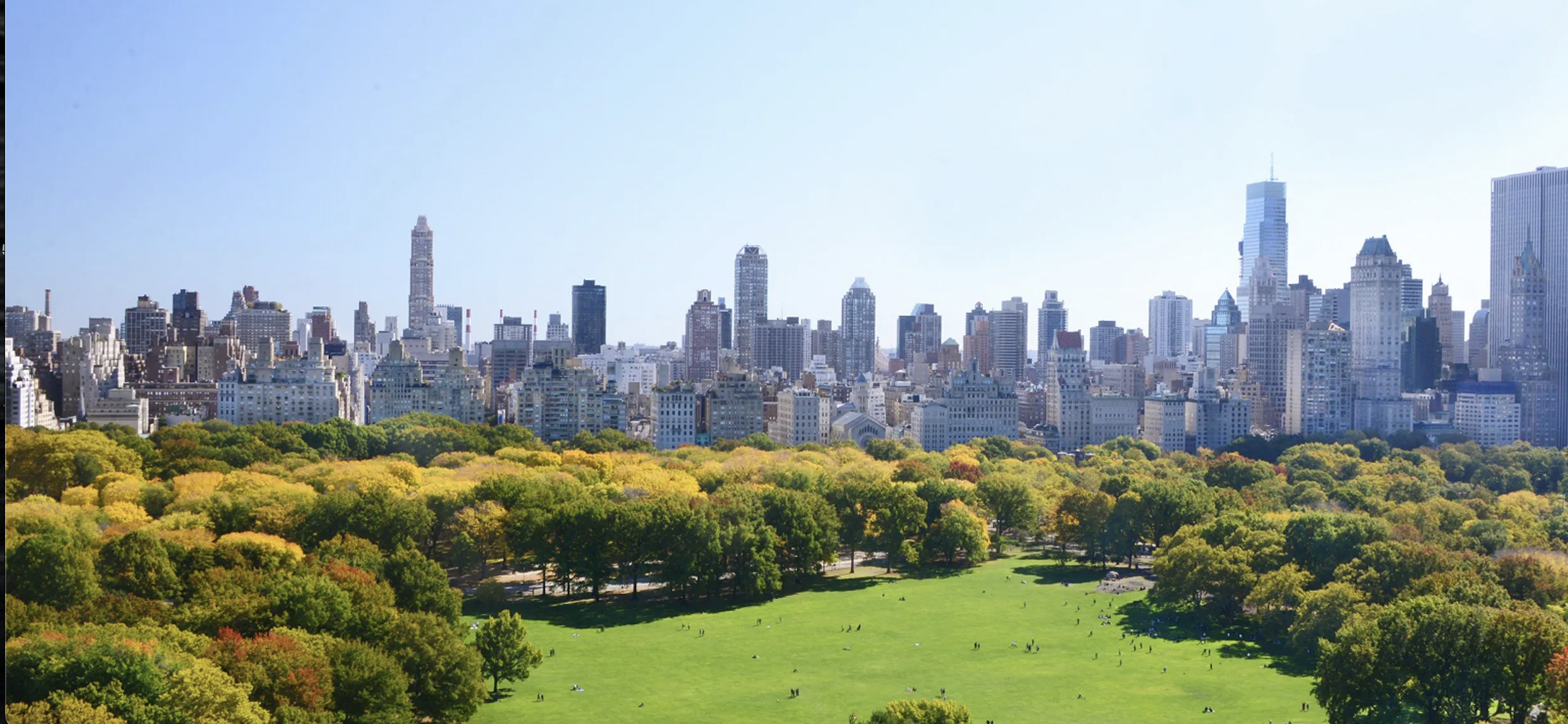
A good non-religious example of this might be Central Park in New York City. A visitor to the park has a variety of options, none of which press upon them or demand their attention. You might walk or run. You might notice the statues. The open-air. The benches. You might wander to the periphery, where there are food vendors, musicians, artists. Poetry readings. Shakespeare in the Park or a crew filming a movie. Dog walkers being walked by their dogs. The use of the space is versatile, virtually limtless. And at no time are there demands placed upon you.
As Oldenburg writes for Planning Commissioners Journal (No.25, Winter ’96-97),
Most residential areas built since World War II have been designed to protect people from community rather than connect them to it. Virtually all means of meeting and getting to know one’s neighbors have been eliminated. An electronically-operated garage door out front and a privacy fence out back afford near-total protection from those who, in former days, would have been neighbors.
Here and there one sees evidence of people struggling against the anti-community character of the postwar suburban landscape. A rare vacant lot attracts dog-owners who, near day’s end, time their visits so as to maximize contact with others. The animals “doing their business” constitutes a social high point in their owners’ day. Beneath a shade tree by a convenience store one sees working men drinking a beer which they may not consume inside, and enjoying the company of other men for which there is no provision inside. Elsewhere, men and women build a meager social life around visits to a laundromat, a most unlikely place, and yet many laundromat owners add amenities so as to capitalize on people’s frustrated need for affiliation. Such embers of human association signal the flaw in much of today’s residential land use pattern — all space is used up and there’s no provision for a community life. What should be local is remote, and because it is remote it serves no community at all.
What suburbia cries for are the means for people to gather easily, inexpensively, regularly, and pleasurably – a “place on the corner,” real life alternatives to television, easy escapes from the cabin fever of marriage and family life that do not necessitate getting into an automobile. Most needed are those “third places” which lend a public balance to the increased privatization of home life. Third places are nothing more than informal public gathering places. The phrase “third places” derives from considering our homes to be the “first” places in our lives, and our work places the “second.” Americans long enjoyed third places in the form of the inns and ordinaries of colonial society, then as the saloons and general stores springing up with westward expansion. Later came the candy stores, soda fountains, coffee shops, diners, etc. which, along with the local post office, were conveniently located and provided the social anchors of community life. “Third places” also suggest the stability of the tripod in contrast to the relative instability of the bipod. Life without community has produced, for many, a life style consisting mainly of a home-to-work-and-back-again shuttle. Social well-being and psychological health depend upon community. It is no coincidence that the “helping professions” became a major industry in the United States as suburban planning helped destroy local public life and the community support it once lent. Nor is it a coincidence that the joie de vivre cultures of the world are those in which third places are regarded as just as essential as home and work. “Joy in living” depends upon peoples’ capacity to enjoy the company of those who live and work around them. Places to do this must be provided and the time to do it will be available if those places are close to where people live.
Third places serve many functions, important both to individuals and to the communities they live in:
1. Third places help unify neighborhoods. Where third places are absent we find that people often live in the same vicinity for years without ever getting to know one another. Indeed, the subdivision resident who knows three other families is something of a social gadabout. Before neighborhood taverns were banished to commercial strips, the average one drew about 80 percent of its trade from within a two-block radius. It served the same function as does the English “local” — creating community where there would otherwise be a regimentation of private dwellings with little interaction between households.
2. Third places also serve as “ports of entry” for visitors and newcomers to the neighborhood where directions and other information can easily be obtained. For new residents, they provide a means of getting acquainted quickly and learning where things are and how the neighborhood works. One might have thought that the high rate of residential mobility in our society would have inspired planners to make provision for new residents to get acquainted quickly and easily. With almost a fifth of the population changing residence every year, would it not have made sense to create the means for newcomers to be easily assimilated? Instead, the typical residential district is notable for its absence of public gathering places, offering instead of maze of frequently deserted streets.
3. Third places are “sorting” areas. While third places serve to promote the habit of association generally, they are also the places in which those with special interests find one another. In third places, amateur musicians, shooting enthusiasts, poetry lovers, fishermen, scuba divers, etc., get introduced and find local outlets for their interests. Here is provided the basis of whatever kind and degree of local culture will emerge. In the modern subdivision, “local” culture is provided by television.
4. Third places can bring youth and adults into association with one another. In soda fountains, diners, family taverns, produce markets, and the like, children of prewar days “hung out” with adults and learned a lot from them. Sadly, as time spent with parents has declined for the nation’s children, so has the time spent with other adults. Between 1965 and 1985, the amount of time parents spent with their children declined by almost half. Meanwhile, those children were increasingly being raised in neighborhoods where contact with other adults was reduced to almost nothing because of the lack of places where they might spend time together.
5. Third places help care for the neighborhood. The people who operate third places are often the kind of people noted social observer Jane Jacobs described as “public characters.” They seem to know everybody in the neighborhood; they keep an eye on the local kids and what they’re up to; they do favors for local customers; and they keep regulars upto-date on all variety of local matters. Third places also serve as gathering spots when emergencies or disasters occur. People want, and need, to be with other people in these situations — to help and support each other, and to decide on courses of action.
6. Third places foster political debate. From the colonial inn to the old country store, from the neighborhood tavern to the soda fountain, third places have historically served as forums for political debate and discussion. It should surprise no one that political literacy is low in this country; that people don’t know who serves in the President’s cabinet, or who their local legislators are. This kind of information matters to us more when we put it to use by conversing, arguing, and debating with each other. We can better test and refine our opinions by interacting with others, not by simply listening to the pronouncements of television commentators.
7. Third places help reduce the cost of living. Where people meet regularly to relax and enjoy one another’s company, natural support groups or “mutual aid” societies tend to form. As we take our relaxation with people, we grow to like them and, as we come to like them, we are inclined to “do for them.” Third places are also easy places to collect time-saving, labor-saving, and moneysaving advice — sometimes without even asking!
8. Third places are entertaining. And the entertainment is provided by the people themselves. The sustaining activity is conversation which is variously passionate and light-hearted, serious and witty, informative and silly. In the course of it, people become very near and dear to one another such that continuity is assured. Television offers the principal form of entertainment today. Yet how many of us, having “surfed” through the available channels two or three times and been bored by it all, wouldn’t like to walk down to the corner and have a cold one (or a hot cup of coffee or tea) with friends and neighbors? Ah, but there’s nothing on the corner, nor in walking distance at all, to easily go to.
9. Third places give the gift of friendship. Not the singular, lifelong “best” friendship necessarily, but the tonic of friends met in numbers. The great boon to friendship is that which is often called “neutral ground” and third places represent the best of it. On neutral ground people avoid the obligations of both guest and host and simply enjoy the company. They come and go without making arrangements or excuses; they may leave the very moment it suits them to do so. It is a very easy form of human association. When friends meet in numbers, as opposed to “one-on-one,” there is a festive spirit and laughter is frequent. There is an atmosphere of acceptance and belonging that no single friend, no matter how close, can provide.
10. Third places are important for retired people. They provide the means for keeping in touch with others and continuing to enjoy the life of the community. “Only in America,” it seems, do millions of retired people make a final migration away from the cities and towns where they worked and knew people.
As Oldenburg details, the removal of Third Spaces or Third Places is a product of a post-World War II world where suspicion of neighbors and the compartmentalization of those different or not in alignment with our private world made communication superflous, even problematic. This division and divisiveness was quickly exploited and now undergirds much of the American approach to “foreigners”, even those with whom Americans share cultural ties through entertainment, food, and history.
Churches, if they are to recapture their spaces for something more reflective of the Gospel they claim to admire, must reconsider their spaces in light of Oldenburg’s insights. This will necessitate a reconsideration of the programs they offer on their campuses – Men’s Groups, Sunday School, monthly potlucks and “dinner on the grounds” – as well as those they have outsourced – Bible studies in homes, conversations at the grocery store, but more tellingly the homes of their congregants. Congregants who they have failed to meet, congregants whose loneliness continues to want assurance that at least someone knows their name.
 Theology & the City