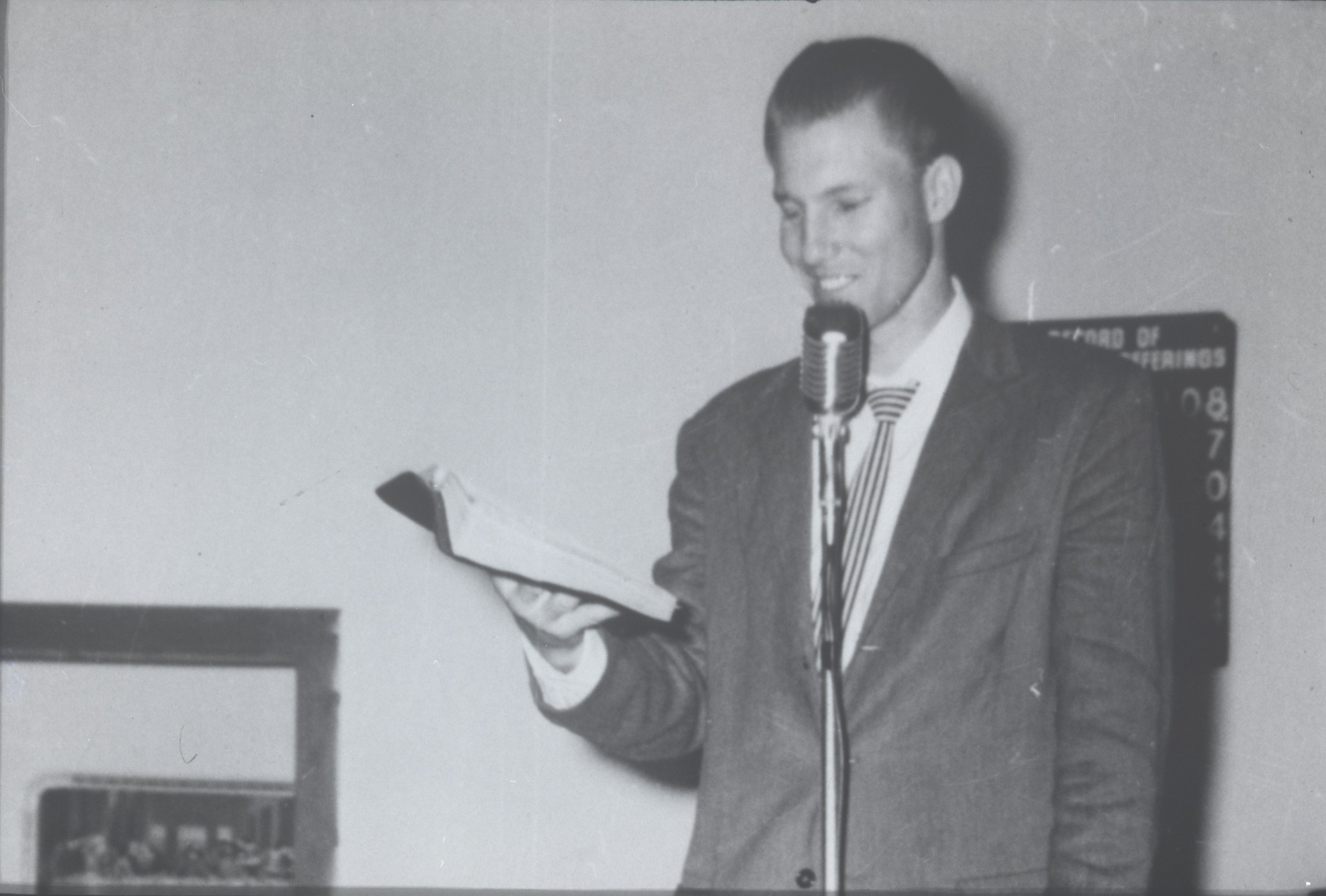
Long before 1988, before hubris and theology collided to bring about Jimmy’s “fall”, he was a jongleur who went about throughout the countryside singing other people’s songs. At Frances’ insistence, he showed up to recordings and walked out with records that, even by today’s standards, continue to hold up. He was good. No question about it.
There was money to be made, Frances told him, lugging those freshly pressed albums in the trunk of their car. He gave himself over to a routine. When other men enlisted to serve in Korea and then Vietnam, Jimmy performed. He would preach. He would sell records. It was better than military service, for Jimmy saw himself as someone in the thick of a spiritual battle for the soul of America. Jimmy was a patriot for God and did his duty driving to the next church, the next studio appointment. He would read during his downtime. He would go home, personal leave, and visit his family – especially Jerry Lee.
Jerry Lee became more duplicitous as his star waned. He would hang on Jimmy’s every word in private, making tearful promises to turn his life around, only to ridicule Jimmy in front of others.
Once, Jimmy was approached by a woman at a party Jerry Lee was hosting. She told him she had grown up Pentecostal like him, that she needed to be saved. She pretended to cry and when Jimmy began to respond, taking her at her word, she began to laugh along with everyone else at the party. Jerry Lee had told the girl to watch the tall corn-haired minister try to actually lead somene in a prayer of repentance right there in the middle of everything. Jerry Lee, like every other man in their family, could be unnaturally cruel. Jimmy would, in turn, use these unpleasant experiences for his own purposes. Jerry Lee, still struggling to find the salvation that had eluded him, was always good for another anecdote in another sermon.
Across the miles, Jimmy would reflect on what his grandmother taught him about the Holy Spirit, about the impact of Pentecostalism on his family. He sought out other ministers like L.O. Waldon and A.N. Trotter, who he would then try to emulate. These men emphasized the Spirit of God, not that high-falutin’ mainline religion where God was restrained by manners and etiquette. Jimmy had been so embarrased when his parents had done the same thing years earlier, laughing with joy, praising God loudly, and speaking in tongues.
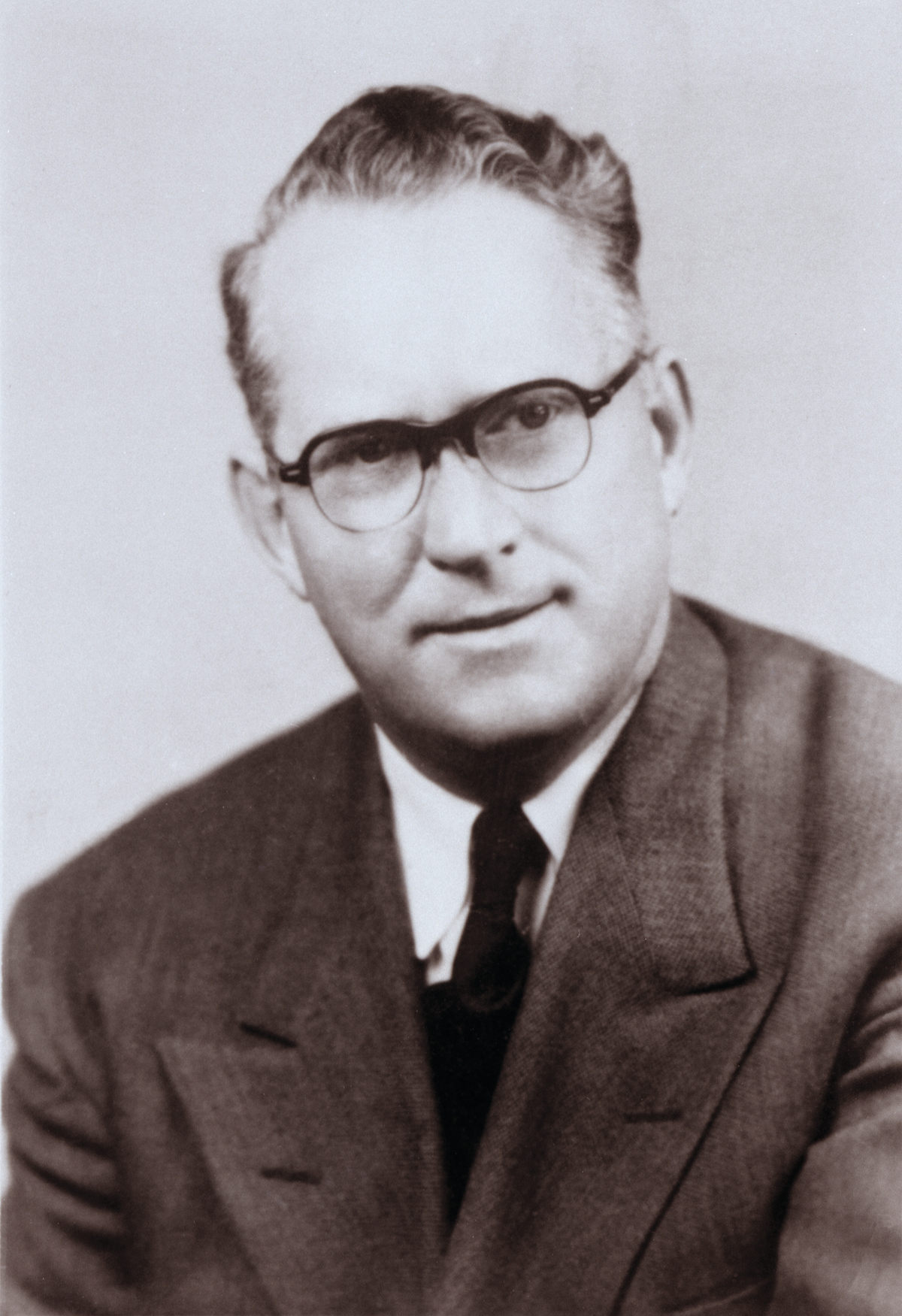
In January, 1960, I attended a preacher’s seminar in Monroe, Louisiana. I was still plagued by criticism of my ministry, and worried by thoughts of not being able to get a decent start in my home area. “If you can’t make it here, you’ll never make it anywhere,” I told myself.
A.N. Trotter, a man who had given many years to serve as a missionary in Africa, spoke on the subject, “The Miracle River and the Holy Ghost.” Using Ezekiel 47 as his text, Brother Trotter compared Ezekiel’s river with the Holy Spirit. “Everything touched by the river shall live,” he said.
“You must have the life of the Holy Spirit in you to live,” he preached. “You find a church where the Holy Spirit is not moving and its dead. You find an individual who is stale and stagnant and I’ll show you a person who isn’t moving in the Holy Spirit.”
He preached for almost an hour, his every word bringing life to the congregation. Everyone sense the presence of God.
Parts of Brother Trotter’s message sounded like the story of my own ministry. As a young preacher, his own brethren had fought him. Instead of helping, they did everything to discourage him. He had come to the end of the road financially several times. But at a particular camp meeting, an elder preacher came and laid hands on him. The prayers of that preacher seemed to be the turning point of his ministry,
At the close of his message, the entire congregation of three hundred preachers moved en masse to the altars. Men were sobbing before God. I was on my knees among them, praying. “Lord, what I’ve heard this man say has strengthened me. I know it’s asking a lot, but would you have him come over and lay his hands on me?”
At that moment, Brother Trotter, who had never met me, walked down off the platform and made his way through the praying, weeping preachers. He walked past me, then came back. Stopping directly behind me, he laid his hands on my shoulders and began praying. I could almost hear the voice of the Lord whispering, “I’m with you and I love you. My Spirit is with you. The anointing this man has spoken of is going to be in your life and ministry, too.”
That night I raced home and woke Frances to tell her about the service. Brother Trotter’s prayer had been like the hand of God on my shoulders. Facing opposition from good people who believed they were right, I had slipped into a depressed state of mind. Had they told me specifically why they refused to ordain me, I could have corrected it. But since they only dealt with generalities, I had allowed myself to believe I was inferior. That condition was now changing. I knew God was leading me…
Not only did the Lord use people like A.N. Trotter and L.O. Waldon to encourage me but He also greatly used my mother. In my first few years of preaching, she was a source of constant inspiration and strength. People loved her for the soft, tender way she dealth with them. She seemed to have a personal touch with folks that overcame any problem or barrier. Mama used that same touch on me. It wasn’t what she said, but the way she said it which helped. “God has called you sinc you were a child,” she often reminded me. “He has much better things in store for you than this. Now you give this ministry all the strength and energy you have.”
It was the same strength and energy she imparted to daddy who had become pastor at Calvary Assembly in Baton Rouge. Any time he was preaching, she would be right there with her amen, encouraging him with all her heart. She finally quit playing the guitar because of my kidding “it wasn’t ladylike.” But she sang frequently at meetings while I played the piano (To Cross a River, 126-129).
This was his theological education. How much of any of this he understood and how much of it he left unprocessed to reinforce his presuppositions is a matter of debate.

And then, he almost lost it all.
Jimmy’s mother died in June of 1960.
Shortly after, he also lost his grandmother.
The loss of these figures in the same year would destabilize even the strongest person, but with God ahead of him and Frances spurring him forward, there was no time left to think or feel things anymore. Instead of breaking down, Jimmy had to become harder. Self-reflection is a luxury for those with privilege, and Jimmy Lee Swaggart had very little time by then to navel-gaze or wonder about the things left unsaid between these dear women.
Despite what his father may have thought, Jimmy had strength as well as endurance. He wasn’t sullen and truculent as a teenager. He didn’t deserve his father’s abuse and criticism. Jimmy knew his father was wrong about him; he was wrong about a great many things. With the passing of Minnie Bell, Jimmy felt that the wrong parent had died. Losing his grandmother right after sent him into a tailspin, but he would find a way to survive it. He had survived so much already. Jimmy shoved down the sorrow, sublimating the abiding loss of these central women, so he could make it to the next meeting. So he could smile. Perform. Become what his mother, grandmother, and Frances expected. He had to compartmentalize his anger for decades, and grief made a cannibalistic companion, but he would survive.
Work became an outlet, a way to outwardly perform his inner life. No sir, Jimmy wasn’t afraid of hard work. His father was wrong about him there, too. Jimmy could work as hard as anyone, especially when it meant catharsis. Mental and emotional turmoil could be focused through his sermons, and, by all appearances, that’s exactly what he managed to do. He developed his own “style” in the pulpit during this period, careening messily between difficult emotions. The crowds laughed when he laughed, especially when it was hollow. They felt his rage as their own, understood the sadness behind the music he played. His ministry resonated with audiences who were similarly disenchanted and disheartened.
Jimmy’s emotions, messy as they were, felt like their own. Because they were.
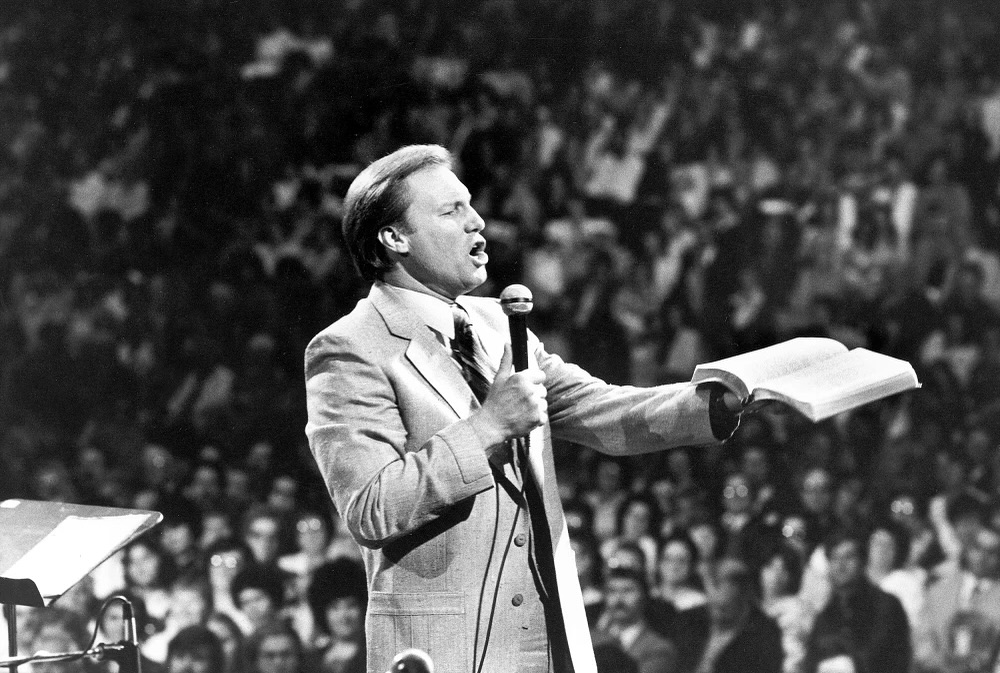
Many commentators, biographers, and finally his eulogists have noted that Swaggart held audiences “spellbound” and “in the palm of his hand” as though he were a gifted orator who could “transfix” his listeners. This is true; he was naturally talented in working a room and he was able to do this until the last two or three years of his life when age and senility would cause him to lose his train of thought, repeat himself, or stare off camera for extended periods of time. What these critics were reluctant to acknowledge was that Swaggart, especially in his prime, was something of a folk hero for Pentecostals. He spoke to something in the American experience that was, for all of the great changes in American culture after World War II, remained unaddressed in popular religion. While other ministers like Norman Vincent Peale and “faith” preachers like Kenneth Hagin, Kenneth Copeland, and John Osteen, even Swaggart’s fellow televangelist Jim Baker, emphasized the blessings and riches of God, Swaggart’s base knew by experience that life was unkind. As the world raced to Armageddon, many felt that things were changing in American Christianity too rapidly to think critically about each inflection point. As William Willimon, Bishop of the United Methodist Church, cheekily wrote in the foreword to Christless Christianity (2008),
Here we are in the North American church – conservative or liberal, evangelical or mainline, Protestant or Catholic, emergent or otherwise – cranking along just fine, thank you. So we’re busy downsizing, becoming culturally relevant, reaching out, drawing in, making disciples, managing the machinery, utilizing biblical principles, celebrating recovery, user-friendly, techno savvy, finding the purposeful life, practicing peace with justice, utilizing spiritual disciplines, growing in self-esteem, reinventing ourselves as effective ecclesiastical entrepreneurs, and, in general, feeling ever so much better about our achievements… Somehow we’ve managed to preach Christ crucified in such a way that few are offended, a once unmanageable God suddenly seems nice, and the gospel makes good sense – as we are accustomed to making sense. We just can’t stand to submit to the machinations of a living God who is determined to have us on God’s terms rather than ours, so we devise a god on our own terms. Flaccid, contemporary Christianity is the result.
Change wasn’t necessarily a bad thing. Swaggart embraced media technology and pioneered it at each step of advancement, selling CDs and DVDs before many other ministers, developing an online presence early on, buying up land and real estate around Baton Rouge decades before those areas became populated. He paid attention to geopolitics and led missionary efforts into the countries of South America and Africa before most Americans even knew such countries existed on a map. Yet, Swaggart also embodied a form of religious expression that was getting left behind in the gold rush.
Other televangelists were selling poorly made tchotchkes. Swaggart demanded that all of the products of his ministry – from the spools of tape in the cassettes to the feel of the fabric of the clothes, to the paper quality of pamphlets – be made with care and quality. The content had to actually contribute to spiritual development; no books or tapes or episodes of any his programs were allowed to be sold unless they could actually help people understand the Gospel of the Bible. Other religious leaders promoted fads slopped over from weekend business retreats. Swaggart wanted to know the character of a person first.

In the gold rush of televangelism, Swaggart’s message that God wanted to live with an individual and do something with their life, maybe even change it, seemed antiquated. But it spoke to a need.
Swaggart has frequently been depicted as a contrarian who defined himself by what he was against. This is not accurate, and certainly not a complete understanding. Jimmy was riddled with doubts, and as American religion after Karl Barth became softer and more focused on the individual experience, Jimmy thought he might very well be wrong about how he understood the Bible. Inside, he knew he was intelligent, but he was still a high school dropout from the end of a dirt road in a nothing town. He was still the cousin to someone else, someone who had actually made it out. Who was little ol’ Jimmy Lee to think he understood what God was doing in the great big wide world – a world he had only read about in National Geographic magazines or heard about from his alcoholic, drug-addled, underage wife-beating cousin?

Jimmy tried to embrace “the [Word of] Faith movement” and possibility thinking in the 1970s. Having not been exposed to these teachings as a boy, and having grown up in poverty, he was precisely the kind of Christian who was susceptible. Norman Vincent Peale’s easy message of speaking things into existence made sense. Sometimes, yes, you really did need to speak up on your own behalf and articulate what you wanted out of life. It also lent itself to magical thinking, with its mantras and incantations. “I will have success” and “I believe in myself” dethroned God in some sense, where the individual could take credit for their own successes. This is an American idea, of course. One chooses one’s destiny, one can work their way out, even bending the so-called “laws of the universe” to one’s favor. While Peale’s ministry was unquestionably successful, it was clear that Peale’s emphasis on the individual as the center of the universe, bending the laws of science and spirit to one’s desired outcome were unquestionably outside the Gospels and Epistles of the Christian Scriptures. Still, Peale’s popularity was evidence of how hollow American Christianity had become. When Time magazine ran a cover story by religion editor John Elson on 8 April 1966, it upset many people, but asked a genuine question. When popular “Christian” books like Peale’s could dethrone God and replace the Divine with frail humans, it was time for a reconsideration of what Americans meant when they said they were Christian.
A fringe quasi-Christian group, the Word of Faith Movement, ran parallel with Peale’s more mainstream messaging. In 1917, Kenneth E. Hagin was born with a deformed heart and incurable blood disease. Both were claims he made without documented proof, as well as the claim that he was paralyzed and confined to his bed when he was fifteen. The following year, expecting to die, he converted to Christianity and allegedly, shortly thereafter, died three times in ten minutes. Each time he died, he went to Hell before returning to life. Terrified, he began reading the Bible and on August 8, 1934, he says he was raised from his deathbed by a revelation of “faith in God’s Word” after reading Mark 11:23–24. He claimed he was healed of his paralysis and never struggled with walking again after that. Whether these claims were true or not, Hagin’s conversion was evident. He began to preach and continually returned to Mark 11:23-24 in his sermons throughout his life.
For verily I say unto you, That whosoever shall say unto this mountain, be thou removed and be thou cast into the sea, and shall not doubt in his heart, but shall believe that those things which he saith shall come to pass, he shall have whatsoever he saith. Therefore I say unto you, What things soever ye desire, when ye pray, believe that ye receive them, and ye shall have them.

In 1936, Hagin founded his first non-denominational church. Seeking legitimacy, like Swaggart would do decades later, he became an Assemblies of God minister. During the next twelve years, he pastored five Assemblies of God churches in Texas: Tom Bean, Farmersville (twice), Talco, Greggton, and Van. Van was the last church he pastored in Texas before he, once more allegedly, was visited by Jesus in 1949. Then, he was called to become an itinerant minister. It may not have been a divine visitation so much as a logical next step. He had already joined The Voice of Healing Revival with fellow ministers Oral Roberts and T.L. Osborn two years earlier in 1947, where he would continue ministering until 1958. Hagin had also joined the Full Gospel Business Men’s Fellowship, which opened up several opportunities for him to continue ministering before establishing the Kenneth E. Hagin Evangelistic Association (now Kenneth Hagin Ministries) in Garland, Texas, in 1963. In September 1966, the ministry offices were moved to Tulsa, Oklahoma, occupying a space previously used by T.L. Osborn. No longer able to travel extensively, Hagin started selling his sermons on reel-to-reel tape in 1966 and that same year began a program on KSKY in Dallas.
The Word of Faith Movement tapped into the gaps between Pentecostalism and Peale’s possibility thinking. Hagin’s understanding of Mark 11 grounded Peale’s “possibility thinking” in scripture, and proved sufficient enough to build an entire ministry around. His claims to the miraculous – supernatural visitations, divine healing, calling and purpose, financial “blessing” and prosperity, power over both the angelic host and demonic forces – were in deep contrast to the civil religion of mainline Christianity.
In the late Sixties, something happened to change my life. I will never forget it. I experiened a complete spiritual reversal which I believe led eventually to this ministry in its present form.
I was saved and filled with the Holy Spirit when I was eight years old. I was called to preach the Gospel (and even to be an evangelist) at that tender age. Yet despite the great call of God on my heart and His subsequent blessing of this ministry, I was personally a very dissatisfied, negative person during my early years of evangelistic effort. I suppose the underlying cause was a deep-seated lack of self-confidence. I had tremendous problems in this area. I constantly battled doubt and disbelief.
Now let me make this very clear. I did not doubt my salvation, nor the saving grace and love of the Lord. But I did, deep down, doubt the capacity of the Lord to love someone as imperfect and flawed as I. I focused on my faults and the failures almost to the total exclusion of the goodness and grace of God. No doubt many will be surprised to hear it today, but it was because of this “tunnel vision” that I suffered defeat in many areas. I was sick almost constantly. It was not some specific, unconquerable illness, but rather a series of nagging problems which seriously hindered my victory… My faith seemd to be flagging. A smothering collection of doubts literally disabled me. I doubted God would ever let me see great revivals. I doubted that I would ever satisfy my hunger to see thousands saved. I doubted I would ever experience the great anointing of the Holy Spirit which leads to vast numbers being baptized in the Holy Spirit. In effect, if I were to recount this period to you, it would be an odyssey of doubts, not victories. During this time it was only Frances who maintained me on a straight course. Her encouragement kept me going… Praise God, the Lord suddenly intervened.
We were in a great midwestern city. A little lady came up after service one night and handed me a book. I tucked it under my arm, thanked her for her kindness, and took it back to the little apartment in which we were staying. I started reading it that night and the words seemed to leap off the pages and literally explode in my heart. It was definitely God’s message for me at that moment. It was the simple message of positive confession. Obviously it was something the Holy Spirit had been trying to get through to me for some time. It was to mean the difference between defeat and victory. I read it once. I read it twice. I read it three times. I went back again and underlined specific principles. I memorized passages. In all honesty, it was nothing profound. In fact it was very simple. Still, it was like a well of water springing up before a man dying of thirst. I believe before 24 hours passed, that my ministry changed completely. Something happened to Jimmy Swaggart… Instantly, I abandoned the confession of constant sickness and started confessing bouyant health in the Lord Jesus Christ. I immediately started confessing victory in every realm of my life… I believe this ministry, as we know it today encircling the globe, would not be in existence if it weren’t for this great teaching of positive confession. (The Confession Principle and the Course of Nature, 1981)
As an outsider, Swaggart would have felt commonality with Hagin. He had been looking for a father figure for years to replace his own father, Sun. Like Hagin, Jimmy also claimed to have been visited by angels and demons. Like Hagin, he also felt supernaturally called into ministry. Like Hagin, he also wanted to break through the barriers that polite, domesticated Christianity had placed upon Americans.
Swaggart wanted more. But he did so reluctantly. Grounded in scripture, Jimmy came to believe that placing demands on God through the recitation of scripture was the same as witchcraft. He knew what it was to be raised in poverty, like Hagin, only to grow into a poverty of one’s own, as Hagin had. Unlike Hagin, he did not think Jesus died and went to hell to create a new race of supermen and women. Unlike Hagin, Swaggart believed that Jesus was still seated at the right hand of God in Heaven. Jesus was not on weekend vistiation passes, dropping in whenever he wanted. Rather, Jesus would remain seated in Heaven, “interceding for the saints” and offering commentary to God on behalf of Christendom. Jesus was not yo-yoing down every so often, but was purposefully awaiting the day he and his angelic army would be deployed to start a divine war on Earth.
There was also the matter of Hagin’s claims about his own healing and wealth. While Hagin’s “revelations” were entertaining, they could never be shown to be true. Doctors couldn’t provide reports because they didn’t know how to describe miracles. In fact, Hagin continued to claim until his death in 2003 that he had heart issues. It was why he stopped traveling so much. Whether he had he been healed at a certain point, or continued to live despite the ongoing health issues was never resolved.
As for “victory in every realm of life,” specifically his emphasis on financial and material wealth as evidence of God’s favor, Hagin would admit some of his teachings were taken to excess and that he had inspired other ministers to repeat his errors. His Midas Touch: A Balanced Approach to Biblical Prosperity (2000) served as a vigorous recanting shortly before his death in 2003.
For all of his claims that reciting scripture would bring financial and material abundance, Hagin’s ministry never actually prospered. Hagin’s income came from pamphlets and tracts, recorded sermons, books, and donations. Not Heaven.
When Hagin opened a school, Rhema Bible College, believing this would be an easy way to bring young crowds of the pliably naive to one location, he cut costs and enriched his family. “Faculty” were his own family members. “Textbooks” were books he had written over the years. “Written” would be a generous way to describe the transcription of his sermons by students devoted to his ministry. The school, which remains unaccredited with even the loosest of educational agencies, only brought new costs; it did not “open the windows of Heaven” since enrollment was low, decade after decade. Donations did not flood in, “pressed down, shaken together, and running over.” There was never an overflow of abundance. And his so-called Bible College was never taken seriously.
Enamored as Swaggart was by the supernatural exploits of Oral Roberts regarding healing and money, T.L. Osborn’s claims to extreme supernatural healings – Limbs growing back! Missing teeth replaced with golden ones! The dead raised to life! – and mass conversions of primitives in Africa, or Hagin’s simple but consistent message, none of their claims could actually be substantiated. Not one. Osborn’s claims eventually caught up with him. Using his own accounts of salvation, Osborn would have converted the entire nation of India. Twice. Oral Roberts would later claim that a giant Jesus, as tall as a medical building, would assure him that millions of dollars were about to be given to save the school he founded. Hagin receded to oversee Rhema Bible College, missing scandal altogether. Jimmy’s “fathers”, spiritual ones at least, had let him down. Especially when the ones “confessing” were telling lies. They were, in the end, fabulists who could not stop exaggerating and making demonstrably false statements about miracles and money while neglecting actual ministry. Their excesses of these men began to bother Swaggart. He couldn’t reconcile them with his new understanding of faith and positive confession as a force for self-motivation.
I feel I should mention the other side of the coin, some of the heresies being propagated today in the name of positive confession. I believe the confession message is, without question, one of the greatest teachings of truth coming from the Word of God in this century. I believe it has turned untold numbers of lives from defeat into victory. But at the same time, I feel it has been distorted in certain circles until it is no longer bringing victory but it is putting people into bondage… Some have taken it several steps further. First of all, they start by denying the reality of problems, tests, and trials. They tell us to deny the reality of sickness… Suddenly people aren;t to confess obvious fact. And what is it when we deny fact? In all honesty, we are practising heresy! The act of denying difficulties and problems does not mean they do not exist. In fact, by doing so, a person can be hindered from receiving God’s solutions to those problems… Next, individuals are taught to go even a step further. They are taught that they can confess “things” into existence. In other words, if they want a new Cadillac, they are to start confessing a Cadillac. If they want a new stereo, they are to confess a new stereo. If there is a physical problem, they are to confess it as already healed. In some way their erroneous confesions magically bring everything into existence… For anyone, even preachers, to deny the existence of problems or to tell you that you can say the right things and produce a bed of roses is foolishness indeed. The scripture tells us not to think it strange concerning the fiery trials and the difficultires that come our way. It tells us that if the Lord suffered persecution, we will too. (The Confession Principle and the Course of Nature, 1981)
This was as real as faith got: praying for one’s daily bread as soon as the sun came up and eating one’s bread with gratitude. Confessing that Jesus was victorious over the evils of this life, this world, and the evils that were yet to come. Jimmy wanted riches, to be sure. He wanted a life like the one he observed in National Geographic, one where he could travel the world and remark on the quaint and pitiable conditions of squalor other people lived in. He wanted distance from Ferriday. But when it came down to it, his religion was small town and he was quite comfortable – thank you very much, kind sir – holding on to that part of his childhood because it was the realest thing he knew.
The line between faith and fury was, at times, blurry. It still spoke to people, though. It felt authentic. Swaggart’s sermons were not rehearsed and overly scripted, did not have the polish of a tripartite outline with proof texts. Often, it sounded like even Jimmy himself wasn’t sure where a sermon was going to go. He would start off making broad claims about the ancient world of the prophets, then jack-knife into a tirade against “prettyboy” politicians before saying the night’s altar service was dedicated to those “wanting the infilling of the Holy Spirit with evidence of speaking in tongues.” It made for good theater, but terrible homiletics.
Jimmy began to headline revivals, youth conferences, pastoral and evangelistic conferences for the Assemblies of God. It meant something now, opening himself up and bleeding what he felt onto an audience. The music had more resonance for him, the albums and performances were decidedly lachrymose. It spoke to something, a counterpoise to the positive sermons of Norman Vincent Peale and even Oral Roberts, who wanted to lift people’s spirits. Swaggart spoke to those still mourning. He was in demand and had a full schedule; with their son, Donnie, in the back seat, Jimmy and Frances justifiably began to talk of themselves as being perpetually “on tour”, the “demands” and “need” of “the people” who showed up to watch Swaggart whirl from the piano, cry the tears of David in exile or Hannah awaiting a divine promise. He would pace the stage like a caged and hungry animal, demanding change right now – not later. No more excuses. Right now, God damn it.
Like John Wesley before him, Jimmy developed a circuit of churches and venues he would visit. He re-used old material, polishing sermons to perfection. Come round next year, he had developed a new repertoire. And then another. These were not wasted years, but ones spent developing a fan base eager to see him. A base that would bring their friends, dates, and family members. Most were Pentecostals happy to see one of their own headlining an auditorium, many were searching and curious for a practical religion. Others simply wanted to see a performance, wanted to see this wild, unrestrained man go through the emotions they had kept contained and restrained for years.
Continued in Chapter 13
 Theology & the City
One thought on “Biography: Jimmy Swaggart, Chapter 12(C)”