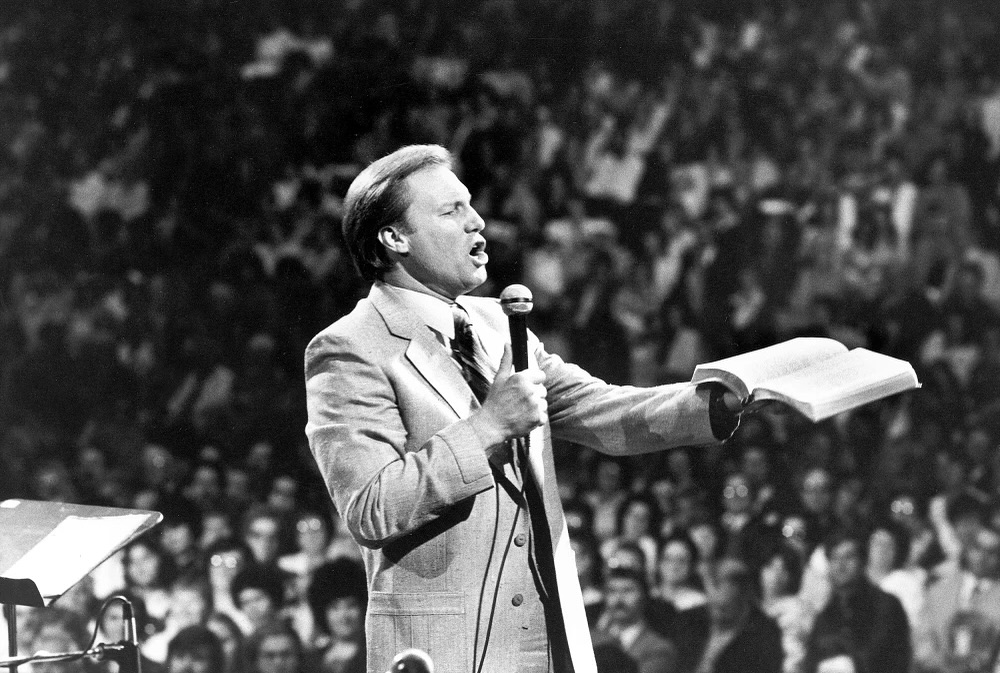
It wasn’t all self-flagellation. Much of Jimmy’s theology, as it was developing, was necessarily a third way. Between Luther’s institutionalism and Calvin’s rationalism, there were a number of beliefs emerging out of the Reformation in counterposition to the “Fathers” of the period. Some new beliefs and expressions would interlace, given enough time. Even the Catholic Church would adopt changes and new expressions of theological insights in their “counter” reformations. Luther’s critiques had substance; thoughtful clergy could not help but agree that the Church had long turned a blind eye to corruption in the pulpit and excess in the public square, for example. It was not a secret in the local parishes which priests pillaged and proved themselves predatory. There was more to be done to align the Church to the teachings of Jesus, all could agree. Many of the criticisms Luther nailed to the Wittenberg door, however, were too profitable for the Catholic Church to make significant change. This created the tension in which Calvin sought to replace the Church with one of his own.
Other movements were contrarian, rejecting Catholicism, Luther’s grievances with the Church, as well as Calvinism’s thinly veiled acquisition of power in their search for something profound and transcendent. Folk religions intermingled, even in the teachings of Martin Luther, who often interlaced his sermons and letters with sarcasm or graphic imagery that seem out of place in discussions of the divine, even in hindsight. These searches for new forms of spiritual expression, new ways to articulate the Gospel, to bring the divine close instead of allowing others to place God on a shelf, were not new; Luther had merely given permission to name the offenses of religion. He was not as forthcoming about what a new expression of faith would look like. In many ways, he did not want to change the Church at all.
In the vacuum of power, frustrated people leaned into the arts and sciences, into logic and reason, into politics and power. Others, not sure who to believe or where to turn, watched the religious uproar from a distance and adopted new spiritual practices when unable to leave the orbit of religion. It wasn’t as though they were in poor company; Luther would have remained within the Holy Roman Catholic Church had they allowed him to do so; almost 250 years later, John and Charles Wesley remained members of the Church of England despite founding an entirely different denomination. There were compelling reasons to stay, and many remained faithful to the end, even if their local religious leaders branded them a heretic.
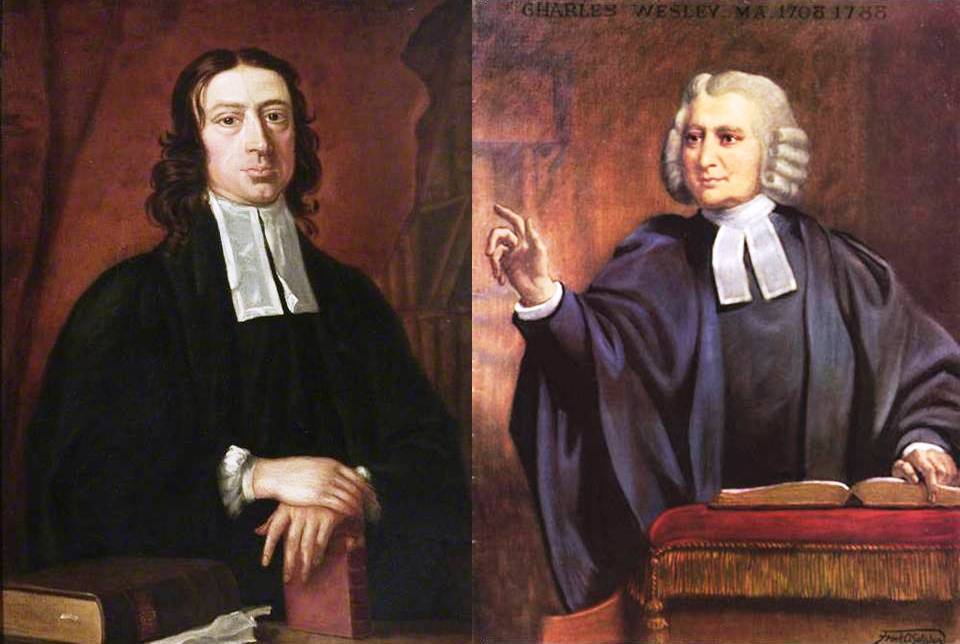
Much later, Pentecostalism would benefit from these smaller reformations and cobble some of their ideas back together – loyalty to God, unique expressions of spirituality, concepts of God that were irrational and contradictory, but insistent on human involvement. John Wesley’s teachings about salvation were Arminian. Tracing the lineage of Azusa Street’s Revival, one finds that they were heavily indebted to John Wesley and Methodism. The assembling of Pentecostals in Hot Springs, Arkansas in 1914, in what would become the founding of the Assemblies of God, even more so. So much would change in the next half century. Oral Roberts, when he began his ministry, was ordained in the Pentecostal Holiness Church. In 1968, he sought ordination with the United Methodist Church, which welcomed him “home”. Even the fringes of Pentecostal Holiness were, like so many branches of the Pentecostal experience, intermingled with Wesleyan thought and theology.
Wesley seemed especially aware that John Calvin’s efforts to systematize and nail down every inconsistency in the Bible only served to once more crucify Jesus to tradition and rigid theological claims. Theology, it turns out, rarely has immediate epiphanies or oracles. In the ancient world, when every great insight could still claim newness as a revelation, this may have been so, but since the Reformation, theology has had to pick up the scraps of the Ancients and Earlys, passing off the dust and decrepit as something new.
Swaggart’s ministry was necessarily Wesleyan-Arminian, making God’s universal call or invitation to salvation based on individual (human) choice instead of the (divine) predeterminism of eternal election. This is a big, theological way of saying that God wants to save the world… if it chooses to be saved. God saves people who want to be saved, who choose to reorient their lives, who feel the need for salvation and consistently act on that impulse. Salvation is not a singular choice, but a lifelong commitment. Sure, God might use people who don’t want salvation – for example, wicked rulers and people in power who don’t know what they’re doing – but God doesn’t save them. Not in the traditional sense. They’re wicked, after all. Instead of saving such broken tools and warped utensils, God lets them construct their cell in Hell, decision by decision, choice by choice, their conscience searing and callousing until sin becomes habitual. Ultimately, the lifelong sins of an unrepentant individual come to define them in this life and the next. But God invites the individual to participate in their own betterment, in the same way that God so long ago invited the first humans to co-create alongside God. Free will, the defining quality of humans, necessitates that humans set their own course; God chooses not to intervene. After all, what was the Fall in the Garden of Eden all about? Adam and Eve ate from the knowledge of good and evil… and still chose evil. Salvation (the good part of the tree) and damnation (the evil side of the tree) have always been part of the created order, growing right there alongside humanity and waiting for us to make a decision.
Once freewill was given to humans, God refused to revoke it. God refused to pluck up the Tree of Knowledge of Good and Evil. Freewill, once given, was not about whether or not the first humans would eat. They would. It seems a foregone conclusion with the perspective of hindsight. God knew all along that humans would have to make a choice and, once decided, what the humans would choose again and again with each subsequent generation, once they had knowledge of good and evil; they would, time and again, choose evil. Not always. But enough to define their character. Humans, then, were not born into sin, but we sure as hell act like it.
Looking at the decisions of the families in Genesis, one sees how free will appears in human choice. How the individual treated their family. How killing one’s brother would always carry a mark of shame, the eagerness with which brother sold brother into slavery and called this peace. If you sold your brother into slavery instead of just killing him, this also brought shame. There were no better decisions, just a slide toward new forms of evil and irresponsibility. By the time the people of God arrive in their Promised Land, genocide is considered good, so long as it is justified. Pillaging and destruction of the land is good, so long as resources can be harvested. Raping is permissible, so long as the rapist is willing to marry their victim. Husbands almost give their wives away to sexual slavery, so long as he can travel safely – but only almost. When people catch on to what the husband is doing, they’re shocked at his perversion. Fathers almost murder their child in the name of God – but only almost. God steps in, shocked that even the good people would do something so deranged. And in the name of God, at that, as though wickedness and perversion are acceptable if God says so. It is, especially by contemporary standards, an unsettling ethos and testament to the evils that humans, even the so-called people of God, are willing to justify, legislate, and normalize. The ancient Israelites, Kenneth Wilson writes in Methodist Theology (2011),
They were sufficiently self-aware, too, to recognize that they had not earned God’s blessing because they were morally superior to other people: on the contrary, they knew they were not; they were frequently dispirited and disobedient. But implicit in this assumption is an intuitive insight, perhaps unique among the peoples surrounding them, that Yahweh’s inner nature was characterized by moral qualities and that he demanded the same capacity for sound judgment of those who were in relationship with him.
What humans did with their shame, what we do with it today, remains a matter of choice. Everyone, every human, will inevitably make mistakes. Some mistakes are small and reversible, perhaps even excusable once we explain ourselves and our intentions. Other mistakes are the kind that have disastrous impact, ruining the lives of those who commit them. Ruining the lives of those around them. Some mistakes, when we sticker them with godly language, spiral into the blasphemous. Sometimes people, even good people, religious people, make these kinds of mistakes and all we can do is – like the foreigners of old – send such people away, shocked by their propensity toward sin while wondering, really and truly, if we are better then them or if a similar propensity lurks somewhere inside ourselves. The only difference is that we make a choice to do something similar.
Many scholars point out that Arminianism is derivative, a softened form of Calvinism predicated upon its assumptions. Arminianism has, historically, been unable to make major claims since response to its theological predecessor. This makes sense, since the theological position was made by a Dutch Reformed minister heavily influenced by Calvin’s teachings.

Jacobus Arminius studied under prominent Calvinist theologians at the University in Leiden before accepting a pastorate in Amsterdam. In 1591, he began teaching through the epistle of the Romans and taught that humans, through grace and rebirth, did not have to live in bondage to sin. He pointed out that the Apostle Paul, in Romans 7:14, spoke of a man living “under the law” and “convicted of sin by the Holy Spirit” who was not yet presently regenerated. Many scholars believe Paul was speaking of himself in the passage. Arminius’s sermons were met with resistance, and some detractors labeled him Pelagian for teaching the heresy that an unregenerate man could feel such conviction and desire for salvation, even with the influence of the Law and the Holy Spirit.
In the same year, responding to Arminius’ theological positions, his colleague Petrus Plancius began to dispute him openly. During a gathering of ministers, Arminius insisted he was not teaching anything in contradiction to the Heidelberg Confession and other standards of orthodoxy. He defended himself by pointing out that early church theologians held similar views to the ones he had been sharing with his congregation and the people of Amsterdam, even going so far to say that he repudiated the heresy of Pelagianism. Further, Arminius expressed some astonishment that he was not to be allowed to interpret this passage according to the dictates of his own conscience, as the Martin Luther had insisted on during his own lifetime, to say nothing of Arminius’ reputation for teaching and preaching only that which was within the pattern of historic orthodoxy. The local burgomaster, or mayor, had to intervene in an effort to keep the peace and tamp down divisions in the populace, urging them to peacefully coexist and for Arminius to teach nothing out of accord with the Reformed thought agreed upon at the time unless he had consulted with the church council or other bodies. It was too late, though. Arminius’s teachings, Arminianism, were branded as heretical by Calvinists for teaching that which was denounced by the Early Church and fellow Reformers. During the following years, controversy emerged as he preached through Romans 9. Although he did not directly contradict Calvinist interpretations, he focused on Paul’s theme of “justification by faith” in contradiction to works, rather than focusing on God’s eternal decrees. During this time he gradually developed opinions on grace, predestination and free will that were inconsistent with the doctrine of the Reformed teachers Calvin and Beza.
Dwelling on the dichotomy of Calvinist and Arminian theology misses a great deal of the reactionary fire out of which Arminianism originated. Arminianism has always been reactionary and continues to take deep offense at the arrogant certainty of Calvinism. In this way, Arminianism remains derivative, unable to escape the appeal of Calvinism’s certainty. It is rarely seminal in nature, on its heels, in the defensive position, losing fire as well as steam to the barrage of Calvinism’s certainty and systematic approach.
Arminianism does, however, offer an empowerment of the believer in deep juxtaposition to Calvinism’s focus on reason to the neglect of the individual. Or, it should be noted, at least the self-assured appearance of reason. Predestination, election, the entire theological effort to justify an emotionally stunted God who condemns humans before He (always He) creates them? Who demands the created order obey and abide by the boundaries of the human experience? Who defines humanity with no effort to understand it? All of this sounds reasonable if one accepts the original premise of a God who hates rather than one who loves. Of a God who judges not because judgment is warranted, but simply because they can. This is all very reasonable.
In establishing boundaries, categories, and systems, Calvinism mimics God, who long ago set the boundaries of the oceans, defined humans by their gender, their purpose, and their function in a larger spinning gyre that humans (so insignificant, really) will never be able to understand. Humans, as Calvinism teaches, were never made to understand God. That was the mistake in Eden, trying to. The believer, whether saved or damned (only God knows), is best served to remain in their caste and class and station. To keep their eyes lowered in the face of such magnificent holiness. To, as it were, bury their talents and set aside whatever pearls of great price they might find because these would be wasted anyway. God is an angry, vengeful God who has no time for mere mortals. Their fate, their place in the larger cosmological imagination, is hardly worth remarking on any further.
Calvinists show a diabolically consistent bend toward destruction of the created order, one which runs counternarrative to scripture, experience, and reason itself. While speaking and writing about hope and glory and weighty matters, they are notably pessimistic. God, it turns out, is a prisoner to a system where the favored, the Elect, can get away with anything. God is silent both because God has already decided the mundane matters of the human experience but also because there is nothing left to be said. God has moved on. The Elect, for their part, celebrate in destruction both because nothing matters – fates and destinies long ago decided – while also because, counterlogically, destruction is God’s judgement on an already damned planet and the Elect are chosen to oversee this destruction.
Arminianism is reactive, but rightly so. It reacts with outrage and horror to the unconscionable committed in God’s Name. It reminds the believer that reason, accountability, personal responsibility, one’s own experience, all point to a loving God emotionally invested in the lives of each human and who is still actively creating this world together with the next. Such a God is not silent, but respectful of the decisions made by each individual who is empowered to make those decisions, whatever their outcome. This God, the Arminian one, does not place limits, reasonable or otherwise, on Their love and does not presume to know who is “in” or “out” not because They do not know such things, but because it has not yet been decided.

Today, Methodist theology and practice may be the best example of Arminianism; while Methodists have contributed a great deal to theological discussion, much of their foundational claims are reactive to the cold indifference of Calvinism and even, to a lesser extent, the unfocused approach of Lutheranism. Arminianism is not an amalgamation of Luther and Calvin’s teachings, nor a selection of Greatest Theological Hits for a customized salvation experience. Rather, Arminianism emphasizes the free will of humans who respond to the callings, plural, of God throughout their lives. It celebrates a God who is active in the decision-making process and who assures the believer that when they make mistakes – which they will – this God will help them set things right, if not intervene to set them right in some mysterious, miraculous way. There is tremendous personal responsibility because of this. The presumption and assumption that an individual will respond soberly to – without necessarily assuming one will accept – God’s invitation is no small thing.
Unlike Calvinism though, where the focus remains on the individual, whether they be one of the ruling class of the Elect or the peasant class of the Damned, Arminianism speaks of a shared community. One does not accept God’s invitation to Heaven so much as they join a community of those seeking salvation in this life and the next. One does not orchestrate the current conditions of economics and politics to their own favor so much as participate in the bend toward justice and peace in this life and the next.
In the 20th Century, particularly with the theology of Thomas Oden in mind, Methodists were continually reminded that salvation was not an individual experience. As Oden frames it, Arminianism invests each individual – those who join the community of God as well as those who refuse to join – with the responsibility of choice. It does not centralize the salvation experience to each individual. Such arrogance was unknown to the Early Church, as Oden insists in pretty much every volume of every work he has ever authored. This emphasis of the individual is a product of Karl Barth and not Jesus Christ, the apostle Paul, or any subsequent “father” or “mother” in the history of the Church. Calvinists, he insinuates, have done everything in their power to rewrite history, theology, law, and the human experience for so long that they no longer recognize the testimony of humans – believers and those of other worldviews, religions, and orientations – even when their words are sometimes written in literal stone. Instead, right emphasis of Arminianism should be placed on the role of community and joining said community, the shared experience of salvation rather than whatever comes of individualism.
Swaggart, a product of an earlier time and expressly rejecting any form of higher thinking, reflection, or institutional witness, outright rejected any of this. To him, as a product of anti-intellectualism (and, being generous, at the periphery post-Barthian theology), God’s activity was always specialized to an individual. Swaggart, after all, was self-taught in those areas he claimed to be an expert on. If you didn’t believe it, he’d tell you as much.
His education coming from books and personal experience, Swaggart was raised on the Great Men Theory of history. The Bible, especially in the Twentieth Century, was retroactively read in the same way. Rather than a collection of stories across time which celebrate God’s presence and lament God’s absence, rather than a collection of ethics and hopes for the future, the Bible became a catalog of the Great Men – of Abraham and Jacob, Moses and Joshua, Samuel and David, Solomon, Elijah and Elisha, and one supposes the litany of forgettable prophets whose “prophecies” are focused on themselves. The prophet Jonah, for instance, is angry that God does not curse the people he hates. The story reads a personal life lesson. Hosea’s wife leaves him several times for other lovers, and Hosea makes her infidelity more meaningful than it probably was. Hosea, predictably, is the victim of the story who had done no wrong at all. Jesus’s temptations, when they come, are private. Paul’s letters are about Paul’s theology rather than the events happening within the churches of the Mediterranean. And, concluding the Bible, John’s Revelation was something God chose to say to John about the churches rather than to the churches themselves. Reading the Bible, one is looking for important figures and “types” rather than the individual’s significance to the community. One is reading to emulate, not for context.
In Pentecostalism, attention is given to the individual “giftings” of the Spirit within Pentecostalism and salvation is entirely individualized. Outside of Swaggart’s orbit, Barth’s theology of the individual experience made its way to America and built upon already-present cultural narratives of rugged individualism like the kind embodied by President Theodore Roosevelt. Pentecostal theology emphasizes, again and again, the individual. As Scot McKnight writes in Five Views on the Gospel (2025), individualism and private spirituality are outcomes of the ‘soterian’ gospel.
Though similar gospel presentations preceded him, it was [Billy] Graham who perfected what many today would call the gospel of personal salvation: God loves you and has a wonderful plan for your life; though created in God’s image, you were actually born in Adam’s sin and stand eternally guilty before God, which means eternal punishment in hell after death; but God loves you and sent His Son, Jesus Christ, to die for you on the cross where he absorbed the punishment for sin on your behalf; if you turn to Jesus and trust him for your salvation you will be delivered from eternal punishment and experience eternity in heavem, in the presence of God and the saints. I have in another context called this the “soterian” gospel, the gospel of salvation (soteria is the Greek word for “salvation”). This understanding of the gospel is framed by an individual’s need for salvation and how personal redemption can be found through faith in Christ. This gospel for Billy Graham, and now his son Franklin, is the beginning and end of all discussions. It is their ultimate message with an eternal claim on the entire world.”

As McKnight elaborates, how one frames a problem will shape how one envisions a solution, so the problem of individual sin will result in a theology of individual salvation. Personal sins can only be reversed by a personal transformation, or choice, which originates with the individual making a conscious choice. Or, as Billy Graham and his fellow Evangelicals might describe it, a “decision” to be saved. Much later, Neo-Calvinists would adopt similar language to make their immediately objectionable and anti-biblical theology more palatable, but poison remains poison even when wrapped in one’s preferred cuisine.
Like the revivalists who preceded him, Swaggart clearly believed that salvation demanded the individual confess their sins publicly. At that point, an individual no longer belonged to their society. They were no longer responsible to, for, or with one another. Anyone who expected Christians to be responsible for other Christians, or especially their non-believing neighbors, was speaking a false gospel.
Empathy, kindness, decency, concern for others, all of this came to be known as the Social Gospel popularized by Walter Rauschenbusch in New York, Chicago, and Boston. Or the Liberation Theology of South America. Or the Communism of Russia and China. It really didn’t matter what empathy was called, it was abhorrent to Jimmy Swaggart. Raised in hardship, well acquainted with poverty, hardened into anger by a demanding father, Jimmy knew no one – not God, and certainly not fellow Christians – would help, nor should they. Responsibility, unfortunately, fell to the individual to pull themselves out of their own economic, emotional, and spiritual struggles. The Gospels of the Bible, as Swaggart and his fellow popular theologians read it, was entirely individualistic. No one was responsible for anyone else.
When Swaggart confessed his sins in February 1988 before the world, they were vague and undefined. He had sinned against God and only God; what was exchanged between the two of them was not for public scrutiny and not up for discussion with the “brothers” of his denomination, the Assemblies of God. Certainly not the world. He balked at the call by denominational leaders for accountability and contrition. He dismissed the media, like Ted Koppel of Nightline, who wanted to know if Swaggart had learned anything about the human condition now that he was exposed as a sinner. Their inquiries were met first with silence, then stonewalling, before characteristically exploding into invectives. When Swaggart was caught once again with a prostitute in 1991, he told the congregation of Family Worship Center that it “is flat none of your business.” He had confessed his sins to God and bore no responsibility to anyone else. Not to those above him, those charged with his spiritual care. Not to those under his spiritual care. No one.
This too was a choice.
 Theology & the City
One thought on “Biography: Jimmy Swaggart, Chapter 12(B)”