
Why hadn’t Jimmy recorded an album already? That was what Frances wanted to know. He sang. He played the accordion and the piano. Just about anything that could be played, Jimmy could figure out. He had a great singing voice, or at least enough confidence to carry a tune, and was naturally a baritone who could move from tenor to bass like his mother. Jerry Lee, for whom “hard living” (drinking, smoking, and constant yelling) would take a toll, was similarly gifted. That range, from A2 to E4, Jimmy could hit without any effort. It was his natural chest voice. Once he warmed up, he could go from G2 to G4. God may have called Jimmy to preach, Frances reasoned, but it was a waste of God-given talent not to sing and make music. After all, look at what Jerry Lee could do. So what was stopping her husband?
This was a sore spot for Jimmy, who had been compared to his cousin throughout his life. It cut both men. Jerry Lee’s success was muted by Jimmy Lee’s piety, Jimmy’s piety by Jerry Lee’s success. It was also a constant source of frustration for Frances and continually touched a nerve, loving and encouraging as she may have been. Unlike everyone else, Frances knew how to handle her husband. She wasn’t intimidated by him and she could get loud too. Her dull nasal demands could drill into her husband and son, down to the core of who they were, and anchor there. Luckily for Jimmy, Frances was exceptionally loyal. Above everything else, everyone else, she actually loved the man and if there was ever a point where she questioned this in the privacy of her own thoughts, she reminded herself that God had, after all, told her to marry him. Her love and loyalty gave her purpose. Unlike Jimmy, she wasn’t prone to depression and self-doubt. She was unwavering. And so her commands, when they came, were as resolute as the voice of God. When she had a mind to do something, it got done.
When Uncle Elmo, Jerry Lee’s father, stepped in and told Jimmy that he had talked to Sun Records producer Sam Phillips about him, Jimmy felt a shiver of fear. More than anything, Jimmy lived in a constant state of fear that crippled his ability to make decisions that would, quite obviously benefit him. Anxiety was something that the entire family recognized had prevented Jimmy from becoming the man of God they all knew him to be. Decades later, Donnie would confess that he also suffered from anxiety. In turn, Donnie’s sons Gabriel and Matthew, would also admit they knew the chilling effects of poor mental health. If Jimmy had a major flaw in Frances’ eyes, it was his reluctance to do things. It was not because he was lazy; it was because he questioned himself too much. He wanted repeated, constant, unwavering assurance every step of the way. From God. From Frances. From his parents. From the people of North Louisiana. Even in his fantasies of fame and fortune, Jimmy had an ungodly fear deep down inside himself that only Frances could mine, extract, and ultimately replace. He was afraid of sliding into the same unstable, dulled life that Jerry Lee was living and, despite the promise that Uncle Elmo relayed to him from no less than Sam Philips, Jimmy refused the connections his cousin offered to him.
Frances stepped in and took charge. Jimmy had grown up with strong women and they had always been the chorus to his drama. Frances surely saw something Jimmy could not. Either she saw his talent and potential, or she saw continued poverty, but things could not be allowed to continue on this way with Jimmy’s struggles shutting them both off from a better life. He needed to do what she said and how she said it, and that was the end of the matter.

Jimmy did what Frances told him after that. By his account in To Cross a River (1977) and Amazing Grace (2018) as well as the infamous biography of him by Ann Rowe Seaman, Swaggart: The Unauthorized Biography of an American Evangelist (1998), there is a lull of silence after Jimmy’s refusal of Sun Records. “God” told him that Sun Records was not the right choice but undoubtedly yes and amen, Jimmy needed to press vinyl, he must do it to become who he was meant to be.
So he did.
Quietly, Jimmy began to compile songs, organizing them, and using the churches he and Frances visited to test out flourishes. Frances quietly followed along from the pew, making notes and watching how people reacted. She took control, breaking the overwhelming fear into manageable decisions. They were not pioneering anything new here; Frances had heard of Black ministers doing this very thing in Chicago, Atlanta, New York, Dallas, and Houston. Their wives set up tables in church foyers and banquet halls, sold records out of the trunks of their cars, took money and mailed more records to parishioners. They gave away their best albums for “free”, ostensibly because “God had a word for” the churches they visited. It didn’t hurt to include a personal letter encouraging the listener to give the album away once they were done. To continue the marketing campaign. To keep the minister’s name recognizable. If churchgoers obeyed God, a minister’s name would continue to be recognizable well after they drove away. As Frances saw it, if other ministers could do it, why not Jimmy? Wasn’t he an evangelist, called to speak on God’s behalf? Wasn’t he called to minister and serve God too?
Frances began making calls, finding out what she didn’t know. She booked time in small studios and had Jimmy record at radio stations when the studio did not meet her or Jimmy’s standards. She had the records pressed. All Jimmy had to do was pick up the boxes she pointed to, put the boxes into the trunk. To drive to their next stop. Now pick them up and bring them into the church. “Put them down beside the table, here, right here.” She would sell them. “Good.”
Next month, there would be another recording session. She would make breakfast, make sure Jimmy was ready to go for another day of recording. Again, she would have the records pressed. Repeat the same process. He would come up with a new sermon and a month later, he would record a new album and the new sermon he had perfected with her notes. She would sell entire services, spiritual experiences, on those records, just like Black ministers. She would promote them, just like their wives. “Oh, my husband just preached about that! Here, I have a record for you!” A full church service of good Gospel music, a sermon, and a call to salvation were affordable thanks to these modern circuit riders. There was no markup, no middle management; it was a straight process, broken down every step of the way.

Sure, Frances billed the product as bringing God into people’s homes, offering a convenient spiritual experience, but the truth was, she was also bringing Jimmy into these people’s homes. She was building a fanbase. Jimmy had a mind for spiritual things, but she had the mind for business. For marketing. For management. For pinching a dollar to make it go further. If the sweetness of her Southern heritage couldn’t win them over, she discovered her intense and sharp voice could. Big men, burly men, angry men just like Jimmy would bend to her demand when she drilled into them just like she did with her husband. On top of that, she would tell these nameless producers, people needed these records. People needed God. Didn’t they understand that? People needed to hear Jimmy’s singing, hear his sermons, hear his name. Arguing wouldn’t work with her, didn’t they understand that? They weren’t arguing with her. They were arguing with God. Did they want to go against God? People needed to share those records with their friends and neighbors. People needed to spread the Gospel. They needed to obey God. They needed to spread the name of Jimmy Swaggart. Didn’t they understand that?
Jimmy trusted God. Now, he needed to trust Frances. It was obvious to Frances that Jimmy had a mind for another world and no practical sense for this one. According to his autobiography To Cross a River, Jimmy, Frances, and Donnie lived in poverty. His pride in being called by God as a boy prevented him from committing to profitable labor in farming, oil, construction, and roadwork as each of these sectors of Louisiana’s economy began to expand into the North and make connections with nearby states like Arkansas, Mississippi, and Texas. He treated his grandfather’s grocery store like a weekend job, showing no enthusiasm for taking over the store one day. Jimmy had grown up in the shadow of his father, who had come to believe that anything other than ministry was menial work.
Yet as he preached throughout rural Louisiana, Jimmy and his small family struggled to survive on an income of $30 a week (equivalent to $330 in 2025). They were too poor to own a home and could barely afford their rattletrap car before Myra stepped in and told Jerry Lee to buy Jimmy a new Oldmobile. The Swaggarts lived in church basements, the guest rooms of pastors, and small motels when they could afford it. Donnie would later recall that his parents ostensibly splurged to get him his own hotel room when they went to state and national conferences and conventions, but it is more likely that they wanted privacy as much as the appearance of being among the middle class.
Jimmy had no instinct for business. No common sense. Sun Records producer Sam Phillips wanted to start a gospel line of music for the label to remain in competition with RCA Victor and Columbia; both had gospel lines at the time and there was money to be made. Jerry Lee’s stories about Jimmy raised Phillips’ curiosity and when Lewis played a sampling of Jimmy’s music, the producer was sold. Phillips wanted Swaggart to become the first gospel artist for Sun Records; Jerry Lee and his father assured Jimmy it was a done deal. Jerry Lee, Elvis, and Johnny Cash were on the label, which practically assured Jimmy’s success. At the time, Jerry Lee was earning $20,000 a week and was booked in concert halls and stadiums into the following year, so he wouldn’t be over Jimmy’s shoulder or lingering around for anyone to compare and contrast them. C’mon now. It was a sure thing, and Jimmy would undoubtedly be asked to play in churches across the nation if not the world, if the success of Sun Records was any indication. Why, he’d be just as famous as Oral Roberts or Billy Graham for sure. Who knew what God would do? Think of it – Jimmy would play auditoriums and maybe preach a little bit. He would be famous, except he would save people’s souls and spread the Gospel.
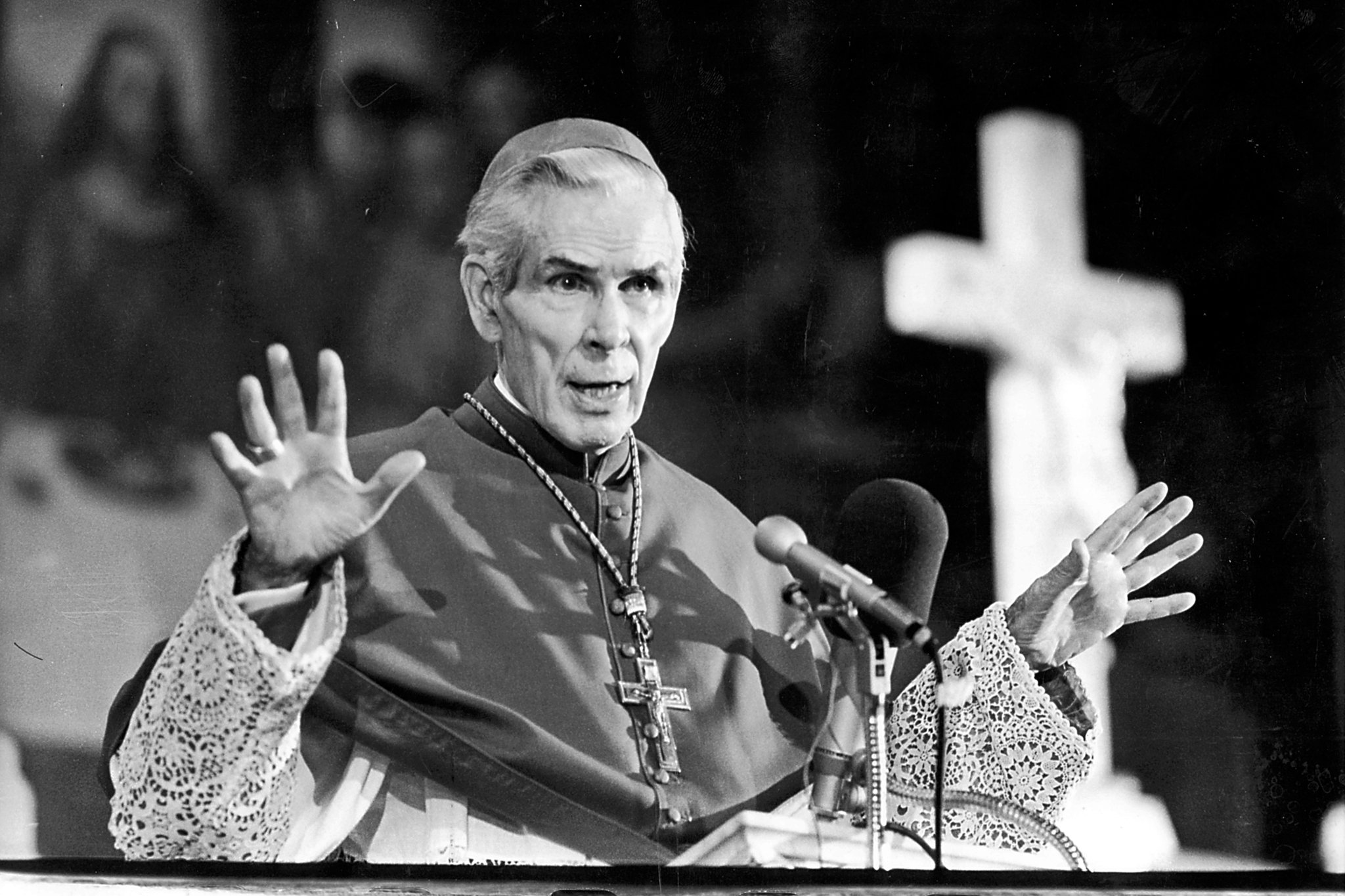
Although the offer meant a promise of significant income for him and his family, Swaggart turned Phillips down. He was called to preach the gospel, he said, and that didn’t mean being shy about it. Preaching wasn’t a side act, complementing music. Preaching, saving souls, sharing the Spirit of God, changing lives needed to be the main attraction. Slick marketing, lowered standards, cheap grace, all of this disgusted Jimmy. The success of other ministers like Father Fulton Sheen with his Papist ghoulishness or Billy Graham, who by then had a traveling carnival show of music and political gladhanding and introductions of this Senator or that one like they were actually friends, actually Christian, actually respected the Word of God and its teachings, followed by a sermon so watered down that one could hardly think lives were changed culminating in a limp, ask-nothing altar call with no follow-through to explain what salvation meant? This was a corruption of God’s call. America was in a pitiful state with these two clowns.

What America needed, Jimmy believed, was a barnstormer like Dwight L. Moody, Billy Sunday, or Martin Luther. Someone bold and courageous, someone rigid enough to overturn the tables on moneychangers who wanted to sell God, on false prophets, on those who had made a name for themselves but had forgotten the Name of God. America needed someone like Jimmy, a friend of God who was willing to make personal sacrifices, who wasn’t afraid of hard work, and who refused fortune and fame like he did. No, sir. Jimmy wasn’t subject to poverty. He chose it. He was committed. How could no one else see this, see how holy and righteous he was? His refusal to learn the “ways of the world” was evidence that he relied on the Spirit of God, like the Early Church, even like Martin Luther whose great leap into the unknown surely required him to ignore practical knowledge. Challenging the Holy Roman Catholic Church, the same one that empowered world leaders and issued permission for them to wage wars. Luther was many things, chief among them a man of faith. Jimmy’s embracing of faith appeared like ignorance, even stupidity at times, and the criticism was not just from peripheral agents. Frances along with Jerry Lee, Sun, and Minnie Bell wanted to know, very simply, why Jimmy ran away from easy opportunities. Jimmy’s rabid rejection of Calvinism, it felt to them, blinded him. Such heedlessness clouded him, compelling him to reject reason and logic as much as a music career, easy money, to his destiny.
Frances continued to give Jimmy notes, continued to get him in the booth to record another album. She was the sensible one, committed to the long process of building her husband’s career and climb out of poverty. She continued to sell the albums, continued to push them into people’s hands, to “work the room” when old biddies said Jimmy played too loud. She pushed her husband to his limits and demanded perfection from Donnie, whose behavior reflected on her and Jimmy. She kept Jimmy’s schedule and kept him focused. Frances saw what Jimmy was unable to and as a result worked even harder because of how he moved through the world. If he could not do it naturally, she would make it a reality anyway. Without her, his opinions would amount to nothing. He was nothing when they met. He was nothing without her. She made him into something more, into the man he would become. God had given Jimmy so much potential, but Frances was the sculptor who could carve out that potential and make a masterpiece.
Their marriage reveals a fault line within Pentecostalism. As Pentecostals sought legitimacy with Evangelicalism and a broader, more lucrative share of American religion, they were willing to set aside and downplay many of their defining beliefs. For example, expressive worship, tongues, and divine healing became less prominent in Pentecostal sermons, focusing instead on happy living, loyalty to one’s nation, and a strict definition of gender roles. This was not a conflict, at least not initially. Some Pentecostals emphasized music and logical thinking that was almost theological insight, others faith and supernatural thinking that greatly diminished the efforts of thir counterparts to bring Pentecostalism into the mainstream. But these disagreements were often internal, a reflection of the familiarity Pentecostal expressions share with one another and a unifiying origin narrative.
Jimmy was a fundamentalist at heart and remained so throughout the duration of his public ministry. Frances, on the other hand, saw the changes taking place in America. As the more rational of the two, she made the compromises necessary to build her husband’s ministry. Jimmy had proven unable, incapable, unyielding, or inattentive. She did not fade into the wallpaper, nor was she at the periphery of the ministry like so many wives of pastors who had opened their dirty homes to the Swaggarts. She was shrewd and, through natural temperament or by surviving hardship, made the calculated moves necessary to see her husband’s star ascend. It was not a marriage of romance during this time. Whatever attraction existed at first obviously faded after the birth of Donnie. There was something decidedly desexualizing about sweaty, gassy car rides through the backroads of the South, sustained poverty, quiet and failed trysts on basement floors or cramped beds in parsonages, to say nothing of Jimmy’s fits of anger matched by Frances’ dominance of Jimmy’s career. When Jimmy thrived, he became boastful and sometimes forgot who was in charge. She had to remind him that while he might be the voice of God once he was on stage, it was her own voice that had brought Jimmy there. He was all emotion and no sense; she was the other side of the coin entirely, the voice of reason and rationality, the even temper and marital constant who carried Jimmy forward. She was, to put it theologically, the Calvin to his Luther. He may have started off well, he may have even heard from God, but he was too unfocused to recognize what God meant. Let him publish his short essays, even translate the Bible for the masses. Let him tear down long-held convictions and beliefs. Let him challenge the institutions and face scorn publicly. All of this was sufficient up to a point. But it was Frances who would take the undefined and unrefined parts of Jimmy and give them purpose. She would build an empire. She would rewrite the story to make Jimmy into a hero, rather than a morose folk hero. She would institute plans and procedures, policies, and handle the denominational politics.
After all, she had chosen him.
And God had told her to marry him.

In discussing her experience handling marriages, prenuptial agreements, and divorces for her clients, Kitty Calavita writes in her Invitation to Law & Society (2016) that,
The contradictions of looking for poetic love through calculated selection remind me of Max Weber’s (1954) theory that in modern capitalist societies, rationality permeates all realms of human activity, including those that were once the province of other motivations.
Rationality, Weber wrote, increasingly displaces tradition, religion, emotion, and other such forces as a primary motivator for human behavior. It’s the clash between romance and rationality that makes the prenup so stressful and that limits the romantic potential of online dating services, with their photo galleries of available mates.
For Weber, as reason and calculation increasingly motivate all human activity with the advent of modern society, law too becomes more rational. What he meant by this is that modern law is driven by logic and calculation rather than by irrational forces like oracles, tradition, or emotion. In the process of rationalization, law also becomes more functionally insulated from other institutions, such as religion or politics, and is therefore more “autonomous.”
None of this is a coincidence. Instead, for Weber (1958), rationlization emerged with Calvinism – specifically the Calvinist principle of predestination. Imagine for a moment that you are a Calvinist who believes you are predestined by God from before birth to be a chosen one or to be damned for eternity. If chosen, you will spend your life on Earth blessed and live in an afterlife at the hand of God; if not, you will have a miserable life and, worse, a miserable eternity. In Weber’s view, this late sixteenth and early seventeenth-century Calvinist idea of predestination produced an intolerable level of anxiety. In part to alleviate that anxiety, Calvinists searched for signs of being chosen. In looking for signs, they produced the very signs of the chosen life – hard work and the accumulation of wealth – they were looking for. This hard work, accumulation of wealth, and the frugal lifestyle that were taken as signs (presumably subliminally, since God kept his decisions to himself) were compatible with the emergence of capitalism, and all of the above were accompanied and facilitated by a calculating, reasoning mentality. So, there is an “elective affinity,” to use Weber’s term, between Calvinism, capitalism, and rationality.
There is a direct and unbreakable connection between the predestination of Calvinist thinking and America’s religious experience. One does not even have to be especially religious to feel a looming dread of facing ruin and damnation in America. Calvinism was baked into the culture, government, economic policies, division of labor, food and folkways, architecture, communication, literature, and social structure of America. It is laced through the signage of National Parks and Historical sites, decorating museums of early America if only one knows what to look for. In the first two hundred years of exploration, many of the first settlements were organized around religious organizations. In New England, Calvinism was by far the most identifiable and had the strongest claim to American identity.
- Quakers, seeking to escape persecution in Europe (often from Calvinists), found a new kind of persecution in America whenever they lived among Puritans, the inheritors of Calvinism on the new continent.
- Men who did not have “abundance” on their farms were suspected of idleness, a sin, or may have been under a curse from God for private sins.
- Puritans, with deep superstition and a pressing belief that every malady and disagreement had its source in spiritual darkness, persecuted women and demanded constant productivity from men simply trying to survive. If women were unable to produce children, Puritans claimed she was not “fulfilling” her marital “duties” or “obligations” and, unproductive, would not find salvation. If a woman had children but was unmarried, the “labor” of her survival and that of her child was for naught. After all, without a husband to oversee the fruit of her labor, and complete her, she was either a whore or a witch, both subject to court fines and ultimately death for their “public indencency” of existence.
- Early records of the settlements like John Smith’s “General History of Virginia, New England, and the Summer Isles” (1624), Thomas Morton’s “New English Canaan” (1637), and William Bradford’s “Of Plymouth Plantation” (1651) each depict settlers placed under a divine whip of governors profiting from their labor. Settlers were denied a heavenly reward because they sinned grievously in expressing frustration with an unjust ruler, doubted that a God of mercy supported theft and murder of the Native People, or turned away from their assigned labor in hopelessness.
- As one colony settled and others began to appear, the migration of Europeans across the American continent and their slaughter, displacement, and destruction of the First Peoples was forgiven as part of the Calvinistic teaching of Manifest Destiny, whereby the faithful were destined to take the New World from savages, exploit their resources, murder their warriors, sexually enslave their women, and generously displace those who obeyed.
- Bombarded by relentless sermons denouncing the sinfulness of genocide, Christians turned their wickedness toward legitimizing and enforcing “domestic” and “indentured servitude”, legalizing a new and perfectly legal form of oppression, slavery. Legalizing slavery was even a form of economic expansion, assuring pirates and trading companies that there would be a reciprocal market in the New World built upon the bodies of the enslaved. Good business and focused devotion to building God’s Kingdom was, after all, a form of godliness.
- The enslaved were taught that their salvation would come about not through conditions of the heart, not through prayers or church attendance, but instead through hard work and obedience. Enslavers (sellers) and those who enslaved (buyers) insisted upon their charges scripture out of context. “Slaves, obey your earthly masters with respect and fear, and with sincerity of heart, just as you would obey Christ,” reads Ephesians 6:5 and Colossians 3:22-25 expands upon it, “Slaves, obey your earthly masters in everything; and do it, not only when their eye is on you and to curry their favor, but with sincerity of heart and reverence for the Lord. Whatever you do, work at it with all your heart, as working for the Lord, not for human masters, since you know that you will receive an inheritance from the Lord as a reward. It is the Lord Christ you are serving.” The wise and industrious enslaver had a profit motive to perpetuate such teachings inside the Church, expanding these verses with gentleness and determination to include “workers” instead of “slaves”, creating an entirely new line of psychological and spiritual oppression under the auspice of Biblical obedience.
- Slavery was protected in the South because of Calvinism. Primarily Catholic, at least initially, as the South was explored by Spain and France, Southerners were well acquainted with a looming sense of dread experienced by the poor, people of color, women, immigrants, and the deeply religious who do not subscribe to the teachings of the elect (Calvinists) are, as they have been for centuries, deemed “the damned.” Damnation takes many forms in Calvinist thought, especially poverty – poverty of mind, heart, will, spirit, and yes, finances.
Calavita cuts to the heart of the matter when she writes that there is an “elective affinity,” to use Weber’s term, between Calvinism, capitalism, and rationality. Increasingly in the latter half of the 20th Century, the primary evidence of “God’s blessing” and “God’s favor” was personal wealth. Success in any area, particularly through the “security” of wealth, the amassing of private fortune, or financial privilege, was synonymous with American narratives of manifest destiny, itself a Calvinist teaching regarding one’s salvation which was transformed and repurposes to instead describe the estate one was born into. God chose some people to be born into slavery. Conveniently, they were people of color and conveniently they could be found for purchase at the local dock. Slavery has taken many forms, but has always been conveniently available to Americans. God also chose some people to be born outside of slavery, typically Whites but most certainly Whites who had some measure of freedom evidenced by their skin color and, hopefully at least, a small amount of possessions – land, dishes, clothing – as evidence of their divine providence. The wealthiest and most privileged were, by definition in this new exegesis, closest to God, who would not entrust them with wealth and privilege had they not already been destined for it.
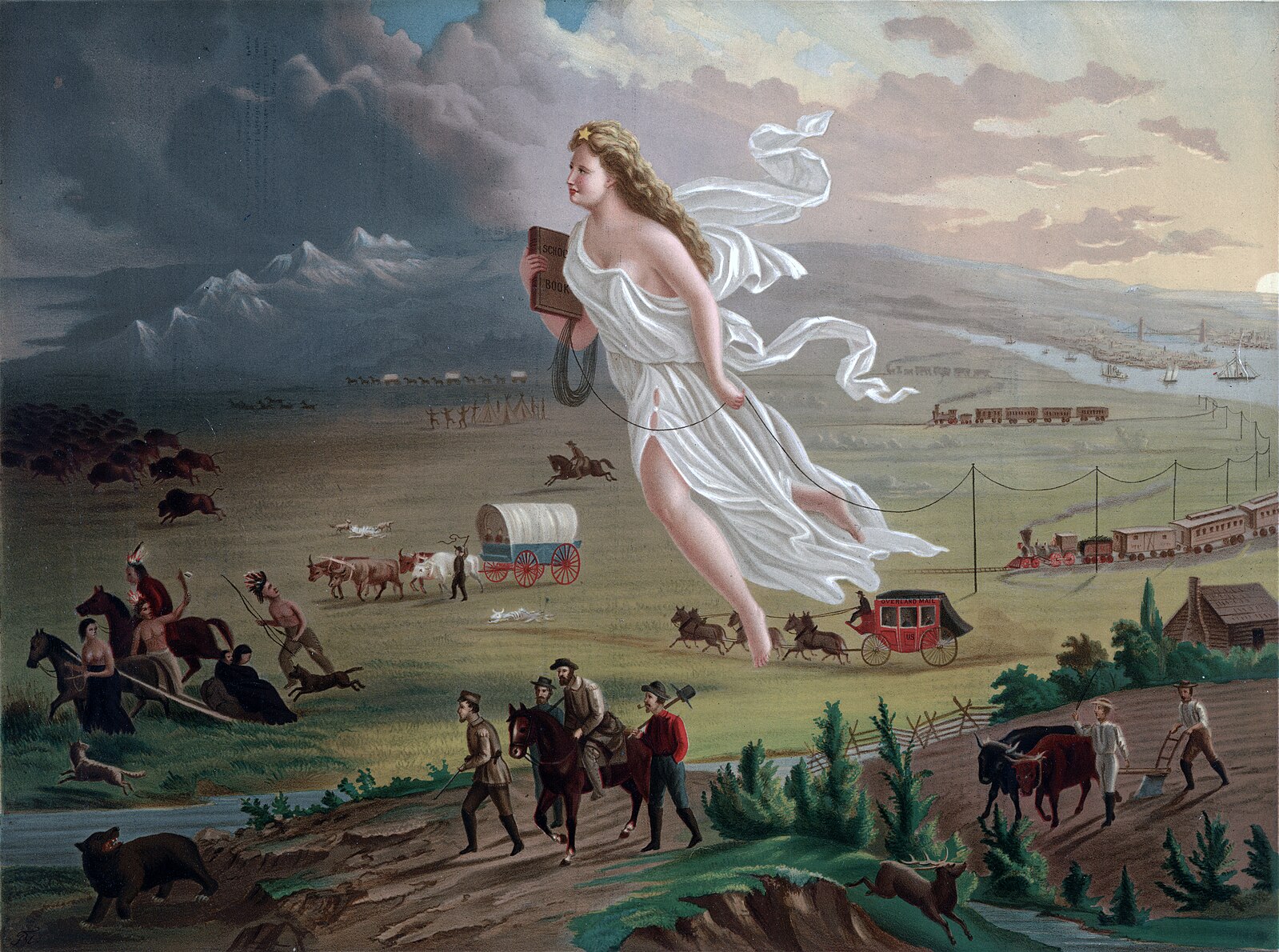
This was what was always intended. The universe gifted the fortunate. An individual was meant to be wealthy, it was their destiny and the collision of circumstance through which the stars aligned, providence was revealed, and an individual succeeded. Those who were poor, whether through birth or circumstance, were damned. Gone were sermons about the eternal state of the soul in Heaven or Hell.
Capitalism, in many ways, is an outgrowth of Calvinism. It is a symbiotic religion unto itself, in the same way that Evangelicalism is. Either are defended by adherents who claim no, what one believes has no bearing on their approach to money and power, but unfortunately, that is not true. At best, Evangelicalism and capitalism are bastards, religions without fathers who seek paternity from those they wish to legitimize them. Yet Calvinism, like Evangelicalism, is denounced by Jesus, Paul, Peter, John, and James, together with the witness of the Church so insistently, so definitively, that they are incompatible. They neither resemble Christianity nor bear any identifiable birthmark of it. They are, remarkably, bastard religions. Their antecedents – predestination in the case of Calvin’s teachings about weaponized power and forced religiosity and Evangelicalism’s defining quality of greed and moral compromise, if not relativism – stand apart. Swaggart, perhaps unable to articulate this, still knew it to be true.
Capitalism is not just an economic theory, it is a religion. As economic historian Richard Henry Tawney writes in Religion and the Rise of Capitalism (1926),
The most characteristic and influential form of Protestantism in the two centuries following the Reformation is that which descends, by one path or another, from the teaching of [John] Calvin. Unlike the Lutheranism from which is sprang, Calvinism, assuming different shapes in different countries, became an international movement which brought not peace but a sword, the path of which was strewn with revolutions. Where Lutheranism had been socially conservative, deferential to established political authorities, the exponent of a personal, almost quietistic, piety, Calvinism was an active and radical force. It was a creed which sought not merely to purify the individual, but to reconstruct Church and State, and to renew society by penetrating every department of life, public as well as private, with the influence of religion.
Tawney’s thoughts may have been written over a hundred years ago, but contemporary economic theorists echo him as much as sociologist Max Weber in The Protestant Ethic and the Spirit of Capitalism (1905), theologian Walter Rauschenbusch in Christianity and the Social Crisis in the 21st Century (1907), philosopher and cultural critic Benjamin J. Friedman’s similarly titled Religion and the Rise of Capitalism (1921), and editor of Current Affairs magazine Nathan J. Robinson’s comedic but pointed Why You Should Be a Socialist (2021). In particular, Rauschenbusch’s work influenced, among others, Martin Luther King Jr., Desmond Tutu, Lucy Randolph Mason, Reinhold Niebuhr, Norman Thomas, George McGovern, James McClendon, and his grandson, Richard Rorty. Well into the 21st Century, Rauschenbusch’s name is used by social-justice ministries in tribute to his life and work, including such groups as the Rauschenbusch Metro Ministries in New York and the Rauschenbusch Center for Spirit and Action in Seattle. The North American Baptist Conference Archives in Sioux Falls, South Dakota, and the American Baptist Historical Society in Atlanta, Georgia, both maintain extensive Rauschenbusch collections.
In time, as these men were already pointing out a hundred years ago, capitalism became a religion unto itself. The tentacles of this new beast remain securely fixed within Christianity through churches and denominations that were derivatives of Calvinistic thought, to a lesser extent the Church of England/Anglicanism and to a greater and more explicit extent those Reformed (“and Reforming”) churches. This is especially true of American Christianity, whose founders and framers baked Reformed thinking into their buildings, laws, monuments, and founding documents. Their efforts were quite literally etched into stone. In other accounts of this nation’s origins, William Penn would found the state of Pennsylvania to escape persecution from Reformers for the egregious sin of not wanting to see the continued genocide of the First People and for his own religious practice of tolerance and peace, Quakerism.
Capitalism as it is practiced now, meaning the belief system and not just the markets, has morality, sin, punishment, and salvation. Money becomes a god, and retirement becomes heaven. This myth, mimicking Christianity, tells a lie built on the tenets of Christianity. Namely, that our suffering now will be rewarded by salvation later. The unfortunate truth – as so many of us now realize after several financial collapses where only the rich survive, where hardships only get worse for an ever-declining middle class who joins an ever-growing lower class, where financial decline of the many is matched by the financial thriving of the few, where collective power continues to fracture even as the wealthy solidify their privilege and insulate themselves with gated communities and, in exceptional circumstances, private armies – is that most of us will not get the retirement that we were promised. That dream has become a tool of control and has led millions to sacrifice their bodies on a daily basis through exhaustion to the system of capitalism. It has led millions to sacrifice their souls to a false idol. Like Elijah the prophet, Christians find themselves surrounded by false prophets who bow to idols, who practice the false religion, who bow to the false gods, and who preach and teach false promises. They are complicit in evil even though they speak with a familiar tongue.

Just like in other high-control religions, capitalism teaches the individual to distrust their intuition, their bodies, their thoughts, their feelings, and to ignore the still, small voice of God. Capitalism teaches the individual from childhood to ignore every primal warning sign their evolved predecessors developed to move forward. Humans under capitalism are not thriving and no longer evolving, instead slowly returning to a prehistoric state. We are not mentally thriving, but burning books and rejecting education. We have turned our tools into gods, and forsaken ourselves. We have the power to change this only collective action and by sharing stories to learn from one another, but capitalism insists on individualism with the dim hope that we might escape this enslaved life. Alone, we start by questioning what we were taught. We reject the idiols, even when their prophets speak comforting words and offer distant promises. Though we may not be able to leave our job or circumstances, we can start to decondition our mind and, more importantly, our body, from the lies this system has told us. In this way, Jimmy Swaggart’s poverty was his greatest tether to reality, his most forward-thinking insight, the closest he ever came to God. Rejecting the ways of the world was always the undercurrent of his sermons. After his failures in the late Eighties, he would say his greatest failure was not the result of pornography or greed but arrogance, the kind celebrated by capitalism. Rejecting “the world” was only half of his sermons and stories. The alternative was not an absence, a hollowing out forever after, but an “infilling” of God who did not follow convention, logic, or reason. The Spirit of God, the part of God which lived inside of a believer’s soul and body, the part of God that occasionally spoke out in unknown tongues, declared things unknown and sometimes unknowable to the human mind. When God spoke, what was declared was not situationally true but eternally true.
If Frances’ orientation was capitalistic, rational, and practical, then it was necessarily Calvinistic. Unlike Jimmy, Frances was not prone to public emotions and especially emotional outbursts so characteristic of Pentecostals. Jimmy’s sense of calling was, in contrast to Frances, fundamentally Lutheran; when God spoke, it was often in times of crisis. The devil routinely showed up, especially at night. Mixed in with committed (and sometimes commitable) claims about God were brief asides, rambling thoughts, fart jokes, personal insults, and of course Satan standing in the corner of the bedroom.
Swaggart necessarily borrowed from the thinking and teachings of John Calvin, primarily as an interlocutor, whenever he spoke about nameless churches, denominational leaders, and American enterprise. But of course, he would always deny this. He was not dependent on Calvin or any other theologian; he was independent of denominational policy or polity. Jimmy would claim he had a “check” in his “spirit” or that he had heard from God after witnessing “some dear brother the other day” pastoring a church or leading a conference. Increasingly, these dear brothers spoke at an Assemblies of God conferences. The targets of these insults almost exclusively were ministers who wanted to seem credible, reliable, logical, and profitable.
Frances, like many other Pentecostals of the mid-Twentieth Century, recognized that the future of Pentecostalism and the only way to get their message across was to adopt more Calvinistic approaches, to emphasize capitalism and nationalism, and to place rationality – doctrine, theology, logical thought – to bridge the divide into spheres of influence. Pentecostals made great claims about the world and especially about God, claims that cut against the grain of American religion. God was alive and active, still speaking to those who would listen. God wanted people to be healthy and whole, rather than accept the inevitable life of suffering that passed for the American Dream. But God quite reasonably expected humans to work for the good life. America, God’s great nation, provided opportunity to live the life God intended, but as the Puritans made clear, the one who did not work deserved to die. The “good life” was not some fantastical, idyllic state of repose and peace, but one in which the believer found freedom through hard work. As professor of biblical theology at Southern Baptist Theological Seminary James M. Hamilton Jr. writes in Work and Our Labor in the Lord (2017),
We see from this vast and splendid universe that God is a skilled worker who completes his tasks with unparalleled excellence and creativity. Work is neither punishment nor cursed drudgery but an exalted, Godlike activity… As a justificiation for his right to heal on the Sabbath, Jesus declared, “My Father is working until now, and I am working” (John 5:17). The Bible opens with a depiction of God at work, and the operational understanding throughout the Bible is that God continues to work…

Hamilton’s premise is that God made Earth not as a creative act, or as a home for the created order including humans. Rather, Hamilton’s premise is that God created Earth as a factory. Humans, allowed to reside here, must by necessity work to justify their existence. If Jesus had to justify his miracles, then who are we to think any better of ourselves? Almost losing the thread, Hamilton immediately follows this up by launching into a discussion about the proper place of the divided genders, male and female. It is important for man (by which he means male and female) to assert their unified dominion over the work they have been given and subdue the created order through hard work, which is not yet a curse (see Genesis 3:17-20) but a blessing, arbeit macht frei. God is the divine overseer, the World’s Best Boss who “told them what he wanted them to do (1:28). Man was not created for passive observation of the world but for an epic task, a worldwide venture.” Made in the image of God, the first humans embody God through hard work and now, divided by gender, they organize not for better working conditions or shared investment in the enterprise of Earth, but in fulfilling God’s directives by subduing one another. “God next charges them to exercise dominion over the animal kingdom – the whole thing.” Here, Hamilton means humans must exercise dominion over one another. Without missing a beat, he continues, “Man is to be fruitful and multiply,” have sex to increase the working force, “so as to fill, subdue, and rule” through rape, if necessary. The connection is obvious: men must subdue women, who are animals. To his larger point, one must be productive by any means necessary to be a good, God-reflective worker. Social rules, politeness, affection must not obscure the divine directive to subdue and rule.
It is interesting to observe that in order to subdue and rule, man will have to be fruitful, multiply, and fill. This makes the fact that man was made male and female (1:27) indispensable. The marriage of the man and the woman (Gen. 2:18-25) will make possible the fruitful multiplication, which will enable the filling, subduing, and ruling.
Sex and relationships, if they possess any pleasure at all, must be exploited for maximum productivity. “God gave man marriage to enable the completion of God-given and God-sized responsibilities. This is true in merely logistical terms – without the woman the man cannot be fruitful, multiply, and fill the earth. What the narrative” of creation “draws our attention to, however, is the more significant relational blessing that God’s gift of the woman was designed to be. God said that it was not good for man to be alone (Gen. 2:18), and he created a very good companion in the woman (2:22)” to work and fulfill the duties of obligation handed down. “This means that the fellowship and companionship and soul-deep oneness in the marriage of the man and the woman (2:23-25) were given to make the filling, subduing, and ruling over the world a delightful adventure undertaken together.” Women are tools in Hamilton’s economy. They may be human, but their purpose is to help men in the work of creating a new labor force, subduing creation (which is wild, untamed, and violent even before the Fall), and ruling other humans (children and kin are not family, or sharers of creation but fellow laborers who must, by necessity, be reminded of the “divine” hierarchal line of management).
Hamilton’s views are shocking and offensive, viewing the act of creation by God as something that must be restrained, subdued, and conquered. It is definitively diabolical, this view. At no point in the creative activities is there evidence that God (or early faith traditions, for those seeking a sociological explanation rather than a theological explanation) views the cosmos, Earth, the ecosystems, or humans as needing to be subdued or placed under federal headship.
Rather, having completed creation, God claims it is “good” and pleasing. And then rests.
It is also worth mentioning that Hamilton’s interpretation is perverse in the ways that it reframes the union and shared trust of the first humans into a narrative of dominance. It is clear that God places no such instruction or even expectation on the first humans. Rather, as with the creative activity of God, it is “good” that they find comfort in one another – a comfort, it must be pointed out, that could not be found between God and human but only between humans. Even in the presence of God, humans are lonely without another like themselves. This too is “good” and sufficient unto itself and, in case the point is missed, God witnesses this loneliness and for the first time notes something not good. “It is not good for the human to be alone,” says God in Genesis 2:18. Rather than the human working hard to overcome what surely is a flaw in their own nature, God intervenes once again and creates a partner. Not for work, but to find joy (the kind even God cannot provide).
Nevertheless, Hamilton is not unique. Such views are prevalent within Evangelicalism and Calvinistic thought. Hamilton
At no point, strikingly, does Hamilton recognize God’s creation as its most obvious expression – an act of creativity, full of pleasure for pleasure without need for commercial or fiduciary activity. This world, at least according to Genesis 1:1 – 2:1, was created for no purpose at all except as an expression of creativity. It exists, according to scripture, at the will of God for the pleasure of God. It is enough for that reason. It is “good” for that reason. Anything beyond this, as was the case with the serpent who tempted the first humans, is extraneous and dubious. While such claims may (debatably) have a kernel of truth within them, they are not divine in origin and thus are both corrupted and corrupting.
When the Hebrew Scriptures conclude, there is still talk of land and human activity. Only, what the prophets speak to is not a quarterly statement but instead how humans have exploited and defiled the land through industry and labor. When the Christian Scriptures conclude, there too is an extensive discourse on the state of the world and the Evil One is exploiting the people, seeking to oppress and enslave. God’s liberation comes to restore the world to peace – defined by calm assurance and leisure, humans living in a restored state without talk of hierarchy, industry, and how best to subdue one another.
Having created the world in some distant, unreachable past, God continues to revisit the Earth and add details, features, flourishes, new and exciting pieces in distant corners. Day by day, these acts of creation have no purpose and function; they fulfill no stated objective. Fish and mammals and insects engage in no commerce or trade for future earning potential. Plants meet no quota of output. Humans, even under direct management of God and familiar with God’s “board members”, the angelic host, file no reports. Humans and angels have no agenda, are not reporting on material costs or growth strategies, and there is no evidence that any party is seeking or speaking about their return on investment. Painfully, Hamilton ignores the punctuation to this artistry – that God creates and then rests. Each day ends with rest, not more industry. Hamilton will continue, arguing that “Again, the multiplying is for filling, and the filling is for the image of God to cover the dry lands” (in the lush garden? outside of them?) “as the waters cover the seas so that all the earth will be subdued” – there’s that word again, laden with oppression and not-divine demands – “by those who image forth God’s likeness, and thus all animals” – Hamilton has already equated women/ non-males with animals – “will be ruled by those who exercise godly dominion”, something not the first human was able to do and, as will be evident in the centuries to come, not even God could manage peacefully.
To summarize: God built a cosmic temple when he called creation into being. In that temple he placed his own image and likeness. He then blessed his image and likeness and charged them with a responsibility. Their job was to make the world that God made good (Gen. 1:31) even better.
Entirely apart from Hamilton’s reading, which is popular and thriving among Evangelicals today in much the same way that it was popular with early Calvinists, the Bible says no such thing. Not even close.
The created activities, when they are completed, have no express purpose. God acknowledges the work that has been created and still calls it “good” – again, though it has no purpose.
God still, unproductively and inefficiently, rests for an extended period, neither seeking nor expecting but instead inviting humans into the act of creation – naming, ordering, and understanding the complexities of this fabulous created “work” even as they continue to create more humans like themselves. This too is good and, satisfied, God rests.
God says nothing – nothing even remotely close – about allowing or commanding humans to improve on this, or make the created activities “even better.” Yet this approach is familiar to Evangelicals and Calvinists who insist that destruction of natural resources and the enslavement of “shit hole countries” is somehow performing the work of God on Earth. Even in this, where judgement and correction is necessary, God continues to passively observe. God does not take further action. Nor, conversely, does God continue with this “worldwide venture” of packaging, selling, and marketing what has been created. God’s rest runs counter to the profit motives, the excessive discipline and demand for purpose that defines Calvinism and Calvinistic thinking, and which remains, as Hamilton’s bizarre claims reveal, popular within Evangelicalism.
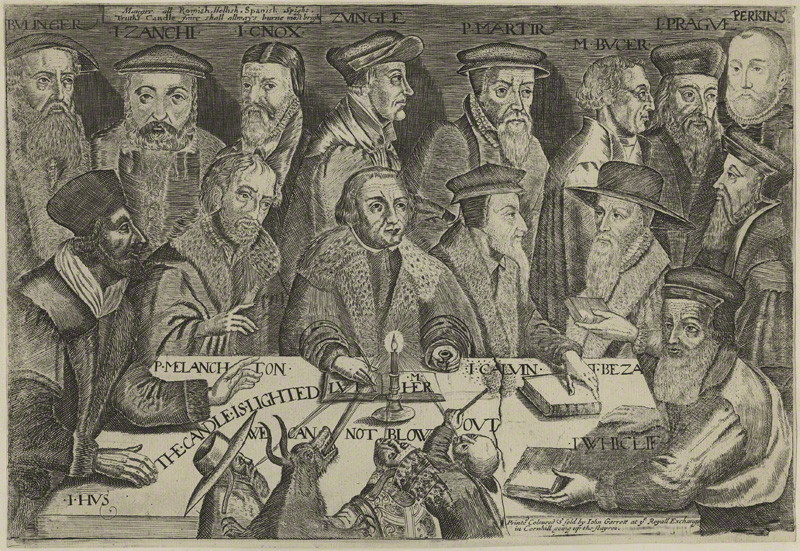
Seen in this way, it is no wonder that Jimmy Swaggart took pains to contradict Calvinism with its insistence on work as a means of salvation, its emphasis on predestined states in this life and the next, with its distant and remote God who visited Earth long enough to paint and plumb then abandoned the project to human empire, and with its continued insistence on climbing the social hierarchy rather than taking comfort in God.
Jimmy rejected the turn Pentecostals in general and the Assemblies of God in particular were taking to pursue social currency and legitimacy, this focus on maximizing profits and reaching new quotas to justify churches being built, missionary efforts being supported abroad and traveling evangelists like himself stateside. It was, and still is, enough to sing. To talk. To teach and preach. To meet people individually and share enthusiastically. Pentecostals generally and the Assemblies of God specifically were forgetting themselves, their origins.
Unlike many other ministers, Jimmy would claim (“The Coming Storm” [8 Sept. 1984]) that the Bible was against war. The Bible was against the escalation of war in any form, the crippling of economies and forced famines that came about as a result of capitalism. Surely, real Christians had not forgotten this. Alignment with Empire had only led to destruction in the history of the Church, whether militarily, economically, or socially. Capitulation and, worse, agreement with Empire was evidence that believers had been deceived.
“Now, I realize tonight that it is not very pleasant to preach a message or hear a message of this nature. I know that and I am not a preacher or a prophet of gloom, but as I endeavored to relate to you last evening, I have no choice or alternative but to bring you what I feel [God] has given unto me. It’s not my business to please the crowd, it’s my business to preach the Word.
Within the Church, Calvinism had led many to believe that such measures were justified in the expanse of their religion – “subduing” meant war, didn’t it? Forced consent was part of the Church’s activities with the unwilling. Jimmy, to a great extent, felt it was his responsibility to remind the Church that such deceptions, such practices left believers numb and insensitive to the cries of the victims they committed in the name of God.
“It’s difficult for us to imagine tonight a carnage of that magnitude, a horror, that can only leave us numb. And I wish that I could say that mighty men, sensible men, men of wisdom, diplomats, ambassadors, will somehow find a way out of the morass of difficulties this would finds herself in tonight… There’s tribulation in many countries right now, there’s tribulation in Africa at this moment. Over 100,000 men and women, boys and girls in Mozambique have literally starved to death, there’s tribulation tonight in Afghanistan, there’s tribulation in the mountain fastness of El Salvador, there’s tribulation tonight behind the Soviet Iron Curtain and the Bamboo Curtain of China. There’s tribulation, but the tribulation I’m talking about is of such magnitude I do not have the vocaublary to describe it but I must endeavor to do so to wake you up and to wake a sleeping Church up…
Swaggart saw this coming storm, the Great Tribulation of suffering, visiting America and wreaking havoc through the activities of good people who meant well as a result of their corruption. Their intended pursuits would be the betterment of America and the world but evil, the kind characterized in the Bible by figures like the Antichrist and an all-deafeating war called Armageddon, always began that way. Christians, Swaggart insisted, often forgot the past when it was convenient and “rebranded” the words and activity of God to fit with their violent narratives. They promised peace, promised efficiency and safety, but brought destruction.
It began, Swaggart insisted, through activities every good, decent American would agree with. Good people, good Christians, would ultimately be deceived because they would stop relying on the words and power of God, the peace and kindness of God. They would stop seeing the sufficiency of God, the sufficiency of Christ, and the sufficiency of God’s Presence. To their peril, Christians who relied on goodness, logic, self-assurance, and the pursuit of wealth and power – tenets of Calvinistic thinking – would find themselves on the wrong side of eternity. These promises of peace and blessing – that we could be like God – always brought war and destruction.
There is a storm coming, there is a storm that I cannot stop, all the preachers together cannot stop, no prophet were there one on this earth could stop it, no President will stop it, no Premier will stop it, no land, no nation, no empire, no dynasty will stop it… The Antichrist will be the culmination of all the Herods and Hamans and Hitlers that have ever lived and the problems of this planet today are such that humanity is almost begging for a man to solve their problems. Right here in this great city of New York City, there are powerful men that are working toward global control. Are you hearing me? There are powerful men in this nation of America that would desire that the sovereignty of the United States be given up to a conglomerate that would control the entire planet, that would have the power to control every army, every navy, control all scientific effort on the face of the earth, the end of nationhood which would be catastrophic to the United States of America. But these men are powerful, one-worlders, global control, global conquest! These are not kooks either, they’re the most rich, powerful individuals in this nation, some of them. This is playing right into the efforts of the white horse [peaceful] rider, the Antichrist, when he makes his debut. The Bible tells us that following the white horse rider will be the red horse rider, red horse typifying war… War! I wish I could stand here and tell you that man will somehow find a way out of this stumbling morass of difficulty that he finds himself in. I wish I could tell you that somehow the might and the power of America – and I believe America ought to be the strongest nation, militarily, on the face of the earth. I believe that. I don’t like to see my taxes spent for guns and bombs and bullets. I don’t like that. But we have to face the world that is instead of a world that we would like it to be.”
Though Jimmy resisted Calvinism and the pursuit of power, fame, and money, often railing against it in his sermons, like so many other parts of his life, he would eventually do what Frances told him to do. He would, in time, wear designer suits, “need” his supporters to buy a private a jet “for the ministry”, and celebrate violence against the wrong kinds of people, the ones God had destined for destruction – Muslims, gays, anti-Zionists, liberals, and other such ilk. Whatever hesitation or softness he possessed, the kind cultivated by his grandmother, would be removed through the merciless Calvinism of his wife.
 Theology & the City
One thought on “Biography: Jimmy Swaggart, Chapter 11”