Continued from Chapter 4
The baptism of the Spirit allows for many expressions of God’s presence. For some, the presence of God’s Spirit will be expressed through prophecies. In the lives of other believers, it will be expressed as faith. For another, tongues. Upon examination, this would appear to be contradictory or circular reasoning. If speaking in tongues is the initial evidence of God’s Spirit, why is it also a “gift” of the Spirit, given to some but not others, and only after one is “baptized” into the Spirit? If faith is necessary for salvation, and everyone has a measure of faith that will either save or condemn them in the Eternal Judgement, then how can salvation also be a gift? Is salvation, like tongues, like all of the gifts of God, dispersed to a select few? This contradicts the teachings of John, whose salvation is universal. It contradicts the teachings of Paul, who insists that Jesus was seeking to reclaim the entire world – humans, plants, land and animals, entire kingdoms and cultures. But as it relates to the baptism in the Spirit, Pentecostals – like every other expression of Christianity – hang their beliefs on selective readings of scripture, highlighting key verses and conveniently forgetting others.
The gifts are not evidence of divine favor. Instead, they are dispersed among the community of believers “to each person, just as [God] decides” (I Cor. 12:11). This remains a “mystery” in the teachings of the Church, for who can understand the mind of God (Romans 11:34) and “no one knows the thoughts of God except the Spirit of God” (I Cor. 2:11). The Assemblies of God, like many other Pentecostal bodies, claim that the gifts of the Spirit are special qualifiers, evidence not that God’s Spirit exists and not that the Spirit is actively continuing the creative order introduced in the Book of Genesis. Instead, the gifts are special qualifiers for those who are called to ministry. What that ministry looks like is the mystery, turning the mystery – if it exists at all – back onto the believer, who must discover their purpose, often day by day, in life and ministry. The believer is continually “on” and seeking ways to express the gifts however God wills. This disassociation from self, where the believer’s identity is replaced by God, is a divine reversal of demonic possession. It is the way God always intended it. Humans have no identity or purpose apart from God. In this way, the Book of Revelation depicts an eternity of saved believers who become so consumed by God, who identify with God and are possessed by God, singing praises to God in a puppetry of self-congratulation. This is a toxic expression of religion, to be sure, one that theologizes a way of life that prevents people from responding to situations as they require, in ways that threaten their well-being, and externalizes the locus of control one has over their life and daily decisions. It is a form of religion that enables abuse, harmful relationships, and mental health maladies. It creates self-sabotaging mindsets.
Despite their noble intentions, the Assemblies of God have always been riddled with problems. By the 1980s, the scandals within the denomination would come to define them and almost consume them. The divisions theologically, socially, and racially were always present even from the founding, creating a tension that would only grow with each decade, pulling at the corners until the very fabric of what originally tied them together into a fellowship – not quite as legitimate as a denomination for almost half a century – began to fray and warp.
From the outset, the fellowship was divided. Most of the ministers who met in Hot Springs, Arkansas, had already been rejected by other churches for their fringe views and nontraditional interpretations of scripture. Speaking in tongues was one such view, but even among fellow tongues and charismatic interpretations, the importance of tongues remained in debate. Along with tongues, the importance and prominence of Jesus’ death, burial, and resurrection was another major point of division. The debate was tabled at their first meeting in 1914 to instead found something before it could come apart; rational minds prevailed on those in attendance to at least come together and agree that details of theology would be worked out later.
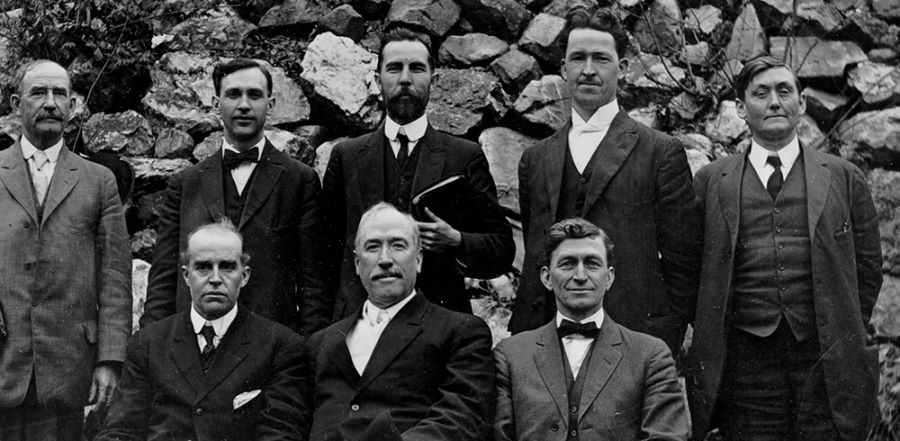
Two years later in 1916, a General Council was formed to settle the matter. The Council condemned Oneness Pentecostalism, causing a split within the young denomination and the adoption of the Statement of Fundamental Truths, which endorses the Trinity. Even after 1916’s resolution, the matter continued. Two forms of Pentecostalism had begun to emerge, Finish Work Pentecostalism and Holiness Pentecostalism, diverging over the impact that Jesus’ death and resurrection had in, on, with, and for Christians.
The Assemblies of God were forced to declare one of their first defining beliefs as part of Finished Work Pentecostalism, expressing that after conversion, the converted Christian progressively grew in grace. This would distinguish the AoG from the other leading branch of Pentecostalism, Holiness Pentecostalism. Finished Work Pentecostals are generally known to have retained the doctrine of progressive sanctification from their earlier Reformed roots, while Holiness Pentecostals retained their doctrine of entire sanctification from their earlier Wesleyan roots, believing in an instantaneous, definite second work of grace. For Holiness Pentecostals, sanctification was the necessary prerequisite for receiving the baptism in the Holy Spirit.
To those outside of the debate, the difference is minor, perhaps even tedious. To many Christians, even Pentecostals, the two approaches may seem indistinguishable. In the final analysis, some Christians will grow in their faith immediately, their character changing to become more like Christ and distinguishable as Christian while other Christians may have a more difficult time changing their lives. There is no timetable for such things, after all. From another perspective though, the Assemblies of God was challenging a bulwark of Pentecostalism. Most Pentecostals at the turn of the century did not derive their churches, theology, or behavior from Charles Parham or Agnes Ozman in Topeka, Kansas, or from William J. Seymour and the Azusa Street Revival.
The first Pentecostal churches in the world originated in the holiness movement before 1901: the United Holy Church (1886), led by W.H. Fulford; the Fire-Baptized Holiness Church (1895), led by B.H. Irwin and J.H. King; the Church of God of Cleveland, Tennessee (1896), led by A.J. Tomlinson; the Church of God in Christ (1897), led by C.H. Mason; and the Pentecostal Holiness Church (1898), led by A.B. Crumpler. After becoming Pentecostal, these church, which had been formed as second-blessing holiness denominations, retained their perfectionistic teachings. They simply added the baptism in the Holy Spirit with tongues as initial evidence of a “third blessing.” It would not be an overstatement to say that 20th Century Pentecostalism, at least in America, was born in a Holiness cradle (Vinson Synan, The Century of the Holy Spirit [2001]).
For Pentecostals and those at the founding of the Assemblies of God in 1914, this difference was a defining one theologically, socially, and culturally. Either God was active in the life of the believer, imperfect as they may be at the time of salvation, or God had handed the life of the believer to the individual. Holiness Pentecostals insisted that one either was a Christian and behaved accordingly from the moment of salvation, or they were never saved at all. As Holiness Pentecostals began to recede from American life, they set themselves apart culturally. In parallel, the Quakers also began to give up on American life in the 19th Century. Their appearance today is identifiable in the same way that Holiness Pentecostals are today, with clothing, hairstyles, and culture that are remarkably distinct. For the fellows who congregated in Hot Springs, Arkansas, in 1914, this was not the future of their faith. Theirs may have been a new expression of Christianity, even Pentecostal belief, but it was not one that would be anchored to the past or place restrictions on God. From the perspective of this new upstart fellowship, it was the Holiness Pentecostals who were placing restrictions on God and even more so on the life of the believer, who were bound to make mistakes and sin.
Many were taken aback by the extreme legalism among some Holiness Pentecostals that seemed to border on Pharisaism at best or fanaticism at worst. Also, insistence on a second blessing ran contrary to the theology and experience of many people who entered the movement from non-Weslyan backgrounds.
The first man to challenge the “three blessing” theology was William H. Durham of Chicago. A longtime holiness preacher of second-blessing sanctification prior to his Pentecostal experience, he stopped preaching instant sanctification as he searched for a new theology. By 1911, he had fashioned what he called the “finished work of Calvary” theology, which denied the necessity of a “second blessing” experience prior to speaking in tongues. For Durham, sanctification was a gradual process that began at conversion and was followed by a progressive growth. This teaching, so revolutionary for the times among Pentecostals, opened a wide theological rift in the Pentecostal movement. Leaders such as Parham, Seymour, and others denounced the “finished work” teaching as a threat to the survival of the movement.
In time, independent Pentecostals who agreed with Durham joined together to form the Assemblies of God in 1914. Most of the Pentecostal churches in the world that were formed subsequently affirmed the Durham view. This reduced the spiritual experiences of these Pentecostals from three to two. Afterward, the “finished work” Pentecostals testified to being “saved and baptized” in the Holy Ghost” without reference to sanctification (Synan).

Recall that, as America had experienced with the Second Great Awakening, there was tremendous variety in spiritual experience, theological ingenuity, doctrinal creativity, and human insight as seekers, believers, and the disenchanted sought a new way of life and spiritual expression. Dissatisfied with the theology and restraints of their churches, some three hundred persons gathered in the Grand Opera House in Hot Springs, Arkansas, in April of 1914. Their goal was to create a new national organization for the hundreds of independent Pentecostal assemblies that dotted the cities and towns across the country. Yet the formation of this new fellowship owed much to men who were not present in the Hot Springs, who would never be part of the church. Charles Parham, whose teaching that speaking in tongues was the “initial evidence” of one being baptized in the Spirit and whose ministry debatably “began” the Pentecostal experience in America was not there, though his doctrine on Spirit baptism would become distinctive for the Assemblies. Another absentee was William J. Seymour, who led the Azusa Street revival in Los Angeles where most of those present accepted the experience of Spirit baptism and tongues. William Durham had already passed away two years earlier before the assembly in Hot Springs, though his doctrine would also shape the fellowship considerably and in many ways reshape religion in America. Durham’s “finished work” teaching regarding sanctification distinguished the assembly from older Pentecostal bodies. Finally, A.B. Simpson, founder of the Christian and Missionary Alliance, was also absent. Members of the Christian and Missionary Alliance quickly migrated to the Assemblies of God, bringing with them Simpson’s basic theology and emphasis on world missions.
Those who did attend came with a sense of purpose, frustration mixed in equal measure with hope. Many were from Holiness-Pentecostal churches, but many did not have roots in Wesleyan theology. Those who met in Hot Springs were also from Presbyterian and Baptist churches and seminaries, particularly women who were denied a role in ministry by Baptist churches. Others were seekers or believers who had experienced conversion to Christianity and immediately, unexplainably, also claimed to be baptized in the Spirit without the intervening “second blessing” of Weslyans and Holiness Pentecostals. They sought a sense of recognition, having been rejected by Holiness Pentecostals and denied legitimacy for the salvation they claimed to now possess, whatever the church had to say about it. Together, they formed the various “assemblies” of their fellowship, intending to reconvene and iron out their differences and disputes.
In many ways, the doctrinal variation and allowances made by the Assemblies of God in 1914 would sow issues they would then reap in the latter half of the century. As the fellowship began to solidify their teachings and doctrinal statements, they became prominent enough to claim that they were no longer an “assembly” of divergent beliefs, but a denomination. The denomination, pulling from such a wide spectrum of experiences, welcoming women and Blacks into ministry, boomed. The Assemblies of God is the best-known Pentecostal fellowship in the world today, commanding respect in the broader world of Evangelical and Charismatic Christianity. As the Assemblies of God continued to grow, it attracted new expressions of spirituality that were problematic and well outside of their teachings. With the rise of non-denominationalism and Neo-Pentecostalism in the 1970s, and the appearance of increasingly problematic Charismatics in the 1980s, the denomination’s continued acceptance of diversity would begin to undermine the advances of Pentecostalism.
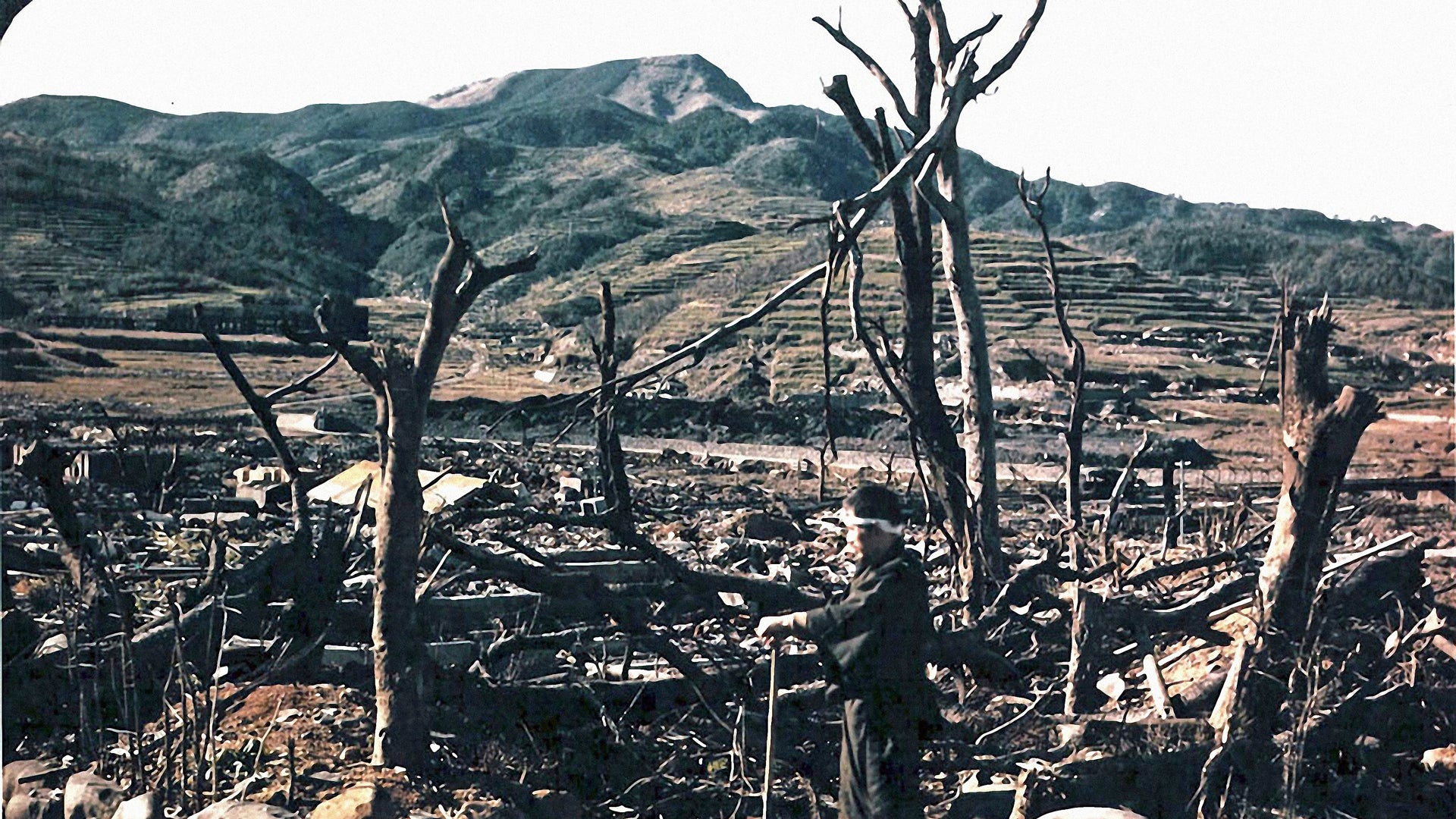
In 1943, the denomination was beginning to solidify. Many theological disputes remained on the horizon, but what came through was a broad welcoming of experiences that did not yet have a defined theological explanation. Like an eight-year-old boy, tucked away in a small Louisiana town barely even on the map, who claimed to be filled with the Spirit of God and who prophesied the bombing of Hiroshima and Nagasaki.
Tongues were a defining expression of the Spirit of God among Pentecostals in the Twentieth Century. But they were not the only expression. The gifts of God were, even during the period of the Early Church immediately after Jesus’ death, still being cataloged and defined. Those identifiable in the Early Church under Paul, Peter, James, and John are familiar to most Pentecostals – tongues, prophecy, words of wisdom and knowledge. Even here, though, the Early Church embraces as much as it forgets. God’s Spirit, in the Hebrew Scriptures, was “upon” individuals (not “in” them) and expressed Godself through creative projects like the construction of the Tabernacle when the Israelites left Egypt, singing, even passing references to being comatose states of ecstasy, which Pentecostals would call being “slain in the Spirit.” While Pentecostals see in the epistles of Paul a redefinition of prophecy as divine declarations about an individual, their life and purpose, this is now how prophecy is depicted in the Hebrew Scriptures. The Spirit of God was, presumably, “with” and sometimes “upon” the prophets when they saw the end of empires and, ultimately, the entire world. Jimmy’s claim to seeing the bombing of Hiroshima and Nagasaki is more “biblical” than many of the “prophecies” made in Pentecostal and Charismatic churches, even now. Still, he was quite young when he received these prophecies.
The gifts of God, according to Paul in Romans 11, are without repentance or, in modern vernacular, are without apology. Which is to say that there is nothing prohibiting God speaking through children. In the Book of Numbers, chapter 22, God speaks through a donkey. In other circumstances, God spoke through dreams, through the corrupt, and through circumstances. While it might break from conventional thinking, once one accepts the mystical even magical exceptions to convention that define every book of the Bible, it is not a leap to imagine that God could speak to a small town like Ferriday through a child like Jimmy Swaggart.
God saved me when I was eight years old in a strange way, in front of a moving picture theater in the little small that I called home in Northeast Louisiana at about 3 o’clock on a Saturday afternoon in 1943. A few months later, [God] baptized me in the mighty Holy Spirit. I was talking with Frances just the other day about our granddaughter, that by the time you see this, she will have already been eight years old, the same age I was when the Lord baptized me in the Spirit. I remember the great hunger that I had even as a child. I remember vividly as it it were yesterday how hungry I was for God, how I sought for the Holy Spirit. I remember the thoughts that were in mind, I remember by quest, my earnestness, my hunger, my thirst, and I wondered if she would have had that same thirst, that same hunger.
I was, 1944, I was nine years old. And in a prayer meeting at our little church, a church on the wrong side of the tracks, small, insignificant as far as the world was concerned, God one morning about 9 a.m. started speaking through my lips of the invention of a bomb, one that would be so powerful that it would destroy an entire city. In 1944, even though the Manhattan Project was even then in operation, the world knew nothing, basically, of the invention of atomic warfare or atomic bombs.
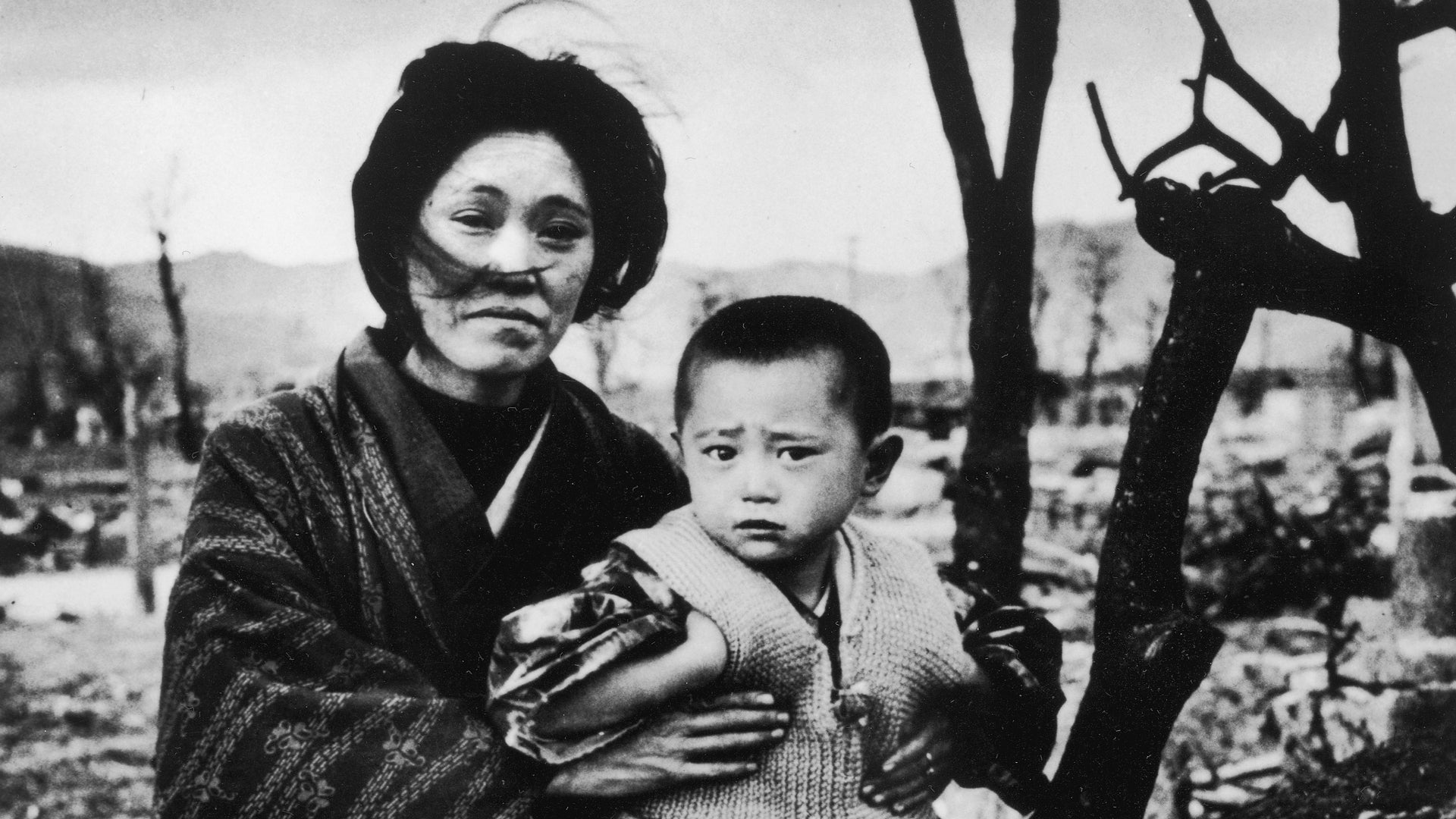
I still see that altar, I still see the place, as morning after morning, the Spirit of God in prophecy would speak through my heart and spoke of one instrument of death that would completely destroy an entire city. I saw the fireball, I saw the smoke, I saw the dying, the death, the agony, the suffering, the sorrow. That prophecy was partially fulfilled in August of 1945, when the “Long Boy” and the “Fat Boy” were dropped on Nagasaki and Hiroshima, Japan, completely destroying those two cities resulting in over 200,000 to 300,000 casualties in the Japanese Empire.” (“The Mystery of Iniquity” 44:06 – 47:02, delivered on 20 April 1985 in Charlotte, NC).
In his first autobiography, To Cross a River (1984), Swaggart fills in details without being specific. It is something of a Monet, interesting only from afar but smudged and undefined up close, even untouchable. One could lose the image entirely, if one stands too close and focuses.
Back during the summer of 1944, our little church was having another revival, and a morning prayer meeting had begun at Aunt Rene’s house. It was a daily occurrence for the four of us to meet with Nannie and Aunt Rene for prayer. From those prayer services, I knew God had called me to preach and one day I would be an evangelist.
Few of the people in church knew anything about the gifts of the Spirit. What we did know had been explained by Brother Culbreth. It was during one of those early prayer meetings the Lord gave me the gifts of prophecy, and interpretation of tongues.
The first time the Lord spoke through me prophetically I didn;’t know what was happening. I felt like I was standing outside my body. Then I began to describe exactly what I saw, “… a powerful bomb destroying an entire city… tell buildings crumbling… people screaming.” I didn’t know it then, but there wasn’t a bomb available with the power I described.
Word spread about the strange goings-on at Aunt Rene’s. People from all over town came, filling up her living room. Soon the crowd was so large we moved to he little white frame church. Still the prophecies came forth. People were captivated by the prophecy on the bomb, which came almost daily.
“The prophecies weren’t given particularly loud,” daddy remarked to the pastor one day after church, “but a person could hear in front of the church just as plainly as in the back.”
“That’s true,” agreed Brother Culbreth. “You know, that’s really normal. Jesus spoke to thousands of people at a time, and he never used a microphone or loudspeaker.”
Many outsiders, who wandered into the little church on Texas street, were saved after hearing the prophecies. Others, feeling convicted, left. Some dismissed the whole matter because I was only nine years old. But a year later, when the two Japanese cities of Hiroshima and Nagasaki were destroyed by an atomic blast, nobody thought the prophecies were childish any more.
Increasingly as I prayed in the little woods behind the house and read my Bible, I felt the hand of God on my life. Where He would lead, I did not know (43-45).
Jimmy would heed the warnings of their grandmother and shun evil. He would speak in tongues. He would prophesy of destruction to a congregation who neither understood the words being spoken nor were they able to do anything about them. Some, as he notes, dismissed the strange prophecies entirely because of how young Jimmy was at the time. Maybe they dismissed the prophecies as the active imagination of a boy who enjoyed going to the movies and reading Captain Marvel comic books a little too much, a little too frequently.
It would take time for his words to come to pass, to be proven valid. Once they did, they would explode into legend. Only this: there is something hollow about it all. Niggling thoughts linger and grind away. Not that Hiroshima and Nagasaki were bombed. This is a historical fact. Not even that such a young boy would receive such visions, which have biblical precedent and are not especially unbelievable, particularly for Pentecostals. Only, troublingly, Jimmy’s prophecies raise questions about the providence of God.
There was never a point where Jimmy or the community of Ferriday were, or would be, asked to change the events of World War II. Hiroshima and Nagasaki were a world away, unknown and unknowable. Each time Jimmy has written or spoken about these prophecies, he is clear that he had no idea what they meant, nor did anyone else, until August of 1945. The prophecy in 1944 would not be understood until after the fact, the following year, as speaking of a bomb that would destroy these cities and their inhabitants.
There was no mention in Swaggart’s recollections, of how or why these then-unnamed cities would become so important to the outcome of the war, to the impact of the bombs on diplomatic relations and governmental decision-making, to world history, of the role they would play in nuclear science, how the fallout of the bombs has been tied to a notable increase in incidents of cancer and birth defects, or to how the world would come to understand the responsibility of power. No part of these concerns played into Jimmy’s prophecy.
Which begs the question of why they were given to, through, with, or by Jimmy at all.
If there was nothing to be done and if God’s heart could not be turned away from destruction, then Jimmy and Ferriday could not be held responsible. Unlike the biblical prophet Jonah, Jimmy did not refuse to prophesy. He did it willingly, only to the wrong audience. He may very well have seen the future, but what does this entire experience say about God, showing a young boy what would happen but guaranteeing no one would be able to stop the horror that would occur?
In subsequent decades, Jimmy would never go to these cities on an apology tour, lament over their destruction, or visit any part of Japan. Not at any point in his ministry.
There was never a sense of obligation to warn the people of Japan, to instruct or strategize with the Allied Forces as they moved forward with the Manhattan Project, or to encourage the American people.
The prophecy was secondary to the prophet.
In Pentecostal teachings, the local decorum and practices that would be assembled into what amounted to Pentecostal theology, all spiritual gifts – tongues, prophecy, healings, the discerning of spirits – are subject to the individual. God gives the gift of the Holy Spirit. The Spirit empowers the believer. However, the decision to act or refuse action rests upon the individual. God does not possess people, Pentecostals insist, does not remove the individual’s will. Any prophecy spoken, word for word, is done in surrender of the self to God. The removal of consent would remove free will. The overriding of consent through force, even well-intentioned, is a sign of evil. God does nothing by force but with decency, with patience, and in order. God always respects and defers to the believer, allowing them to be a part of God’s will and purposes and yes, at times, insisting and compelling the individual, but never without their acceptance.
God did not force or override young Jimmy’s will or autonomy when speaking through the boy; God gave the words to Jimmy and, moment by moment, he consented to speak for God. Though, again, whatever was said and however it was said, there was nothing to be done about it. God will not force an individual to do something but still brings about displays of force to destroy cities.
These are incompatible concepts of God. God is considerate enough to not possess a believer, but destructive enough to destroy the lives of a quarter of a million people. Perhaps God prefers Americans, American children, but shows no regard for the Japanese who are ungodly by choosing to live in an ungodly nation? Or does all of this, Jimmy’s prophecy, speak to a division between the Godhead – the Spirit of God is patient and kind, but God the Almighty is a god of chaos and destruction. This would validate the Marcionites, who believed that the God of the Old Testament, or the Demiurge, was a jealous, wrathful, and genocidal tribal deity who created a defective material world while the God of the New Testament, or the Heavenly Father, was a loving and compassionate universal God. Except that Marcion was excommunicated from the Christian community in 144 CE for this teaching, which was considered heretical by the early Church fathers. It remains a heresy, at least nominally, to Protestants and Roman Catholics to the present moment.
As for Jimmy, he bore no responsibility for the message he gave as a boy. For the individual, the prophet, there is never a sense of responsibility or accountability once the message is delivered. Jimmy would often quote from part of the Bible, Ezekiel 3, to explain the intensity of his sermons and threats to America. God had made him, Jimmy would explain, “a watchman for the people.” He was to “hear the word I [God] speak and give them warning from me.” If Jimmy warned people of God’s wrath, whether they obeyed or disobeyed God was their responsibility. But if the prophet refused to speak, if they refused to issue God’s warning to the nations, “I will hold you accountable for their blood.” It was a selective reading of the chapter. In context, what is really said reads like so.
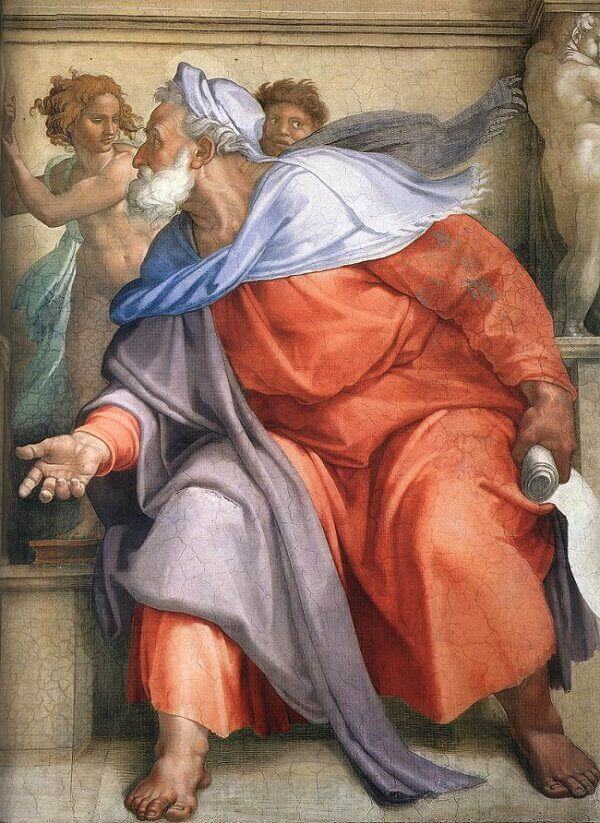
Ezekiel 3:4-9
He said to me: Mortal, go to the house of Israel and speak my very words to them. For you are not sent to a people of obscure speech and difficult language, but to the house of Israel – not to many peoples of obscure speech and difficult language, whose words you cannot understand. Surely, if I sent you to them, they would listen to you – but the house of Israel will not listen to you, for they are not willing to listen to me; because all the house of Israel have a hard forehead and a stubborn heart. See, I have made your face hard against their faces, and your forehead hard against their foreheads. Like the hardest stone, harder than flint, I have made your forehead; do not fear them or be dismayed at their looks, for they are a rebellious house.
Jimmy’s reference was where the prophet Ezekiel is called to speak to his own people, Israel. Ezekiel was a member of the ancient Israelite community and God is explicit that the prophet is not called to a foreign land with “obscure speech and difficult language whose words you cannot understand” but to his own people. More, God’s anger comes through in describing the Israelites as having “a hard forehead and a stubborn heart.” While Jimmy certainly adopted a “face hard against their faces” when preaching before American and South American audiences, he was “like the hardest stone, harder than flint” toward the Church. Those outside the community of God, “Surely, if I sent you to them, they would listen to you.” But the Church, as Jimmy understood it, was a “rebellious house.”
The narrative continues.
Ezekiel 3:10-15
He said to me: Mortal, all my words that I shall speak to you receive in your heart and hear with your ears; Say to them, “Thus says the Lord God”; whether they hear or refuse to hear. Then the spirit lifted me up, and as the glory of the Lord rose from its place, I heard behind me the sound of loud rumbling; it was the sound of the wings of the living creatures brushing against one another, and the sound of the wheels beside them, that sounded like a loud rumbling. The spirit lifted me up and bore me away; I went in bitterness in the heat of my spirit, the hand of the Lord being strong upon me. I came to the exiles at Tel-abib, who lived by the river Chebar. And I sat there among them, stunned, for seven days.
This passage, for Jimmy, was his formative period. He knew “the hand of the Lord” was strong upon him, but what was he to do? He was stunned for years, uncertain of how to fulfill the call on his life.
Pentecostal theology was still formative during this period. It was beginning to appear in churches, but resistance still prevailed in most denominations. The theology of Pentecost, or the serious discussion and apologetic defense of tongues, giftings, and spiritual experiences in general were beginning to be knitted together alongside Swaggart’s own development around the time these events were taking place, so there is a degree of passivity in all of this. The believer is being acted upon, but only as they surrender themselves and their faculties to the leading of God’s Spirit. It might be the case that, with such a profound series of events to inaugurate him into Pentecostalism, Jimmy only knew that he needed to harden himself. This was a message his parents had been beating into him for years.
Here is the part that Swaggart never really addresses: the deaths of those “200,000 to 300,000 casualties in the Japanese Empire” are collateral loss. Their deaths are meaningless to him except to the extent that they validate his claims to the call of God on his life. He could not save them by telling the congregation in Ferriday what was going to happen. He could barely articulate what, specifically, would happen. Without accountability or responsibility, this prophecy validates Jimmy but it never addresses the larger issues of death and destruction, of American accountability, or the role God plays in protecting, defending, and upholding democracy – at least in America, far away from nuclear fallout.
It was not a one-time event, though. Jimmy’s father, Sun, would claim there were ten prophecies in total given before the boy turned ten years old. There would be more as Jimmy matured and became first a traveling minister and even more still much later, once he became a televangelist with the largest audience in the world. But in the 1940s, a legend began to grow in Ferriday. Or perhaps was cultivated. Jimmy was special. He was set apart. He would touch the world. He was called. He was chosen. He was truly something else. As Gerard Laudet explains,
The nature of the prophetic mantle – a crucial aspect of a prophet’s anointing – was the Spirit’s determination to convince / convict targeted members of the audience, typically at 100% certainty, that God was speaking through him or her. When the message of a prophet, or a revival preacher, ushers in this type of convicting / convincing presents of the Holy Spirit upon the audience, this dynamic is historically known as a highly anointed preaching termed preaching with unction. Without unction, the ministry of the prophet is virtually useless because the audience remains largely unconvinced (Strange Fire Indeed, 2021).
These prophecies, at such a young age, become indicative. If one is willing to believe Swaggart’s account, that a young boy in the middle of nowhere received a vision of something that would become an immediately recognizable event, then this is proof that God speaks through him. If one is able to overlook the death toll of Hiroshima and Nagasaki to validate Swaggart’s call, then they are able to believe that God will continue to speak through him. But in doing so, they make God out to be a careless destroyer instead of a merciful God seeking peace. God becomes the God of America, almost exclusively.
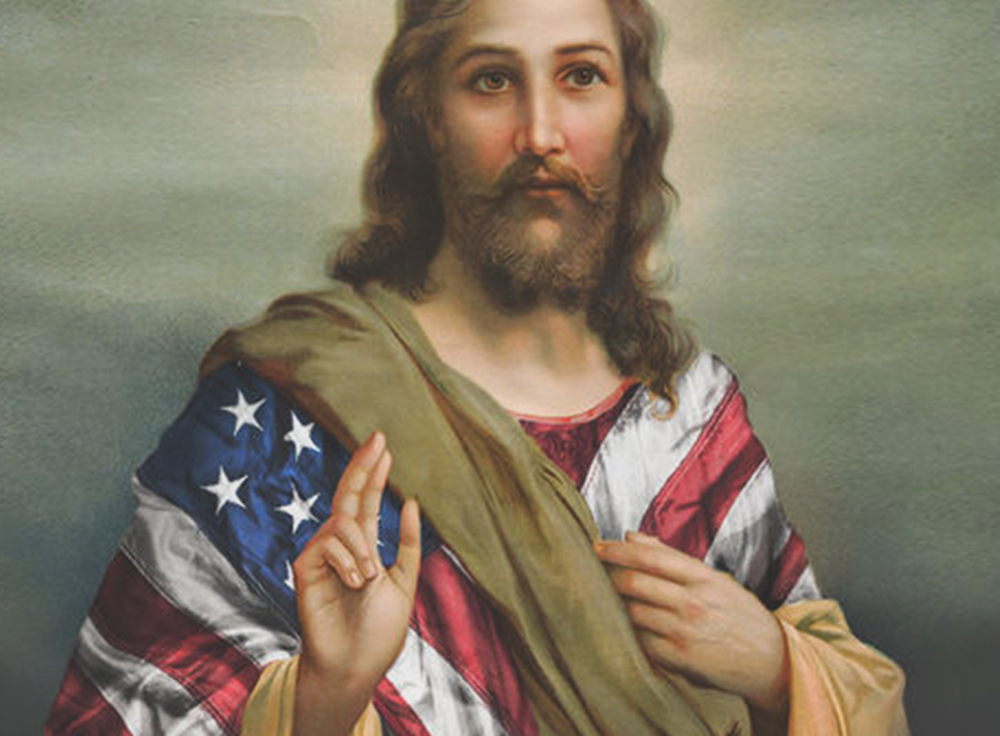
The deaths of those in Japan are meaningless except as collateral to support Swaggart’s claims of divine integrity. He is God’s mouthpiece. If an individual does not accept the founding premise, then there is nothing that Jimmy says or will ever say that will convince them. Even when he is right, he will be misunderstood or ridiculed. The entire account is self-validating. Jimmy either is or is not a prophet, one who speaks for God. There is no equivocation. By his own explanation,
Paul said, “The spirits of the Prophets are subject to the Prophets” (I Cor. 14:32). What did he mean by that? He meant that if an individual claims to be compelled to blurt out at any time whatever he thinks that God has given him, that person is out of order. The Holy Spirit works with the spirit of a person with both deciding when is the right time for an utterance to be given… Once again, “the spirits of the Prophets are subject to the Prophets,” meaning that the Lord does not compel anyone to do anything… Those who have the Gift of Prophecy are used of the Lord to edify the Body of Christ by their utterances, to exhort the Body of Christ to live right, and to comfort Believers. When someone who claims to have the Gift of Prophecy pronounces doom and gloom on the congregation, such cannot be construed as being Scriptural. As would be obvious, such does not edify, does not exhort, and does not comfort. Paul said, “He who prophesies edifies the Church” (I Cor. 14:4) (Brother Swaggart, Here Is My Question About The Holy Spirit).
Continued in Chapter 6
 Theology & the City
One thought on “Biography: Jimmy Swaggart, Chapter 5”