
The cult of Evangelicalism remains antagonistic to many of its founders, even as they have borrowed their language and writings. Evangelicals denounce women in ministry, yet they adoped the teachings of Ellen G. White when it came to a cosmological battle being waged all around. They ridicule William Miller, even as they share Miller’s views on Catholicism (a false religion of the damned) and apocalypticism (American Evangelicalism can no longer be separated from the apocalyptic). They have actively denounced the Latter-Day Saints as “weird” and “a cult” but have fully adopted their emphasis on traditional family values. Especially after 9/11, Evangelicals have aggressively slandered Muslims and “Third World” nations yet have wholeheartedly embraced the marginalization of women, policed their clothing, led multiple efforts to remove civil rights for women, have demonized women in power, have targeted “the Feminist Agenda”, on and on. The rise of the caliphate in the Middle East has become something of a playbook for Evangelicals where it regards women. Finally, the longstanding rejection of Russia after World War II during the Cold War has given way to a bizarre embracing of totalitarianism, Fascism, preference for Russian intelligence, and revision of history that favors Russia, esteems Hitler, Mussolini, and Stalin. It is anathema to Christianity and even the Evangelicalism of the first half of the century.
Only, it is not as simple as that. Evangelicals did not simply wake up one morning, having sold their souls to everything they once denounced. By the turn of the century, disillusionment had set in. Evangelicals quickly gave up, directing their labor toward more tangible fruit like the accumulation of wealth, hard work and self-determination, loyalty to a company, and patriotism to one’s country. In one of his final essays, theologian Paul Tillich wrote
Belonging to the nineteenth century implies life in relatively peaceful circumstances and recalls the highest flourishing of bourgeois society in its productive grandeur. It also implies aesthetic ugliness and spiritual disintegration. It implies, on the one hand, revolutionary impulses directed against this self-complacent period and, on the other hand, a consciousness of the Christian humanist values which underlie even the antireligious forms of this society and which made and make it possible to resist the inhuman systems of the twentieth century. I am one of those in my generation who, in spite of the radicalism with which they have criticized the nineteenth century, often feel a longing for its stability, its liberalism, its unbroken cultural traditions (My Search for Absolutes, 1969).
Douglas John Hall, in his essay “The Great War and the Theologians” (from The Twentieth Century: A Theological Overview, ed. Gregory Baum, 1999) notes that “in the 1950s it was hard for young North Americans to appreciate the effect of World War I on the spirits of those who experienced it firsthand” but “the difficulty has only increased with the passage of the decades.” People did not want to know or acknowledge the depth of loss. As Tillich, who witnessed the change from the late 19th to early 20th Centuries up close,
Together with my whole generation I was grasped by the overwhelming experience of a nationwide community, the end of a merely individualistic and predominantly theoretical existence. I volunteered [to join World War I] and was asked to serve as a war chaplain, which I did from September 1914 to September 1918. The first weeks had not passed before my original enthusiasm disappeared; after a few months I became convinced that the war would last indefinitely and ruin all Europe. Above all, I saw that the unity of the first weeks was an illusion, that the nation was split into classes, and that the industrial masses considered the Church as an unquestioned ally of the ruling groups (My Search for Absolutes, 1969).
The division between classes created tremendous conflict, but the world was too weary to adequately address it. Instead, the world entered a new century with optimism and hope that was immediately crushed. Only in America, things continued to get worse and worse. The world was grinding toward something terrible, perhaps the very end of time. The Gilded Age, the final decade of the former century, was a time of rapid economic growth – especially in the Northern and Western United States. American wages grew much higher than those in Europe, especially for skilled workers, and industrialization demanded an increasingly skilled labor force. The period saw an influx of millions of European immigrants; the rapid expansion of industrialization led to real wage growth of 40% from 1860 to 1890 and spread across the increasing labor force. Railroads were the major growth industry, with the factory system, mining, and finance increasing in importance. Immigration from Europe and the Eastern United States led to the rapid growth of the West based on farming, ranching, and mining. Labor unions became increasingly important in the rapidly growing industrial cities. There was cause for the swell of optimism.
Still, the South remained economically devastated after the American Civil War; the region’s economy became increasingly tied to commodities like food and building materials, cotton for thread and fabrics, and tobacco production, all of which suffered from low prices. With the end of the Reconstruction era in 1877 and the rise of Jim Crow laws, Black people in the South were stripped of political power and voting rights. Most were left severely economically and socially disadvantaged.
Then America entered World War I in 1917. Returning from war a year later, veterans brought a new illness that would become known as the influence pandemic of 1918. It is estimated that about 500 million people or one-third of the world’s population became infected with this virus; the death toll is estimated to be at least 50 million worldwide with about 675,000 occurring in the United States.
Then, the economic collapse of 1929.
Then the “Dust Bowl” dust storms and drought that damaged the ecology and agriculture, the crops, only escalated the Great Depression (1929 – 1939).
The Social Gospel may have been equipped to build unions and clean apartments, but it was not able to address a world in flux. Many turned to social groups like the Ku Klux Klan and other racial, ethnocentric, and nationalistic groups to find solidarity. In the South, poverty, hardship, eking out survival, were constants. One had to be tough and take comfort wherever possible. Many took refuge in bootlegging, prostitution, and other vices to endure. Some, like the Swaggarts, turned to music and, later, to religion.
The Earth, Evangelicals would come to believe, was not worth repairing. After all, wasn’t Jesus coming to destroy the Earth and rebuild it the way He saw fit? Hadn’t God said to the first humans, Adam and Eve, that this planet was theirs to do with as they wished? The Earth was not something to be restored and polished. It was exhaustible, a disposable collection of resources “under the dominion” of believers. But this was just the beginning. In the latter half of the Twentieth Century, Evangelicals in America would go further. The Republican Party found in Evangelicalism a retrogressive accomplice, willing to baptize all manner of evil and unrighteousness if dog whistles were tuned neatly enough. Evangelicals, it turned out, will willing to betray the Gospel, to forget the words of their Savior, to set aside their morals, values, and ethics for proximity to power. These choices, their leaders pointed out, were not new to the history of the Church. What they did not point out is that these choices were made by the apostate Roman Catholic Church. It was a one-two bait-and-switch that would come to define Evangelicals as they accelerated the evils of the world through capitalism and chaos. Jesus didn’t die to redeem anyone’s soul. Jesus died for free market capitalism, for trickle-down economics, for retirement plants, and for privacy from government overreach through taxation. The privatization of the supposedly free market played well with Evangelicals, who had long been suspicious of the government, at least since the Civil War.
For the postmillenialists of the Second Great Awakening, Christians had a duty to purify society in preparation for the return of Christ. This duty extended beyond American borders to include Christian Restorationism. All Christians, everywhere, were responsible for helping one another.
Maybe the Boomer Generation’s parents had the right idea by confronting evil, building public works, sharing resources with close friends when they entered a new century, but they were also old, part of an antiquated time that was being ushered offstage. Their lives were forfeit to something greater. After all, the Social Gospel had only brought about poverty and the Great Depression, Evangelicals began to suggest. FDR’s “New Deal” to revitalize the economy was basically Socialism. What America needed was a vigorous and healthy economy defined by rugged individualism, the kind mythologized by Ayn Rand. Everyone for themselves. None of this Socialist crap.
Destruction of, not care for, creation would bring Christ back. Destruction would make Jesus’ job of fire and horror, of righteous vengeance on the Socialists that much easier. Good Christians destroyed out of love for God. Not hatred. Good Christians understood that the Earth was not a gift from God, but a resource to mine, deplete, and discard. Their parents? The loyalty to family they had been raised to believe in? Suspect, if not evidence of a Socialist attitude. Jesus turned his back on his own family, and Evangelicals followed his example.
Evangelicals would help God by removing restrictions on industry and business, by exploiting the land through deforestation, fracking, coal mining, offshore drilling, and by challenging alternative energies every step of the way. The Earth was not worth saving. Even now, Evangelicals continue to support the efforts of billionaires like Jeff Bezos and Elon Musk to travel in space; one day, Evangelicals hope to colonize another planet and leave this wretched one behind. This is what God would want for them.

The fictional end of the world depicted in Tim LaHaye and Jerry Jenkins’ Left Behind series shows every character seeking salvation and insisting other characters feel the same degree of shame they, the righteous, do at having been left behind when Jesus returned. There would be no effort to repair the world. What would be the point? Jesus was coming back soon to destroy the planet anyway. And Good Christians would help Jesus get started. It was a complete distortion of the scriptures.
Tillich’s lament of the dying world came from an abiding horror at how the teachings he had been raised with – “the deep impression upon me made by the words of the Hebrew prophets against injustice and by the words of Jesus against the rich; all these were words I learned by heart in my very early years” – were being twisted. It was a slow corruption. He had witnessed the rise of National Socialism; its evils had not gone away, they had been exported to other corners of the world like America and given sanctuary in the churches of Good Christians. Tillich was aghast at what was happening, how a new generation would turn against the teachings of Jesus Christ in the name of Jesus Christ.
George Fredrickson argues that Postmillennial theology “was an impetus to the promotion of Progressive reforms, as historians have frequently pointed out.” During the Second Great Awakening of the 1830s, some diviners expected the Millennium to arrive in a few years. By the late 1840s, however, the great day had receded to the distant future. Postmillennialism waned until it became a more passive religious dimension of the wider middle-class pursuit of reform and progress. In Judaism too, the concept of tikkun olam, or “repairing the world” had begun to recede. Americans were becoming cynical, bitter, and turning inward, focused on their own survival in the war between good and evil.
The premillennial understanding of scripture is often attributed to Cyrus I. Scofield; premillennialism is often used to refer specifically to those who adhere to the beliefs in an earthly millennial reign of Christ as well as a rapture of the faithful coming before (dispensational) or after (historic) the Great Tribulation preceding the Millennium. “Premillennialism”, as a term, did not come into use until the mid-19th century. Coining the word was “almost entirely the work of British and American Protestants and was prompted by their belief that the French and American Revolutions (the French, especially) realized prophecies made in the books of Daniel and Revelation,” according to Robert K. Whalen in his article on the subject for The Encyclopedia of Millennialism and Millennial Movements (New York: Routledge, 2000). By the early 20th Century, the belief had already became common in Evangelicalism. By the 1970s, it was a defining belief for Evangelicals. Many of Swaggart’s sermons and teaching series address the role of Russia in destruction, culminating in the apocalypse and ushering in the return of Jesus Christ. The only subject of greater interest, based on the sermons, teaching cassette series, interviews, daily television and radio broadcasts, articles, and books his ministries produced, was the Holy Spirit.
The Assemblies of God was part of the goldrush in new, emerging religious movements at the start of the Twentieth Century. Among the other new religious groupings, movements, and expressions that were emerging throughout America such as the Holiness movement and Nazarene, Jehovah’s Witnesses, Spiritualism, Theosophy, Thelema, and Christian Science, the Pentecostal Movement was seeking a new and enlivening experience with God. At the core of these religious movements was an emphasis on personal revelation, empowerment of the individual apart from institutionalized religion, and the larger theme of individualism in American society. Mainline churches were seen as feeble and impotent, social clubs more than houses of learning or the house of God. Joseph Smith, founder of Mormonism, took tremendous umbrage at the calm, even sedated, religiosity of the churches he grew up observing. But he was not alone. In the South, suspicion of government and authority was allowed to fester.
Reconsidering the “place” and “role” of gender, the Third Great Awakening secured much of the patriarchal attitudes that are still being challenged, even today. A “cult of domesticity” surrounded these conversations, creating and then legitimizing a gilded cage for women, who had been co-laborers in building pre-America into a nation. This history was erased and replaced with a revision of American history, one that ignored harsh realities and sanitized them. Loose, aberrant threads like the disadvantage of Black people as a result of slavery were overlooked in textbooks and denounced as falsehoods. The “role” and “place” of women were now eternally subservient. With the advances of science, this too was legitimized. Thomas Jefferson wrote about the intellectual inferiority of Black people, for example, without even noting the oppressive conditions of slavery and how they were prevented from education. Into the early 20th Century, one sees important figures like Sigmund Freud claiming that women were psychologically less stable and that their orgasms were “immature” compared to the advanced biology of men. The Southern Baptists, even now, continue to insist that women are spiritually inferior to men. The Church of Jesus Christ of Latter-day Saints had long held the belief that people of color were spiritually inferior and that the Heavenly Father and Mother were White; the church only addressed racism in 1978, when its leaders could no longer deny their teachings were blatantly racist and xenophobic. Only then did the LDS leadership announce a new “revelation” on the state of the Priesthood, lifting their policy of excluding Black men and women from ordination. Even then, it still took the LDS leaders another 35 years to disavow their previous teachings on race for the first time in 2013.
The Third Great Awakening offered a corrective to these difficulties. In the wake of the American Civil War, the lived reality of unanswered prayer and hollow piety had been laid bare. The excesses of religion, institutional and new movements, exposed the limits of discipline, virtue, and misplaced hopes when evil still resided in the human heart. At the dawn of a new century, women were marching for the right to vote. Blacks were doing the same. A new movement, derived from pietistic Christianity, wanted to outlaw alcohol because it contributed to domestic violence, broken homes, financial instability, public drunkenness, and crime. The majority of the pietistic mainline Protestants, at least in the North, supported the Republican Party. They urged sitting politicians and their rivals toward prohibition and social reform. These activities threatened the familiar way of life for many Americans. Widespread though it may have been, it was seen as a direct challenge to the South. The Civil War stimulated revivals, especially the Confederate States Army revival in General Robert E. Lee’s army. It stimulated a reactionary attitude in some, defensiveness in others, and the insult to Southern culture where cotton was king, textile factories provided much of the North’s clothing, and plantations supplied much of the nation’s food. The new awakening was interrupted by the American Civil War.
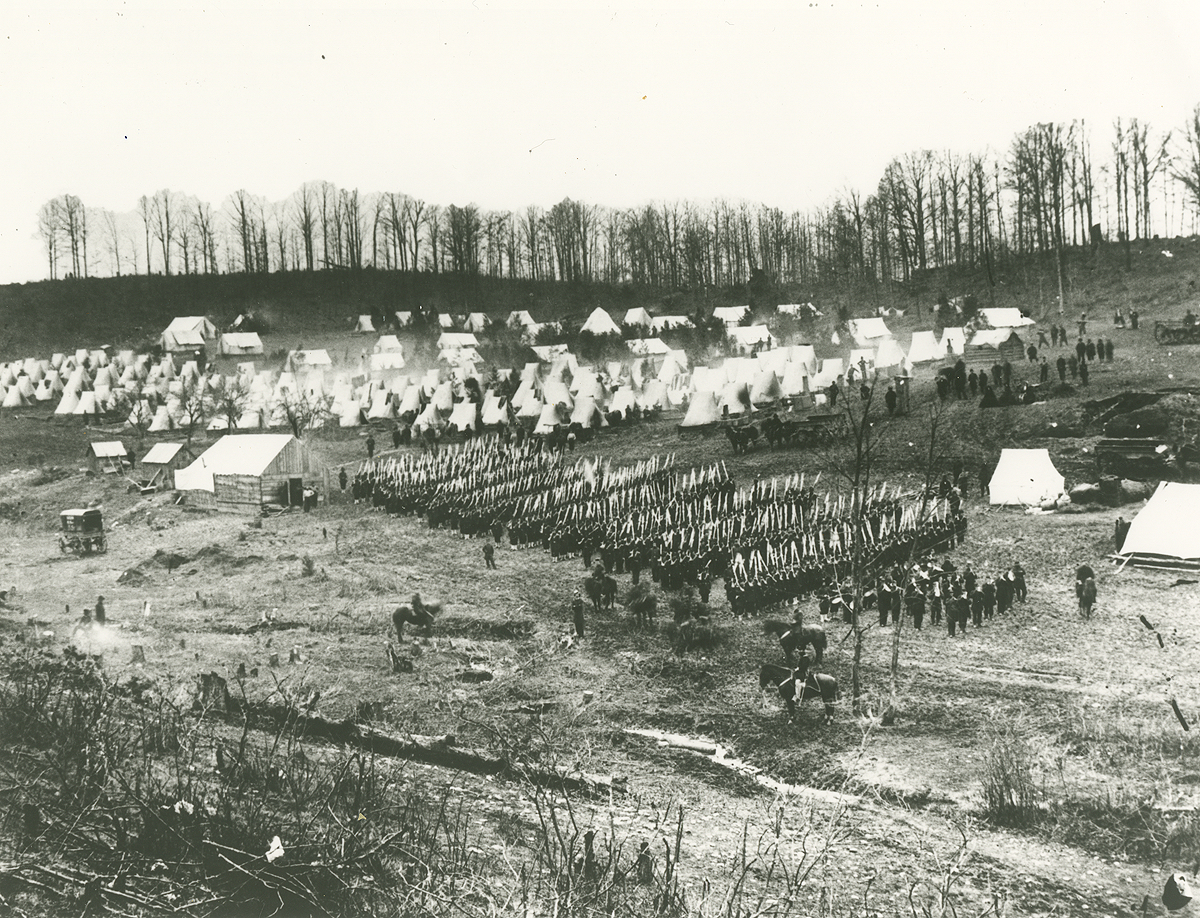
The plantation system came to dominate the culture of the South, and it was rife with inequity from the time it was established. In 1606, King James I formed the Virginia Company of London to establish colonies in North America, but when the British arrived, they faced a harsh and foreboding wilderness, and their lives became little more than a struggle for survival. So, to make settling the land more attractive, the Virginia Company offered any adult man with the means to travel to America 50 acres of land. At the encouragement of the Company, many of the settlers banded together and created large settlements, called hundreds, as they were intended to support 100 individuals, usually men who led a household.
The hundreds were run as private plantations intent on making a profit from the cultivation of crops, which the economy of the South depended on. The plantation system was an early capitalist venture. Unlike small subsistence farms, plantations were created to grow cash crops for sale on the market. Tobacco and cotton proved to be exceptionally profitable.
Cheap labor was used to cut production costs and maximize profits. Initially, the land was worked by indentured servants, who were mostly from England (and sometimes from Africa), and enslaved African and (less often) Indigenous people. Indentured servants were contracted to work four- to seven-year terms without pay for passage to the colony, room, and board. After completing the term, they were often given land, clothes, and provisions.
The plantation system created a society sharply divided along class lines. In the colonies south of Pennsylvania and east of the Delaware River, a few wealthy, white landowners owned the bulk of the land, while the majority of the population was made up of poor farmers, indentured servants, and the enslaved.
Plantation labor shifted away from indentured servitude and more toward slavery by the late 1600s, in part because obtaining indentured servants became more difficult as more economic opportunities became available to them. Wealthy landowners also made purchasing land more difficult for former indentured servants. This sharpened class divisions, as a small number of people owned larger and larger plantations. Wealthy landowners got wealthier, and the use of slave labor increased. This led to uprisings and skirmishes with impoverished Black and white people joining forces against the wealthy.
In response, customs changed and laws were passed to elevate the status of poor white people above all Black people. This new class acted as a buffer to protect the wealthy, and Black people in the British American colonies were further oppressed. Thus, people of African descent were forced into a permanent underclass (“The Plantation System“, National Geographic).
After the war, many Americans simply wanted to move on but there were competing narratives. Parallel to the Civil Religion that would settle into American life runs the story of Pentecostalism.
The romanticized notions of plantation life largely stem from an ideology called the Lost Cause which became popular shortly after the United States Civil War. The Confederates seceded from the United States to maintain the system of slavery. After losing the war, many Confederates and Confederate sympathizers promoted an ideology that falsely altered the reason for succession. This ideology was named the Lost Cause after an 1866 book by Edward A. Pollard, a newspaper editor from Virginia who supported the Confederacy.
According to Caroline Janney, professor of History of the American Civil War at the University of Virginia, the Lost Cause ideology puts the Confederates in a favorable light. She says the Lost Cause claims: 1) Confederates were patriots fighting to protect their constitutionally granted states’ rights; 2) Confederates were not fighting to protect slavery; 3) Slavery was a benevolent institution in which Black people were treated well; 4) Enslaved Black people were faithful to their enslavers and happy to be held in bondage; and 5) Confederate General Robert E. Lee and, to a lesser extent, General Thomas “Stonewall” Jackson were godlike figures. None of these claims are true. The Lost Cause perpetuates harmful and false narratives.
Besides Pollard’s book, other works have carried the Lost Cause lie, including the 1864 painting, the “Burial of Latané” by William Washington, Thomas Dixon Jr.’s 1905 novel and play The Clansman, and Margaret Mitchell’s 1936 novel Gone with the Wind. The last two became popular movies; The Clansman became The Birth of a Nation. Lost Cause propaganda was also continued by former Confederate General Jubal Early as well as various organizations of upper- and middle-class white Southern women—the Ladies Memorial Associations, the United Confederate Veterans, and the United Daughters of the Confederacy (“The Plantation System“, National Geographic).
Much of the division still lingered. It was harbored, fostered, and developed by churches, at work, all around. Animosity simmered until it became a way of life, scorched into the minds of those who no longer felt they were American. In the Northern states, Americans did their best to ignore the claims made by their Southern neighbors. It was pitiable, their ignorance and frustration at having lost the war. Their justification of slavery was abhorrent. Only time and the Lord could heal them of the sin that had warped their minds and hearts. Missionaries and relief societies tried to help, part of the carpetbagging migration of privilege and cultural indoctrination. They were endured with silent hatred, the contempt palpable until class divisions and new construction were erected to keep them safely divided. In the pulpit, ministers tried to reunite a divided country and foster a shared understanding of a benevolent, patient God. The idea of America, rather than its embodiment, was an important emphasis. Presbyterianism led the way in this, creating a hybridization of nationalism and religion in sermons and educational materials as well as indoctrinating those attending seminaries like Princeton Seminary in New Jersey, Columbia Theological in Georgia, San Francisco Theological, even lesser-quality “training” schools like Moody Bible Institute in Chicago. There were appeals to the Founders and Framers, rather than military leaders. Sermons emphasized personal piety. And while the Social Gospel spread in the North, its success was limited in the South where a different kind of religion was taking shape.
Having a congregational polity, Baptist churches in America operated independently from one another, following an array of Protestant theological paths, but were often unified in their mission to evangelize. In the 18th century, they sometimes created local congregational associations for support, fellowship, and work such as the founding of Brown University in 1764. The evangelical mission led to the establishment of the National Triennial Convention in 1814, a collaborative effort by local churches to organize, fund, and deploy missionaries to other countries (the American Baptist Foreign Mission Society, founded in 1814) as well as in America (the American Baptist Home Mission Society, founded in 1832), through tracts and circulating sermons (the American Baptist Publication Society, founded in 1841), and education which was a mission field unto itself (the American Baptist Education Society, founded in 1888). Using the extensive network of the Triennial Convention and these missionary societies, a breakaway group calling itself The Southern Baptist Convention (SBC) was founded in 1845 in Augusta, Georgia by Baptists who disagreed with the antislavery views of their Northern brothers and sisters. Southern Baptists believed slavery was an “institution of heaven” and wanted to protect it. In response to Northern Baptists’ decision to prohibit slaveholders from serving as missionaries, the Southern Baptists formed their own group and, using these networks, one of the first decisions made by the SBC was to establish two missions agencies: the Foreign Mission Board and the Board of Domestic Missions which continued the mission of educating Christians in the righteousness of God and, less explicitly, division of the races. Even within the Southern Baptist Convention, there remained a minority of those born into the South but not fully convinced that slavery was a divine institution or, by extension, that Jesus wanted to keep his sheep divided along the lines of race or gender any more than class and economics. The divisiveness of Jesus was contrived by the South and not witnessed by the New Testament or the history of the Church, as they understood it. This disaffected and unconvinced minority benefitted from the missionary networks of the SBC. They made connections with Methodist relief and missionary groups who were also not entirely convinced that God was with one side or the other in the Civil War. If anything, the outcome of the war felt like God had abandoned both sides. The Civil War was a war of judgment, in the estimation of the disaffected and distraught. Together with other Christians who held no allegiance to any one denomination, these distinct groups shared a progressively minded emphasis on God doing a new thing among them. Some went to the unsettled and unclaimed lands of the Northwest. Some became frustrated and went West to California. Some simply wanted a new life anywhere but here. But the division within Christianity as a result of the Civil War would set the stage for a new century.
Editor Stanley M. Burgess introduces The International Dictionary of Pentecostal and Charismatic Movements (2002) with this explanation.
Historians often trace the origins of Pentecostalism in the United States to a revival that began on Jan. 1, 1901, at Charles F. Parham’s Bethel Bible School in Topeka, KS. With the identification of speaking in tongues as the evidence of baptism in the Holy Spirit, Parham and his students made a vital theological connection that has remained essential to much of classical Pentecostalism. While the immediate impact of this event was limited, Parham’s ministry gained more acceptance several years later in a revival conducted outside Houston, TX. From there William J. Seymour, a black Holiness preacher who had become convinced of the truth of Parham’s teaching on Spirit baptism, traveled to Los Angeles, CA, to preach the new message. The ensuing revival at the Azusa Street Mission (1906–9) represented an anomaly on the American religious scene. Blacks, whites, and Hispanics worshiped together. Men and women shared leadership responsibilities. The barrier between clergy and laity vanished, since participants believed that the endowment with spiritual power for ministry was intended to be received by all. The gifts of the Holy Spirit (1 Cor. 12), understood by most denominations as having ceased at the end of the first century, had been restored.
Pentecostalism has many origin points. Topeka, Kansas and Los Angeles, California are the mother and father most Pentecostals would agree on as they trace their lineage.
From Los Angeles, news of the “outpouring of the Holy Spirit” spread across the nation and around the world by word of mouth and the printed page. Before long, Pentecostal revivals could be found in Canada, England, Scandinavia, Germany, India, China, Africa, and South America.
Theological issues soon began to divide the movement, however. Questions concerning the nature of sanctification, the gift of tongues, and the Trinity generated tensions that have remained. The racial harmony of Azusa Street waned within a few months, and as a result, Pentecostalism remains racially divided with very limited progress toward reconciliation. While in the early years women enjoyed considerable freedom in ministry, often surpassing that of women in the established Protestant denominations, their prominence has declined with but few exceptions.
Although several Holiness denominations in the southeastern part of the United States accepted Pentecostal theology, many participants in the new movements were rejected by their parent groups and were therefore skeptical of ecclesiastical organizations. Even with these reservations, however, Pentecostal mission agencies, “fellowships,” and denominations began to evolve shortly thereafter. By 1950, Pentecostals were outstripping most other Christian bodies in their rate of growth. This phenomenon only accelerated in the last half of the 20th century. During the period 1970–90 Pentecostals tripled in number.
Continued in Chapter 2 (c)
 Theology & the City
2 thoughts on “Biography: Jimmy Swaggart, Chapter 2(B)”